
Canadian Life Satisfaction and the Liberal Vote: A Sagging Correlation
The relationship between Liberal Party voting patterns in Canada and reported levels of life satisfaction has historically been a complex and dynamic one. While the Liberal Party has often been associated with policies aimed at social well-being, economic security, and environmental protection, its electoral performance and the aggregate life satisfaction of Canadians do not always align in a straightforward or consistently upward trajectory. This article explores the nuances of this correlation, examining potential explanations for observed trends, the impact of specific policy areas, and the evolving socio-economic landscape that influences both voter behaviour and individual contentment. Understanding the interplay between political affiliation, policy outcomes, and subjective well-being is crucial for a comprehensive analysis of Canadian democracy and its capacity to foster a satisfied populace.
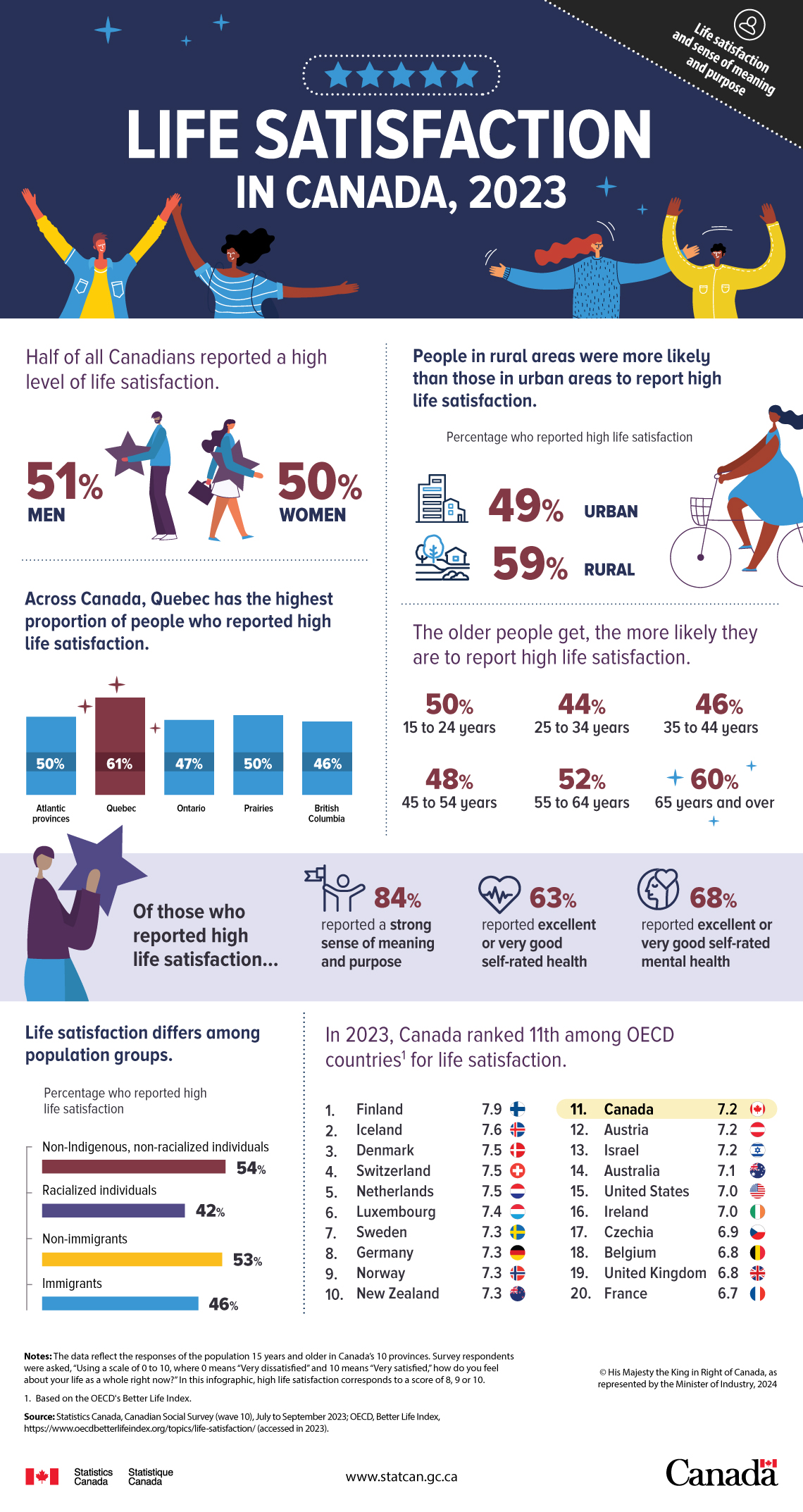
For decades, the Liberal Party of Canada has occupied a significant position in the nation’s political spectrum, often campaigning on platforms emphasizing social progress, a robust social safety net, and inclusive policies. These tenets, in theory, should translate into higher levels of life satisfaction for a broad segment of the population. Life satisfaction, a subjective measure of an individual’s overall contentment with their life, encompasses various domains including economic security, health, social connections, personal fulfillment, and trust in institutions. Research consistently demonstrates that factors like stable employment, access to quality healthcare, affordable housing, and a sense of community contribute significantly to higher life satisfaction. Therefore, one might expect a strong positive correlation between Liberal governance and elevated national life satisfaction. However, empirical data and electoral outcomes reveal a more intricate reality, suggesting that this assumed correlation has, at times, sagged or even experienced periods of decline.
Several factors can contribute to this perceived "sagging" correlation. Firstly, the efficacy of Liberal policies in achieving their stated goals is subject to ongoing debate and evaluation. While programs like universal healthcare, various social assistance initiatives, and investments in public infrastructure are generally well-intentioned, their implementation, reach, and long-term impact can vary. Economic downturns, inflationary pressures, or unexpected global events can also undermine the best-laid policy intentions, leading to diminished economic security for many Canadians, regardless of the governing party. If individuals feel their financial well-being is precarious, or if they perceive a decline in their purchasing power, their overall life satisfaction is likely to decrease, potentially impacting their voting intentions, even if they have historically supported the Liberals.
Furthermore, the definition and measurement of life satisfaction itself can be multifaceted. While economic factors are undoubtedly important, social factors play a critical role. Issues such as perceived social cohesion, trust in government, and the sense of belonging within a community are also integral to life satisfaction. Liberal platforms often emphasize diversity and inclusion, which can foster a sense of belonging for many. However, societal challenges such as rising inequality, social polarization, or the perception of declining civic engagement can negatively impact these social determinants of life satisfaction. Even if the Liberal Party advocates for policies aimed at addressing these issues, their success in achieving tangible improvements may be perceived differently by various segments of the population.
The demographic composition of the Liberal Party’s traditional base also plays a role. Historically, the Liberals have drawn support from urban centres, educated populations, and certain ethnic communities. While these demographics may exhibit generally higher levels of life satisfaction due to factors such as greater access to opportunities and services, shifts in these groups’ concerns or the emergence of new challenges can alter their voting patterns. For instance, if younger urban dwellers, a key Liberal demographic, begin to express dissatisfaction with housing affordability or career prospects, their support for the party might wane, leading to a dip in both Liberal votes and aggregate life satisfaction within that segment.
Moreover, the rise of other political parties and the evolving political landscape can influence the Liberal vote and, consequently, life satisfaction. As other parties articulate alternative visions and propose different policy solutions, voters may re-evaluate their allegiances. If a competing party effectively taps into concerns about economic stagnation, or offers a more compelling narrative on national identity or security, it could draw support away from the Liberals. This shift in the political marketplace can indirectly affect national life satisfaction if the new dominant narratives or policy proposals resonate more strongly with a larger portion of the electorate, or if the perceived effectiveness of governance changes.
The impact of specific policy areas championed by the Liberal Party on life satisfaction warrants closer examination. For example, their commitment to climate action and environmental protection, while broadly supported by a segment of the population, can also be a source of contention. If the economic consequences of environmental policies are perceived to be burdensome for certain industries or communities, it could lead to dissatisfaction among those affected, potentially influencing their voting behaviour. Conversely, individuals who prioritize environmental sustainability might find their life satisfaction enhanced by strong climate policies, creating a divergence of experiences within the electorate.
Similarly, Liberal approaches to immigration and multiculturalism, while contributing to Canada’s diversity and social fabric, can also be areas of concern for some. Debates around the pace of immigration, integration policies, and their perceived impact on social services or employment can lead to varying levels of satisfaction among different groups. The Liberal Party’s efforts to foster a welcoming society might be lauded by some as a direct contributor to their life satisfaction, while others might express anxieties that translate into a reduced propensity to vote Liberal.
The concept of trust in institutions is also intrinsically linked to life satisfaction and voting behaviour. Liberal governments, like any other, are subject to public scrutiny and periods of perceived mismanagement or scandal. A decline in public trust in the federal government, regardless of the party in power, can negatively impact overall life satisfaction. If the Liberal Party, while in power, fails to uphold public confidence or is perceived as being out of touch with the concerns of ordinary Canadians, this erosion of trust can manifest in lower life satisfaction and a diminished inclination to support them at the ballot box.
Furthermore, the media landscape and the way political narratives are framed can significantly influence public perception of both government performance and individual well-being. Social media, in particular, can amplify discontent and create echo chambers that reinforce negative sentiments, potentially impacting life satisfaction and voting choices. If the Liberal Party’s message or its perceived achievements are consistently overshadowed or misrepresented by critical media narratives, it could contribute to a sagging correlation with life satisfaction.
It is also important to acknowledge that life satisfaction is a lagging indicator. While current government policies and economic conditions directly influence immediate feelings of well-being, deeper-seated socio-economic trends and generational shifts can also play a crucial role over time. For instance, long-term trends in income inequality, the precariousness of work in the gig economy, or the rising cost of education and housing can create a pervasive sense of dissatisfaction that may not be immediately rectified by short-term policy interventions. The Liberal Party, like any governing party, will inevitably face the challenge of addressing these systemic issues, and their success or perceived failure in doing so will undoubtedly impact both their electoral fortunes and the life satisfaction of Canadians.
In conclusion, the correlation between Canadian life satisfaction and the Liberal vote is not a simple, direct, or consistently upward-trending relationship. While Liberal ideology and policies often aim to enhance societal well-being, a multitude of factors can lead to a perceived "sagging" of this correlation. These include the nuanced effectiveness of policy implementation, the multifaceted nature of life satisfaction encompassing economic and social determinants, demographic shifts, the evolving political landscape, and the impact of media narratives. A comprehensive understanding requires a granular analysis of how different policy areas resonate with diverse segments of the population, how trust in institutions fluctuates, and how broader socio-economic trends shape individual contentment and voting behaviour over time. The Liberal Party’s electoral success and its connection to the nation’s overall well-being are therefore subject to a complex interplay of forces, demanding continuous adaptation and a deep understanding of the evolving needs and aspirations of Canadians.

