In a striking departure from the traditional pro-development stance of the Lone Star State, Texas Governor Greg Abbott, a prominent ally of former President Donald Trump, recently introduced a comprehensive set of recommendations aimed at curbing the rapid expansion of data centers. Governor Abbott’s move to urge state lawmakers toward aggressive regulation of the tech industry marks a significant pivot for a state that has long prided itself on minimal corporate oversight and a "business-first" philosophy. Simultaneously, across the country, New York Governor Kathy Hochul has found herself in a political bind. Despite leading a state known for its stringent regulatory environment, the Democratic governor has remained non-committal regarding a first-of-its-kind bill passed by the state legislature that would impose a one-year moratorium on large-scale data center construction.
These developments signal the arrival of a new and unpredictable era in American infrastructure politics. The typical partisan scripts—where Republicans champion deregulation and industrial growth while Democrats advocate for environmental protections and state oversight—are being rewritten. As the tech industry scrambles to build the infrastructure necessary to support the "unslakable thirst" for artificial intelligence (AI), they are encountering a wall of resistance that bridges the deepest divides in the American electorate.
The AI Infrastructure Surge and the Resource Conflict
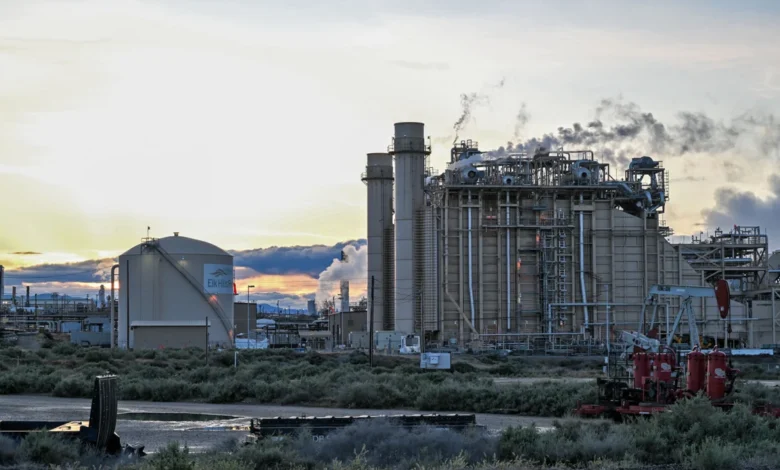
The current friction is rooted in the physical reality of artificial intelligence. Unlike the traditional cloud-computing centers that have quietly stored emails and hosted websites for two decades, the new generation of AI-ready data centers is significantly more resource-intensive. These facilities house high-density racks of specialized chips, such as Graphics Processing Units (GPUs), which require immense amounts of electricity and water to operate and cool. Industry data suggests that AI-focused facilities consume several times the power of their predecessors, placing unprecedented strain on aging electrical grids and local water tables.
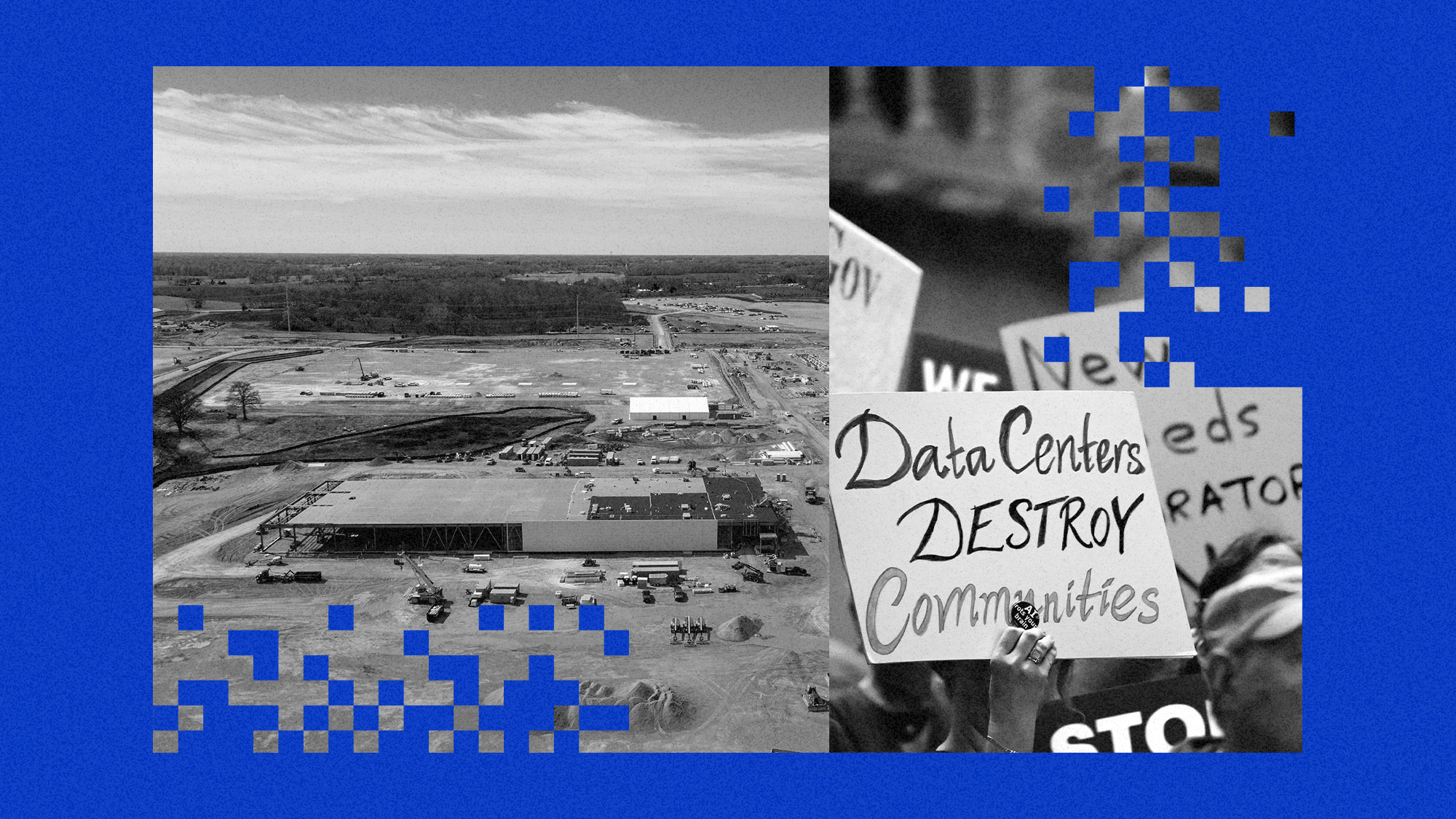
This industrial expansion has become a political flashpoint with remarkable speed. As of mid-2026, the scale of the buildout is staggering. Major tech conglomerates, including Microsoft, Google, Meta, and Amazon, are projected to spend a combined $670 billion on AI-related infrastructure this year alone. This spending spree has translated into a gold rush for land and power, with more than 1,500 data centers currently planned across the United States. However, this momentum is meeting a powerful counterforce: at least 75 data center projects, valued at approximately $130 billion, were stalled or blocked by local opposition in the first quarter of 2026.
A Rare Moment of Bipartisan Consensus
In an age defined by record-high political polarization, the backlash against data centers represents a rare point of agreement between the left and the right. According to recent polling data from Gallup, approximately 70 percent of Americans oppose the construction of AI data centers in their local communities. While the opposition is slightly higher among Democrats (75 percent), a robust 63 percent of Republicans share the sentiment.
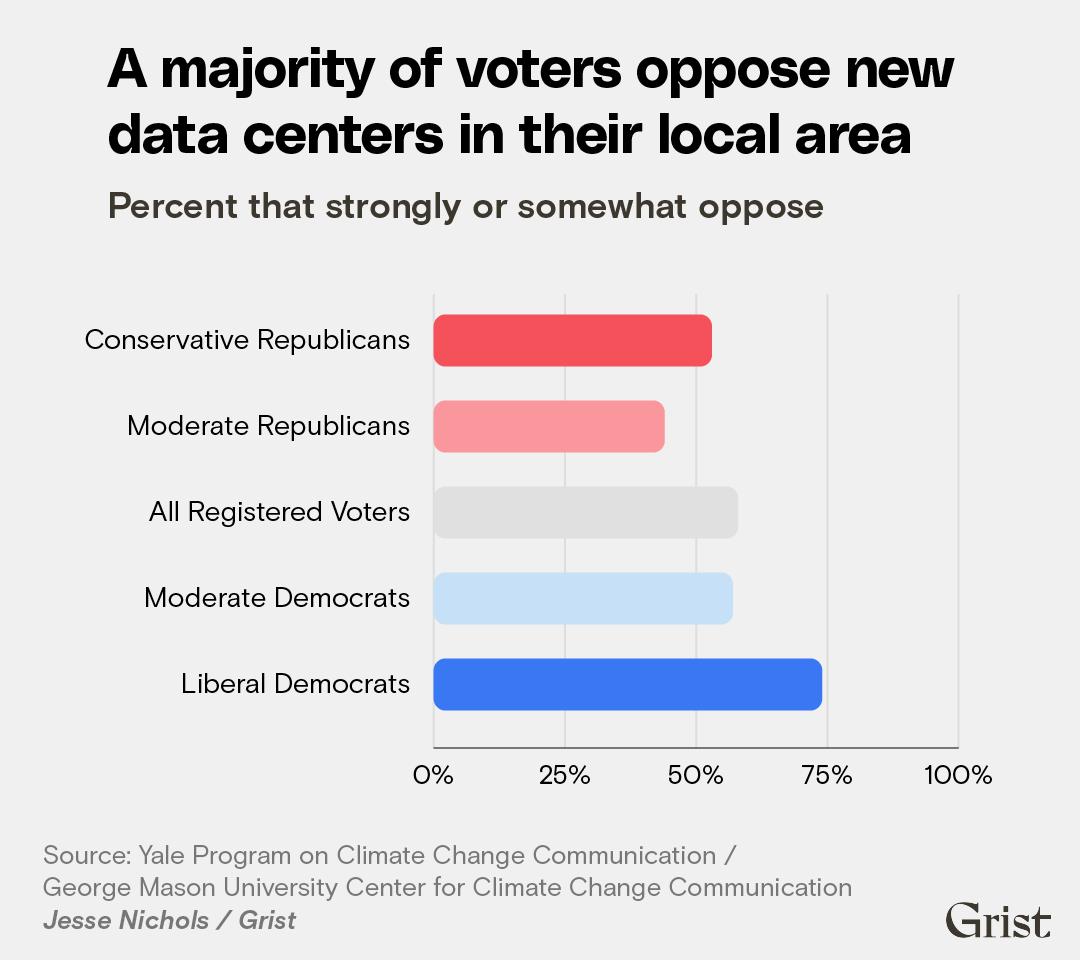
Perhaps most surprising is the breakdown of internal party demographics. Data from the Yale Program on Climate Change Communication reveals that 53 percent of conservative Republicans oppose local data center construction, compared to only 44 percent of moderate Republicans. This puts staunch conservatives in closer alignment with liberal Democrats than with the moderate wing of their own party. Anthony Leiserowitz, director of the Yale Program, noted the anomaly, stating that it is rare to see a political chart where the ideological "wings" of the two parties find more common ground with each other than with their own centrists.
The reasons for this alignment vary by ideology but converge on the same outcome. Republican officials and voters often cite concerns regarding the strain on the energy grid, the perceived unfairness of corporate tax incentives, and the protection of rural landscapes. Democrats, conversely, tend to focus on the carbon footprint of the facilities, the depletion of drinking water resources, and the lack of long-term job creation relative to the massive physical footprint of these buildings.
Case Studies in Resistance: From Utah to California
The localized nature of these fights illustrates the diverse grievances driving the movement. In Box Elder County, Utah—a deeply conservative region where Donald Trump won nearly 80 percent of the vote in 2024—a massive 40,000-acre project backed by celebrity investor Kevin O’Leary has faced fierce pushback. Residents are primarily concerned with the project’s impact on the Great Salt Lake, which is already at historically low levels, and the significant property tax breaks granted to the developers.
In contrast, the opposition in Monterey Park, California, a left-leaning municipality, recently resulted in a successful ballot measure to permanently ban data centers. Voters there cited "public health" and the protection of air and water quality as their primary motivations. Despite the different political landscapes of Utah and California, the core of the argument remains the same: local communities feel they are being asked to sacrifice their finite natural resources and financial health to support a global industry that offers little in return.
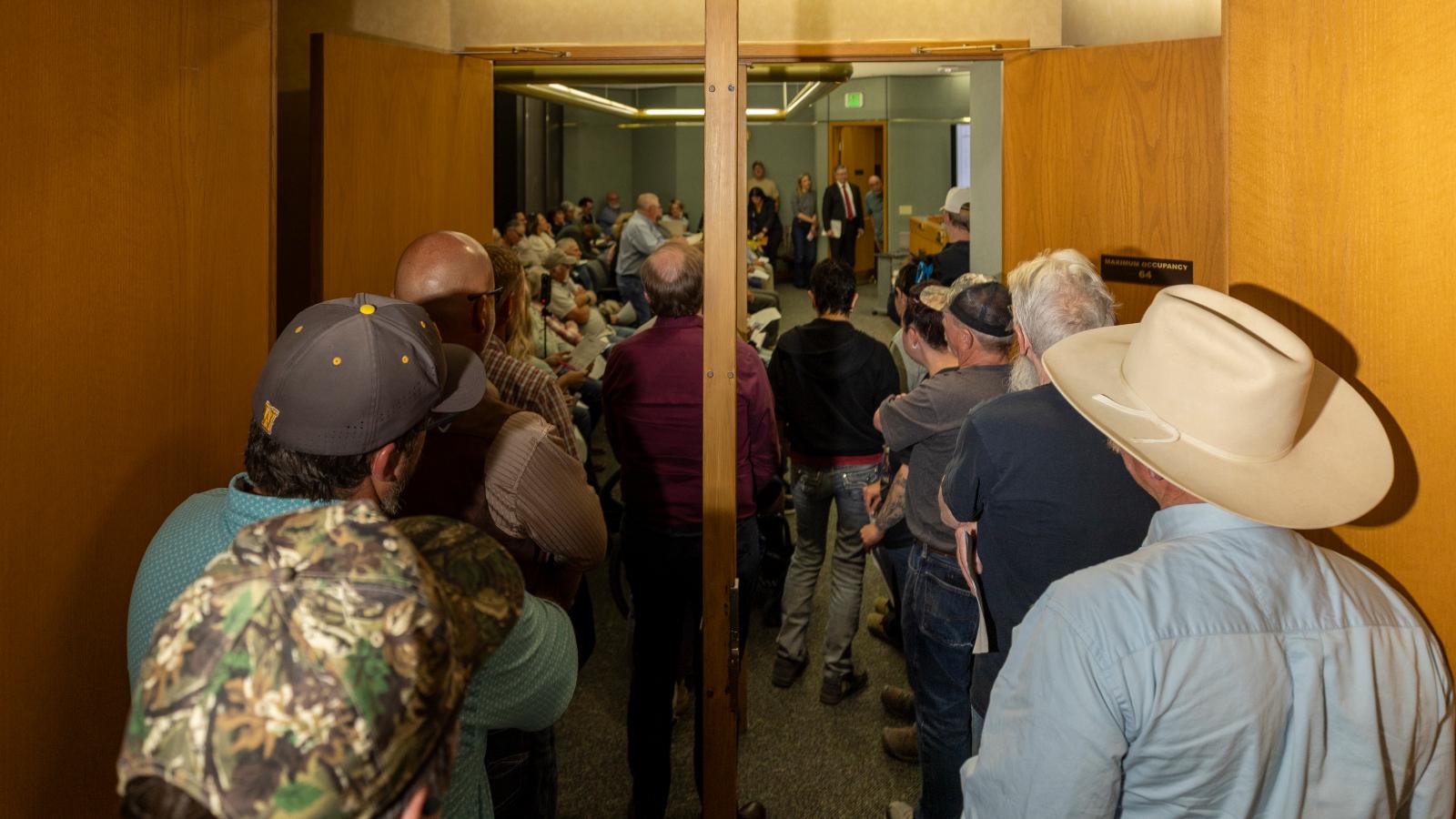
In Wyoming, the town of Evanston has seen its planning and zoning commission meetings packed with residents protesting the "Prometheus Hyperscale" project. The common thread across these disparate geographies is a profound distrust of "Big Tech" and the billionaires who spearhead these projects.
The Villainization of Tech Leadership
The political landscape for data centers is further complicated by the public profiles of the executives involved. Unlike the heads of the fossil fuel or manufacturing industries, who often remain anonymous to the general public, the leaders of the AI revolution—Elon Musk, Mark Zuckerberg, and Sam Altman—are household names.
For years, these figures cultivated an image of "altruistic visionaries" working toward a better future. However, that veneer has thinned. Public trust in tech CEOs has plummeted, with a recent survey indicating that only 7 percent of voters trust these leaders to make decisions that benefit society. The contrast between the industry’s massive infrastructure spending and its recent wave of tens of thousands of layoffs has fueled a narrative of corporate greed.
"These guys are real, actual villains to a lot of people," says Alex Beauchamp, a regional director at the advocacy group Food and Water Watch. This sentiment is amplified by the fact that Elon Musk recently became the world’s first trillionaire, a milestone that has served as a lightning rod for criticism amid a national cost-of-living crisis.
Economic Anxiety and the "Pre-Partisan" Phase
The broader economic climate in 2026 has provided the perfect conditions for this backlash to flourish. With energy prices rising due to international conflicts and inflation, Americans are hyper-aware of any infrastructure that might drive their utility bills even higher. Dana R. Fisher, a professor at American University, suggests that when people fear for their access to affordable energy, ideological boundaries dissolve.
However, political scientists warn that this "unified" front may be temporary. Many experts describe the current state of data center politics as a "pre-partisan" phase. As the 2026 midterm elections approach, there is a significant risk that the issue will be absorbed into the broader culture wars.
The history of hydraulic fracturing (fracking) in the United States serves as a cautionary tale. In the early 2010s, opposition to fracking was also bipartisan, with rural conservatives and environmentalist liberals both concerned about water contamination and industrial noise. However, the issue was eventually polarized by political strategists and industry lobbyists. Pro-fracking advocates framed the practice as a matter of "national energy independence" and "blue-collar jobs," forcing politicians into a binary choice. Today, fracking is one of the most partisan issues in American politics, used frequently as a political "cudgel" in national elections.
Future Implications and the Path Forward
The coming months will determine whether the opposition to data centers evolves into a lasting movement or follows the path of previous industrial conflicts. Some activists see a "remarkable and rare opportunity" to create new, cross-partisan alliances that could force the tech industry to accept real guardrails.
Potential legislative solutions being discussed include:
- Mandatory Resource Efficiency: Requiring data centers to use closed-loop cooling systems to eliminate water waste.
- Grid Contribution Fees: Forcing tech companies to invest directly in new renewable energy generation rather than simply drawing from the existing public grid.
- Tax Incentive Reform: Ending the practice of "bidding wars" where states offer billions in tax breaks to companies that create very few local jobs.
Governor Abbott’s recommendations in Texas and the potential moratorium in New York suggest that the "hands-off" approach to the tech industry is ending. Whether the motivation is environmental protection, fiscal conservatism, or rural preservation, the result is a growing demand for accountability. As the AI boom continues to reshape the American landscape, the political battle over the "warehouses of the future" is only beginning. The consensus currently shared by 70 percent of Americans suggests that for the first time in decades, Big Tech may have finally met a force it cannot simply outspend or out-innovate: the combined resistance of a polarized nation finding common ground in its own backyard.