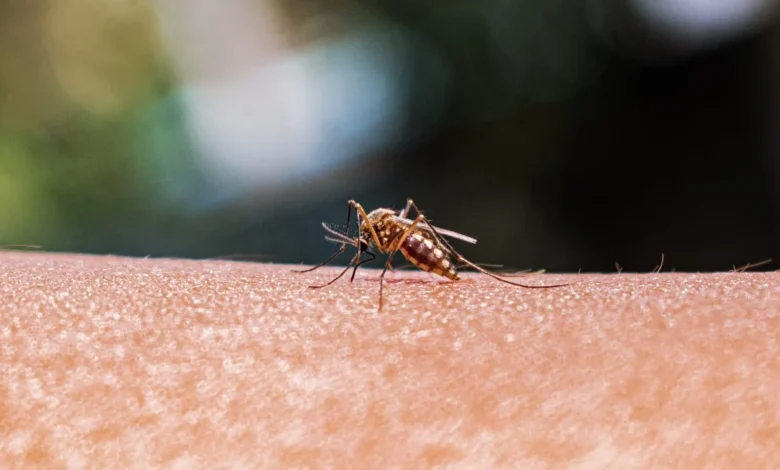
Mosquito monitoring programs, crucial for public health, are typically labor-intensive and expensive endeavors, demanding significant human and financial resources. Across New York State, these programs grapple with a myriad of challenges, from the logistical complexities of fieldwork to a fragmented system of data sharing and coordination. This disjointed approach has raised alarms among public health experts, leading to a legislative initiative aimed at establishing a comprehensive, statewide surveillance program to safeguard residents from the growing threat of mosquito-borne diseases.
The Unseen Battle: Challenges of Current Mosquito Surveillance
At the heart of effective mosquito control lies robust surveillance, a proactive measure that identifies mosquito populations, tracks invasive species, and detects the presence of pathogens before widespread outbreaks occur. However, the operational reality of these programs is often fraught with difficulty. Teams must meticulously set and check various types of traps, often in challenging terrains. Following collection, samples require specialized identification, sorting, and testing by trained professionals, a process that demands both expertise and dedicated laboratory facilities.
-
Technical Hurdles and Resource Drain
The methods employed in mosquito trapping are diverse, each tailored to specific mosquito behaviors and species. Some traps, known as gravid traps, are designed to attract female mosquitoes seeking a place to lay eggs. These often utilize "stinky water" – a concoction rich in decaying organic material that mimics natural breeding sites. Other traps, such as CDC light traps, leverage a different biological imperative: the mosquito’s quest for blood meals. These traps typically release carbon dioxide (CO2), a potent attractant that mosquitoes, particularly those hunting for mammals, sniff out from considerable distances.The reliance on dry ice as a CO2 source presents a significant logistical hurdle, especially in rural areas of New York. Dry ice, a frozen form of carbon dioxide, sublimates into gas at ambient temperatures, providing a steady release of CO2. However, its availability is often limited to urban centers or specialized suppliers, making it difficult and costly for field teams operating in remote regions to acquire consistently. As highlighted by experts, some teams have been forced to resort to making their own dry ice, a testament to the resourcefulness required but also indicative of a systemic deficiency. The cost of dry ice itself can be substantial, adding to the overall expense of maintaining an extensive network of traps. Furthermore, the specialized equipment for CO2 traps, including batteries and collection nets, requires regular maintenance and replacement, further straining already tight budgets.
-
The Patchwork Problem: A Disjointed Defense
Beyond the purely technical and resource-intensive aspects, the existing framework for mosquito monitoring in New York suffers from a fundamental structural flaw: a severe lack of communication, coordination, and data sharing among the various entities involved. As Dr. Laura Leydet, an expert in the field, critically observes, "One of the problems with states that are not comprehensively doing these surveillance programs is that surveillance is hit or miss." This "hit or miss" nature stems directly from the fact that "a lot of these surveillance programs are run by the counties, and they’re not really talking to each other."New York State is comprised of 62 counties, each with its own health department or designated vector control program, operating with varying levels of funding, staffing, and technical capacity. This decentralized approach creates a "patchwork system" where critical data on mosquito populations, species distribution, and pathogen presence often remains siloed within individual county jurisdictions. The implications of this fragmentation are profound: Dr. Leydet’s lab has found that this system allows "some invasive mosquito species to fly under the radar." These species, often non-native, can introduce new pathogens or amplify the transmission of existing ones, posing unforeseen public health risks if their presence and spread are not rapidly detected and communicated across regional boundaries. Without a unified system, understanding the true statewide risk profile becomes nearly impossible, hindering effective, coordinated responses.
The Cost of Inaction: Why Proactive Monitoring is Critical
The financial and health implications of this fragmented surveillance system are substantial. Funding stands as another formidable challenge, directly impacting the longevity and efficacy of county-level programs. "If the county doesn’t have money or resources, these programs fade away," Dr. Leydet explains. This cyclical problem means that vector control efforts become reactive rather than proactive. "If we don’t have these surveillance programs, then all we’re doing is responding to a problem when it’s already a problem, and that’s never how prevention works." This sentiment underscores a core principle of public health: prevention is invariably more effective and less costly than crisis management.
-
Beyond West Nile: The Rise of Invasive Species
Historically, New York has grappled with mosquito-borne diseases such as West Nile Virus (WNV), which first emerged in the state in 1999 and has since become endemic, causing neuroinvasive disease in some individuals. According to the Centers for Disease Control and Prevention (CDC), New York typically reports several dozen human cases of WNV annually, with varying severity. Eastern Equine Encephalitis (EEE) is another severe, though less common, mosquito-borne illness occasionally detected in the state, particularly in wetland areas. However, the landscape of mosquito-borne threats is rapidly evolving.Climate change is a critical factor driving the expansion of mosquito ranges. Warmer temperatures and altered precipitation patterns are creating new habitats suitable for invasive species that were once confined to more tropical or southern latitudes. The Asian tiger mosquito (Aedes albopictus) and the yellow fever mosquito (Aedes aegypti) are two such species that are gradually expanding their presence northward, including into parts of New York. These invasive Aedes mosquitoes are highly efficient vectors for a host of dangerous viruses, including dengue, chikungunya, and Zika. While local transmission of these diseases is currently rare in New York, the increasing presence of competent vectors significantly elevates the risk. For instance, in 2023, several counties in New York reported increased populations of Aedes albopictus, prompting enhanced surveillance efforts. Without comprehensive, real-time data, public health officials are essentially flying blind, unable to predict where and when these new threats might emerge or establish themselves.
-
Economic Burdens of Reactive Measures
The economic consequences of a reactive public health strategy are far-reaching. An ounce of prevention, in the case of mosquito control, is truly worth a pound of cure. When an outbreak occurs, the costs skyrocket. These include:- Direct medical costs: Hospitalizations, physician visits, and long-term care for patients suffering from severe mosquito-borne illnesses. For a disease like EEE, which can have a fatality rate of up to 30% and cause permanent neurological damage, the medical costs per case can run into hundreds of thousands of dollars.
- Emergency response costs: Rapid deployment of vector control teams, emergency pesticide spraying, public awareness campaigns, and increased laboratory testing.
- Lost productivity: Individuals who fall ill may be unable to work, leading to lost wages and reduced economic output. Caregivers may also need to take time off.
- Tourism and economic disruption: Outbreaks can deter tourism, impact outdoor recreation industries, and affect local businesses, particularly those reliant on warm-weather activities. For example, a significant WNV outbreak could lead to cancellations of outdoor events or discourage visitors, impacting local economies.
- Environmental impact: Widespread pesticide spraying, a common reactive measure, can have non-target environmental effects, impacting beneficial insects and aquatic life, and potentially raising concerns among residents. Targeted larvicides, applied proactively to breeding habitats, are generally less disruptive but require accurate surveillance data to be effective.
A Call for Centralization: The Proposed New York State Bill S10393
Recognizing these critical shortcomings, a significant legislative effort is underway in the New York State Legislature. A bill, S10393, introduced this session, aims to fundamentally transform the state’s approach to mosquito surveillance. This landmark legislation would lay the groundwork for a comprehensive mosquito surveillance program, directly addressing what the bill itself terms the "sparse and disintegrated" current system. The overarching goal is to empower public health officials to respond proactively, intervening effectively before an outbreak escalates into a public health crisis.
-
Legislative Efforts for a Unified Approach
The introduction of S10393 reflects a growing understanding among policymakers of the escalating risks posed by mosquito-borne diseases in an era of climate change and increased global travel. The bill’s sponsors emphasize that a unified, statewide strategy is no longer a luxury but a necessity. By centralizing data collection, standardizing methodologies, and fostering inter-county communication, the proposed program seeks to create a robust early warning system. This would allow for more efficient resource allocation, ensuring that areas at highest risk receive appropriate attention and that emerging threats are identified swiftly. The bill is currently undergoing review within legislative committees, where stakeholders, including public health experts, county officials, and environmental advocates, are expected to provide input. Its passage would represent a significant policy shift, moving away from fragmented local efforts towards a cohesive, statewide defense against vector-borne pathogens. -
Blueprint for a Comprehensive Program
The proposed legislation envisions a system that supports and integrates local efforts while providing overarching coordination and resources. This includes:- Standardized protocols: Ensuring consistent methods for trapping, species identification, and pathogen testing across all counties. This would allow for direct comparison and aggregation of data.
- Centralized data repository: A statewide database where all surveillance data is collected, analyzed, and made accessible to relevant public health agencies. This would enable real-time tracking of mosquito populations and disease activity.
- Resource allocation: Directing state funding and technical assistance to counties that lack the necessary resources, ensuring equitable capacity across the state.
- Training and expertise: Establishing programs to train county personnel in advanced surveillance techniques and mosquito identification.
- Rapid response mechanisms: Developing protocols for coordinated, rapid responses when elevated risks or outbreaks are detected.
Such proactive measures, enabled by a comprehensive program, can include a range of interventions. These encompass public education campaigns to encourage residents to remove pools of standing water (which serve as mosquito breeding habitats), the targeted application of larvicides in identified breeding sites to kill mosquito larvae before they mature, and public warnings to use insect repellent and cover bare skin when outdoors during peak mosquito activity. While outbreaks may still necessitate more widespread pesticide spraying, a proactive system aims to minimize the need for such broad interventions by tackling the problem at its source and at an earlier stage.
Expert Perspectives and Stakeholder Reactions
The proposal for greater centralization and coordination, while broadly supported by public health professionals, is not without its challenges. Dr. Leydet acknowledges that "greater centralization would be a start, but widespread coordination in large states like New York can be a challenge." The sheer size and diversity of New York State, encompassing densely populated urban areas, suburban communities, and vast rural landscapes, present unique logistical and administrative hurdles.
-
Voices from the Front Lines of Public Health
Public health officials at both the state and county levels generally welcome the initiative, recognizing the urgent need for a more integrated approach. Many express frustration over the current limitations, where local health departments are often stretched thin, struggling to monitor vast areas with limited staff and equipment. They emphasize that a unified system would not only enhance disease prevention but also improve the efficiency of existing resources by reducing duplication of effort and facilitating shared learning. "We’re constantly reacting to isolated incidents," one county health director, who requested anonymity due to ongoing legislative discussions, stated. "What we need is a bird’s-eye view, to see the whole picture and anticipate where the next problem will emerge." This sentiment highlights the critical demand for a strategic, overarching framework. -
Navigating Political and Financial Headwinds
However, the financial implications of establishing and maintaining such a comprehensive program loom large. "There is general interest in these programs," Leydet notes, "but when you start seeing what they cost, it’s like, ‘Maybe we’re not that interested.’" Legislators must weigh the upfront investment against the long-term benefits and potential costs of inaction. Advocates for the bill argue that the investment in prevention will ultimately yield significant savings in healthcare costs, emergency response, and economic disruption. They point to successful models in other states or countries where centralized vector control programs have proven highly effective in mitigating disease burdens. Opponents, or those with reservations, may raise concerns about state mandates infringing on local control or the burden on state taxpayers. Balancing these interests will be a critical aspect of the legislative process. Despite these potential obstacles, Leydet remains pragmatic, concluding that "any help is better than nothing," underscoring the desperate need for improvement over the status quo.
The Broader Context: Climate Change and Expanding Vector Ranges
The urgency behind New York’s legislative push is amplified by the undeniable impact of climate change on vector-borne disease epidemiology. Global warming is fundamentally altering ecosystems, creating new opportunities for disease vectors like mosquitoes to thrive in previously unsuitable regions.
-
A Warming Climate: New Habitats, New Threats
Scientific consensus points to a direct link between rising global temperatures and the expansion of mosquito habitats. Warmer winters allow mosquito eggs to survive in greater numbers, and extended warm seasons provide more time for mosquito populations to grow and for viruses to replicate within their bodies. Changes in precipitation patterns, leading to more frequent heavy rainfall events and subsequent standing water, create ideal breeding grounds. This phenomenon is not unique to New York; across the United States and globally, regions once considered too cold for certain mosquito species are now seeing their establishment. The presence of Aedes albopictus in New York, a species capable of transmitting dengue, chikungunya, and Zika, serves as a stark local example of this trend. While these diseases are currently imported into New York by travelers, the increasing presence of competent local vectors heightens the risk of local transmission, a scenario that public health officials are working diligently to prevent. -
Global Parallels and Local Preparedness
The challenges faced by New York mirror those in other states and nations grappling with expanding vector ranges. States like Florida and Texas, which have longer histories with Aedes aegypti and Aedes albopictus, provide valuable lessons in the complexities of managing these threats. Their experiences underscore the importance of sustained, well-funded surveillance programs and public engagement. For New York, learning from these parallels means not only preparing for the expansion of existing threats but also anticipating the emergence of entirely new ones. A robust, coordinated surveillance system is therefore not just about addressing current problems but is a fundamental component of climate change adaptation strategy, building resilience in public health infrastructure against future environmental shifts.
Implementing a Unified System: Practicalities and Potential Impact
The transition from a fragmented county-based system to a comprehensive, centralized program will involve significant operational changes and strategic investments. Success will hinge on careful planning, sustained funding, and strong collaboration.
-
Operationalizing a Coordinated Strategy
Implementing the proposed system will require a phased approach. Initially, this might involve conducting a statewide assessment of existing county capabilities, identifying gaps, and prioritizing areas for immediate support. Developing and deploying a standardized data management system will be crucial, ensuring seamless information flow and accessibility for all stakeholders. Training programs will need to be rolled out to ensure all field and lab personnel are proficient in new protocols and technologies. Establishing regional coordination centers, perhaps aligned with existing state health districts, could facilitate localized oversight and rapid response while still feeding into a central framework. Furthermore, consistent funding mechanisms, potentially involving a combination of state appropriations, federal grants, and dedicated public health funds, will be essential to ensure the program’s long-term viability and prevent the "fade away" scenario that currently plagues underfunded county initiatives. -
Anticipated Benefits and Remaining Obstacles
The benefits of a unified mosquito surveillance program in New York are manifold. It would significantly enhance the state’s capacity to detect and respond to mosquito-borne disease threats, reducing the incidence of illnesses and safeguarding public health. Economically, the shift from reactive crisis management to proactive prevention promises substantial savings in healthcare costs and avoided economic disruptions. Environmentally, a more precise and data-driven approach allows for targeted interventions, minimizing the need for widespread pesticide applications. However, obstacles remain. Overcoming the initial financial hurdle, navigating potential resistance to centralized control from some local jurisdictions, and ensuring sustained political will are all critical factors. Yet, the consensus among experts is clear: the long-term health and economic security of New Yorkers depend on this strategic investment.
Conclusion: A Path Towards Enhanced Public Health Security
New York stands at a critical juncture in its battle against mosquito-borne diseases. The existing "sparse and disintegrated" surveillance system, characterized by logistical challenges, funding shortfalls, and a profound lack of coordination, is no longer adequate to address the escalating threats posed by expanding mosquito ranges and the potential introduction of new pathogens. The proposed bill S10393 represents a pivotal step towards rectifying these deficiencies, offering a blueprint for a comprehensive, statewide mosquito surveillance program. While the path to implementation will undoubtedly present its own set of challenges, the imperative for a unified, proactive defense against these evolving public health threats has never been clearer. By investing in a robust, coordinated system, New York can move beyond reactive responses, ensuring a healthier and more secure future for all its residents in an increasingly complex ecological landscape.