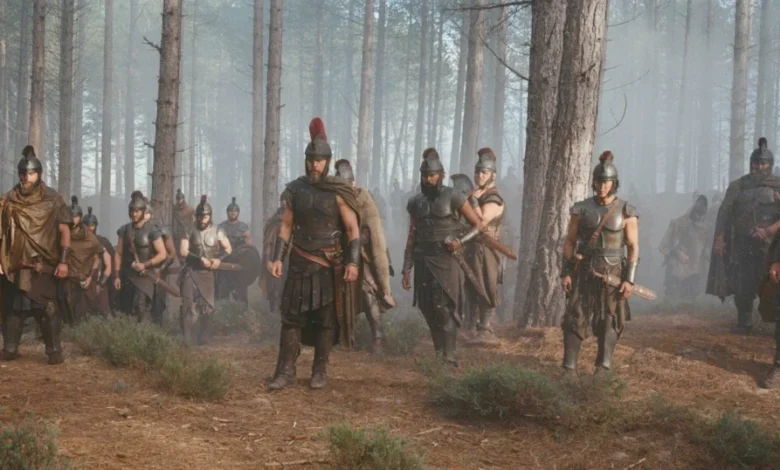
The release of Christopher Nolan’s latest cinematic endeavor, an expansive adaptation of Homer’s The Odyssey, has set a new benchmark for location-based filmmaking in the modern era. Moving away from the green-screen-heavy environments that have come to define contemporary epics, Nolan and his production team embarked on a multi-continent journey to recreate the Bronze Age world through a lens of tactile realism. Starring Matt Damon as the titular hero Odysseus, the production spent months navigating the logistics of remote islands, volcanic beaches, and ancient ruins to bring the ten-year journey of the King of Ithaca to life.
While the original text of The Odyssey is traditionally rooted in the Mediterranean basin—primarily spanning from the fallen city of Troy in modern-day Turkey to the rugged Greek island of Ithaca—Nolan’s vision required a more diverse palette of landscapes. To achieve this, production designer Ruth De Jong led an exhaustive scouting mission that spanned the globe, eventually settling on a blend of traditional Mediterranean sites and the stark, otherworldly environments of Iceland, Scotland, and Morocco.
The Architectural Vision of Ruth De Jong
Central to the film’s aesthetic is the collaboration between Nolan and De Jong, whose previous work on Oppenheimer and Twin Peaks: The Return established her reputation for creating immersive, grounded environments. According to De Jong, the primary goal was to avoid the "sun-bleached" clichés often associated with sword-and-sandal epics. Instead, the production sought to capture the elemental power of the sea and the isolation of the ancient world.
"We wanted to start in the Mediterranean, and we wanted to end in the Mediterranean," De Jong explained in a recent production briefing. "But Chris and I were not interested in an entire sun-bleached sort of vibe. We looked at everything from Australian beaches to Japanese woodlands before finalizing a logistical plan that allowed us to move a massive crew between high-contrast environments."

The production relied heavily on practical sets and real-world locations, a hallmark of Nolan’s directorial style. This approach required the cast and crew to endure physical hardships that mirrored the narrative’s themes of endurance and survival.
Greece: The Rugged Ancestral Home
The Greek leg of production lasted approximately one month and focused on the Peloponnese region and the surrounding islands. Rather than relying on studio-built caves, the team utilized Nestor’s Cave near Pylos to film the harrowing encounter between Odysseus and the Cyclops Polyphemus. The site, steeped in actual Mycenaean history, provided a naturalistic claustrophobia that De Jong felt was essential for the scene’s tension.
In the Messinia region, the production utilized ancient olive groves for a pivotal hunting scene involving Telemachus, played by Tom Holland. The narrative threads involving King Menelaus and Helen of Troy—portrayed by Lupita Nyong’o in a dual role that includes Helen’s sister Clytemnestra—were staged against the backdrop of the Acrocorinth and Methoni Castle.
"Chris wanted to make sure the audience felt the environment," De Jong noted. "The wind in Greece was a constant factor. We used it to our advantage, letting the flags and banners at the Acrocorinth whip violently to emphasize the unrest in the Greek kingdoms following the Trojan War."
Italy and the Physical Demands of Ithaca
To represent Ithaca, Odysseus’s long-sought home, the production moved to the island of Favignana, located off the western coast of Sicily. The centerpiece of this location was the Castle of Santa Caterina, a 15th-century fortification perched atop a steep hill. The site stood in for the palace where Penelope (Anne Hathaway) and Telemachus await Odysseus’s return.

The location became famous during production for its physical demands. With no vehicle access to the summit, the entire cast and crew—including Nolan and producer Emma Thomas—hiked 30 minutes to the set every morning. Heavy equipment, including the large-format IMAX cameras, had to be airlifted via helicopter.
"Everyone got into it and loved that daily challenge," De Jong recalled. "It created a sense of camaraderie. You could see the water from every vantage point, which was vital for the storytelling. We needed the audience to feel how Ithaca was both a sanctuary and a prison for Penelope."
While the exterior shots utilized the rugged Italian landscape, the intricate interiors of the Ithacan palace were meticulously reconstructed on soundstages in Los Angeles to allow for the controlled lighting required for the film’s final act.
Iceland: A Daylight Underworld
Perhaps the most striking departure from traditional Homeric imagery is the film’s depiction of Hades. Eschewing the dark, fire-lit caverns of classical art, Nolan chose the black sand beaches of Iceland to represent the land of the dead. Filmed during the height of the Icelandic summer, the scenes take advantage of the "Midnight Sun," creating a surreal, perpetual twilight.
The production avoided the more tourist-heavy sites like Diamond Beach, opting instead for the remote sands near Hjörleifshöfði mountain, three hours east of Reykjavik. The stark contrast of the black volcanic sand against the pale, unending sky provided a visual metaphor for the purgatorial state of the souls Odysseus encounters.

In a feat of logistical dedication, De Jong insisted on authenticity for the scenes involving the Cattle of Helios. "I was hell-bent on getting the Greek cattle with the horns," she said. After extensive research, she located a specific breed in Iceland that shared a genetic lineage with ancient Mediterranean herds, allowing the production to film the "sacred cattle" in a lush, sun-bleached field just six hours away from the volcanic beaches used for Hades.
Morocco: The Fall of Troy
For the city of Troy, the production bypassed modern-day Turkey in favor of the Atlas Mountains in Morocco. The village of Ait Benhaddou, a UNESCO World Heritage site, served as the foundation for the legendary city. De Jong’s team constructed approximately two and a half acres of practical sets adjacent to the existing village, designed specifically to be destroyed by fire.
"The local authorities were incredibly supportive," De Jong said. "They told us we could burn our sets down as long as we didn’t touch their village."
The burning of Troy was one of the production’s most complex sequences, involving hundreds of extras and precision pyrotechnics. The heat of the Moroccan desert added a layer of grueling realism to the scenes of the Greek army’s departure. The discovery of the Trojan Horse and the initial voyage home were filmed on the Atlantic coast in Essaouira, where the crashing waves of the ocean provided a stark contrast to the mountainous interior.
Scotland: The Isolation of Circe’s Island
To represent the island of Aeaea, home to the enchantress Circe (Samantha Morton), Nolan looked to the Scottish Highlands. The craggy coastline near Cullen provided the "middle of nowhere" atmosphere required for the sequence. The verdant cliffs and serpentine paths served as the backdrop for the transformation of Odysseus’s crew.

"Odysseus would never have gone to Scotland geographically," De Jong admitted. "But the look was perfect. It had a mystical, lonely quality that felt separate from the rest of the world. Circe’s house was built to look as though it had grown out of the rocks themselves."
Chronology of Production
The timeline of The Odyssey’s production reflects the massive scale of the project:
- January – June 2023: Global scouting and location procurement.
- July – August 2023: Construction of the Troy sets in Morocco and palace interiors in Los Angeles.
- September 2023: Principal photography begins in Morocco (Troy and Sparta sequences).
- October 2023: Filming moves to Greece (The Peloponnese and Mycenaean ruins).
- November 2023: Production shifts to Favignana, Italy (Ithaca exteriors).
- June 2024: Summer filming in Iceland (Hades and the Cattle of Helios).
- August 2024: Final sequences filmed in the Scottish Highlands (Circe’s Island).
- September 2024 – Present: Post-production and scoring.
Broader Impact and Industry Implications
The decision to film The Odyssey on location across five countries is seen by industry analysts as a significant move back toward large-scale physical production. In an era where "Volume" technology and CGI environments have become the industry standard for fantasy and period pieces, Nolan’s insistence on geographical authenticity serves as a high-profile counter-argument.
Film tourism, or "set-jetting," is expected to see a significant uptick in the regions featured. Local tourism boards in Sicily and the Peloponnese have already reported increased interest in the specific historical sites used during filming. Furthermore, the use of practical sets in Morocco provided a temporary economic boom for the Ait Benhaddou region, employing hundreds of local craftsmen and laborers.
As the film moves toward its global theatrical release, the logistical triumph of its production remains a central talking point. By mapping a 2,800-year-old poem onto the diverse landscapes of the modern world, Nolan and De Jong have created a visual odyssey that matches the scale of its source material, proving that the most compelling worlds are often the ones that already exist.