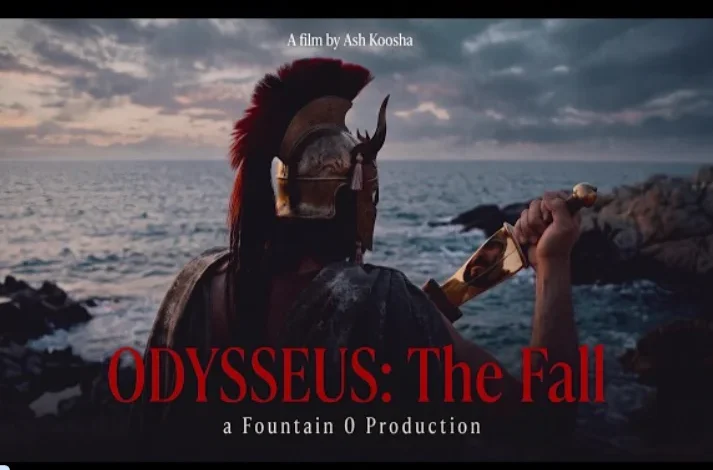
The announcement reverberated through the film industry, designed to provoke and, inevitably, to do just that. An Artificial Intelligence filmmaker, Ash Koosha, has created a 135-minute feature film, Odysseus: The Fall, inspired by Homer’s The Odyssey. This endeavor, leveraging a public domain work and arriving in the summer of 2026, a period already anticipated to host Christopher Nolan’s own ambitious adaptation, has ignited a firestorm of debate. Koosha, an Iran-born, England-raised engineer, has deliberately positioned his AI-generated film as a counterpoint to traditional, large-scale filmmaking, sparking questions about the future of cinematic creation, the role of human artistry, and the very definition of a "film."
The Genesis of a Provocation
Koosha’s decision to craft an AI-driven interpretation of The Odyssey, a narrative rich in human struggle and epic journeys, has been met with a mixture of intrigue and outright criticism. The film, Odysseus: The Fall, is slated for release, though Koosha and his team have indicated a strategic delay of several weeks. This pause, however, has done little to quell the immediate backlash. The core of the controversy lies in the audacious nature of the project: a 135-minute film, reportedly costing a mere fraction of a traditional blockbuster’s budget, created without human actors, and centered on a narrative already slated for a monumental, actor-led cinematic interpretation.
The timing of Odysseus: The Fall‘s announcement is particularly charged. It arrives amidst a public discourse between celebrated director Christopher Nolan and actor Matt Damon regarding the future of analog, large-scale filmmaking. Damon expressed a sentiment of finality, suggesting his involvement in Nolan’s film represented a dwindling opportunity for such productions. Nolan, in response, labeled this view as "defeatist." Koosha’s project, by leveraging AI to produce a cinematic work on the same foundational story, appears to many as a direct challenge to this traditional model, potentially accelerating the very "end-of-cinema" moment that Damon seemed to lament.
Koosha’s previous work, Dreams of Violet, a more sympathetic AI-generated film addressing the recent Iranian democracy protests, debuted at Tribeca last month. This project garnered acclaim for its humanitarian urgency and its innovative approach to storytelling in the face of insurmountable logistical and safety barriers for traditional filmmaking. However, Odysseus: The Fall lacks this immediate humanitarian imperative, leading to comparisons and a perception among some critics that it is a more direct, and perhaps less justifiable, provocation aimed at the established film industry.
Clarifying the Vision: An Interview with Ash Koosha and His Team
In an exclusive interview with The Hollywood Reporter, Ash Koosha, his brother and collaborator Pooya Koosha, and their producer, Tom Rogers (founder of CNBC and co-founder of the AI-centric film production banner Fountain 0), offered insights into their vision for cinema and the rationale behind Odysseus: The Fall.
Ash Koosha: "There’s been a lot of excitement, and a lot of questions, and a lot of confusion. One thing we want to clear up is that we’re not going against Christopher Nolan. He’s doing what he’s doing in the old world of cinema. And he does it brilliantly. But there’s room for something in the new world. I’m an Odyssey fan since I was a little kid – I learned about Nolan’s movie from a Homer-focused Reddit. I’ve been immersed in all the questions about all the details, like Agamemnon’s outfits and everything else. My goal is not to make a movie that is the same as his. It’s to use the tools to make my own version of the story."
Koosha emphasizes that his intention is not to compete with Nolan’s established approach but to carve out a new space. He likens his work to a personal interpretation, akin to an artist painting a portrait rather than a photographer documenting a scene. The fascination with The Odyssey stems from a long-standing personal connection, amplified by community discussions online.
Ash Koosha on Dreams of Violet vs. Odysseus: The Fall: "I see them as related. Dreams of Violet raised questions and this raises deeper questions – questions that are important for the industry. ‘Can we have stories at the speed of news?’ ‘Can other people paint with tools besides people like Christopher Nolan?’ ‘What can be created if they can?’"
Koosha views both projects as catalysts for broader industry conversations. While Dreams of Violet addressed immediate societal issues with innovative tools, Odysseus: The Fall aims to probe more fundamental questions about the accessibility and democratizing potential of AI in filmmaking. He refutes the notion that his film is a mere "knockoff" or derivative work, instead framing it as a contribution to a larger cultural dialogue.
Ash Koosha on Discourse and Tangential Filmmaking: "Not at all. I see more as part of a larger news conversation. Before these AI tools if I had a theory about Odysseus I could write a Substack about him. And some people would read it but how many? Now I can put my take into a film. I can paint my opinion with images and sound and light. And a lot more people can see it."
He introduces the concept of "tangential filmmaking," suggesting that AI enables the creation of supplementary narratives that can coexist with, and enrich, the primary cinematic experience. This perspective draws parallels to the early days of the internet, where independent blogs and content emerged alongside established media outlets, fostering a more diverse informational landscape.
Tom Rogers on Coexistence and AI’s Potential: "Obviously it’s hard to be in the same arena as Christopher Nolan; everyone agrees his Odyssey is the superior film. And we want people to see that film. But hopefully they see ours too. Christopher Nolan is the ultimate in physical filmmaking and what we’re trying to do is be the ultimate in AI filmmaking."
Rogers acknowledges the qualitative difference and established prestige of Nolan’s work. However, he positions their endeavor as the pioneering edge of a nascent field, aiming for mastery in AI filmmaking as Nolan has in traditional methods. He highlights the potential for AI to circumvent traditional budgetary constraints, thereby opening new avenues for creative expression and challenging the perception that AI-generated content is inherently inferior.
Ash Koosha on Risk and Reward: "Exactly, you can’t judge them on the same terms. They’re at 125 years and we’re in our infancy. So of course there are going to be bumps in the road. But it’s what you can achieve by trying. To me the risk is low and the reward is high: a whole new kind of cinema."
Koosha articulates a philosophy of experimentation, where the low financial risk associated with AI tools contrasts sharply with the potential for groundbreaking artistic and industrial innovation. He sees the current stage of AI filmmaking as a formative period, akin to the early days of cinema itself, where experimentation is crucial for future development.
A Deeper Dive into Odysseus
When pressed about his specific interpretation of Odysseus, Koosha offers a personal perspective, rooted in his own journey.
Ash Koosha on his interpretation of Odysseus: "I don’t think he’s well-understood. I don’t want to say too much but I think as someone who came from Iran and moved to the West as a child I can understand something about his story, about what it means to be far from home. How it wasn’t just about ego motivating him."
This personal connection suggests a narrative that explores themes of displacement, identity, and the human drive for belonging, potentially offering a more nuanced psychological portrait of the legendary hero than traditional interpretations.
The Timeline and the Future of Storytelling
The decision to delay the release of Odysseus: The Fall is strategic, aimed at allowing the industry and audiences to process the implications of such a project without feeling overwhelmed.
Pooya Koosha: "We want to wait a while, at least until late summer. We don’t want people to feel overloaded and confused. That’s important to us."
Tom Rogers: "We could have released it now but we’re not trying to trick people. We want them to be able to clearly compare."
This measured approach underscores their desire for a comparative analysis rather than a disruptive imposition. They aim for Odysseus: The Fall to be seen not as a replacement but as a parallel offering that highlights the evolving landscape of filmmaking.
Tangential Filmmaking and the Democratization of Cinema
The concept of "tangential filmmaking" is central to Koosha’s vision. He posits that AI’s capabilities will usher in an era of unprecedented creative freedom, mirroring the internet’s impact on media consumption.
Ash Koosha on the explosion of bottom-up cinematic content: "Yes, exactly. There is room for all kinds of cinema and AI finally makes that possible. We’ve had so many years when making cinema was dependent on having enough money, and unless you’re Christopher Nolan you couldn’t make a movie of a certain scale, and even he couldn’t sometimes. The concentration of revenue became a barrier to entry. All of that is going to go away. That’s what we’re trying to bring about."
This perspective champions a democratized film industry, where the prohibitive costs and resource demands that have historically concentrated power in the hands of a few major studios are dismantled. AI, in this view, levels the playing field, empowering individual creators and diverse voices.
Pooya Koosha on inclusivity: "We hope a lot of other people come in and do this. This is about something very broad and democratic."
Tom Rogers on Fountain 0’s mission: "Yes, that’s the whole goal of Fountain 0 – to look for the best use of the tools."
Fountain 0’s overarching mission is to explore and champion the most effective applications of AI in film production, signaling a commitment to pushing the boundaries of this new medium.
The Question of Actors and the Co-existence of Forms
The absence of human actors in Odysseus: The Fall naturally raises questions about their future role in a cinema increasingly influenced by AI.
Tom Rogers on the value of actors: "I think this will make actors more valuable, whether it’s in an old-world movie or live theater. People will want to see them too, maybe even more than they do now."
Rogers suggests a scenario where AI-generated films occupy a distinct niche, potentially increasing the perceived value and appeal of human performers in traditional or live settings. This envisions a symbiotic relationship rather than a competitive one, where different forms of artistic expression coexist and mutually benefit from the broader cinematic ecosystem.
Ash Koosha on the vision of co-existence: "That’s all we’re trying to do. To show you can make great films in the manner that Christopher Nolan does. But you can make gorgeous films using AI models too."
The ultimate goal, according to Koosha, is to demonstrate the viability and artistic merit of AI filmmaking, not as a replacement for traditional cinema, but as a complementary and equally valid form of artistic expression. This vision embraces a future where the grand, meticulously crafted spectacles of directors like Nolan can exist alongside the innovative, accessible, and perhaps more personal narratives generated by AI, enriching the cinematic landscape for creators and audiences alike. The arrival of Odysseus: The Fall is not merely the release of a film; it is a marker in the ongoing evolution of storytelling, prompting critical reflection on what it means to create, and to experience, cinema in the 21st century.