
Mastering Tag Dining Room Etiquette: A Comprehensive Guide to Navigating Social and Business Gatherings
Understanding and adhering to tag dining room etiquette is paramount for anyone seeking to navigate social and business gatherings with grace and confidence. This nuanced set of unwritten rules governs behavior during meals, influencing perceptions of professionalism, respect, and social intelligence. Far beyond mere politeness, mastering tag dining etiquette demonstrates a keen awareness of social cues and a commitment to fostering positive interactions. The term "tag dining," while not a universally recognized industry term, refers to the practice of attending meals in a professional or social context where adherence to established dining norms is expected. This can range from informal office lunches to formal business dinners, client entertainment, and celebratory events. The underlying principle remains consistent: to conduct oneself in a manner that is considerate of others, facilitates smooth conversation, and upholds the reputation of oneself and any associated organization. This guide aims to demystify the intricacies of tag dining etiquette, providing actionable advice for various scenarios, from napkin placement and utensil usage to engaging in appropriate conversation and managing the bill.
The foundation of effective tag dining lies in preparedness and observation. Before arriving at a dining event, it’s advisable to gather any pertinent information about the occasion, including the dress code, the guest list (if available), and the expected formality. This foresight allows for appropriate attire and mental preparation for the social dynamics at play. Upon being seated, the first observable protocol is the placement of the napkin. Typically, the napkin should be unfolded and placed on your lap. If you need to excuse yourself from the table temporarily, the napkin should be folded loosely and placed on your chair. Upon returning, it is placed back on your lap. The primary purpose of the napkin is to discreetly wipe your mouth and fingertips, preventing food debris from soiling your clothing or the tablecloth. Excessive or ostentatious use of the napkin is considered poor form.
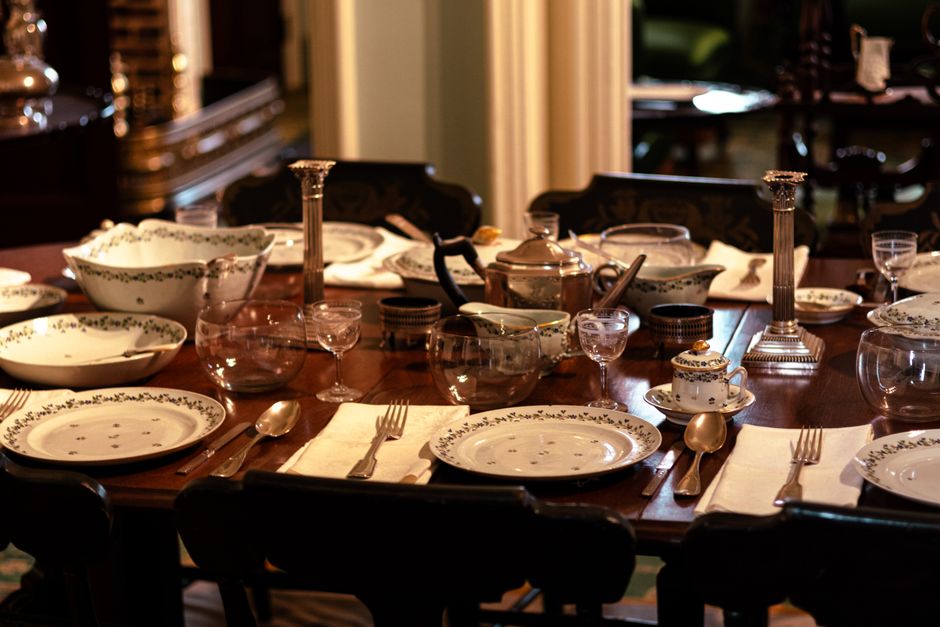
Utensil usage forms a significant component of dining etiquette, often distinguishing novice diners from those with established social fluency. The general rule is to work from the outside in, utilizing the utensils laid out for each course. For example, if soup spoons are on the far right and salad forks on the far left, they correspond to the initial courses served. Understanding the specific types of forks, knives, and spoons, and their designated uses, is crucial. A dinner knife is typically used for cutting meats, while smaller knives might be designated for butter. Forks are primarily for lifting food, with the larger ones for the main course and smaller ones for appetizers or desserts. Spoons are for liquids like soup or sauces, or for desserts like ice cream. In a setting with multiple sets of cutlery, remember that the utensils are arranged in the order of use, moving from the outermost to the innermost as each course is served. This system ensures that the correct tool is at hand for each dish without requiring diners to guess or rearrange.
The act of eating itself requires a degree of composure and consideration for fellow diners. Food should be brought to the mouth, not the mouth brought to the food. Chewing should be done with your mouth closed, and the amount of food on your fork or spoon should be moderate, avoiding overfilling. If food is difficult to cut, it is acceptable to use your fork to steady it while your knife cuts. For certain foods, like pasta or peas, it is permissible to use a spoon to help gather them onto the fork, though this is a subtle technique best practiced discreetly. Elbows should not be rested on the table while eating; they should remain relaxed at your sides. The practice of “grapevine” chewing, where food is actively maneuvered within the mouth, is considered impolite. Similarly, noisy eating, such as slurping soup or crunching excessively, is to be avoided.
Conversation is an integral part of the dining experience, and tag dining etiquette dictates that it should be engaging, respectful, and inclusive. The goal is to foster a pleasant atmosphere that facilitates networking, relationship building, or simply enjoyable social interaction. Topics of conversation should be generally agreeable and avoid controversial subjects such as politics, religion, or intensely personal matters, unless the context explicitly warrants it and all parties are comfortable. Instead, focus on shared interests, current events of general interest, travel, hobbies, or positive professional achievements. Active listening is as important as speaking. Pay attention to what others are saying, make eye contact, and respond thoughtfully. Avoid interrupting, dominating the conversation, or speaking in a manner that excludes others. If the conversation turns to sensitive or potentially awkward topics, gracefully steer it back to safer ground. Questions should be open-ended and encourage elaboration, demonstrating genuine interest. Remember that the dining table is a communal space, and conversation should be a collective effort.
Handling the bill is a critical aspect of tag dining, especially in professional settings. The host typically pays, and it is considered polite to offer to contribute, especially if you are the guest. However, the host’s gesture should be graciously accepted. If you are hosting, be discreet and confident in handling the payment. Avoid discussing the cost of the meal or engaging in a protracted debate over who pays. If the bill is presented and you are not the host, do not overtly examine it. If you are in a group where splitting the bill is customary, be prepared to contribute your share promptly and accurately. In business contexts, the person who initiated the meeting or dinner, or who stands to gain the most from the relationship, is often the one expected to host. Offering to host future meetings can also be a gesture of goodwill.
Navigating the use of electronic devices at the dining table is a modern challenge that requires careful consideration. Generally, mobile phones should be silenced and kept out of sight. Unless there is an urgent and unavoidable reason, it is highly impolite to answer calls or send texts at the table. If an urgent call must be taken, excuse yourself from the table and step away to conduct the conversation privately. Similarly, refrain from using laptops or tablets unless the dining event is specifically a working lunch or dinner where such devices are expected and utilized for business purposes. The focus should be on the people present and the shared experience of the meal.
Specific scenarios may present unique etiquette challenges. For instance, when ordering food, be decisive but not overly demanding. Familiarize yourself with the menu beforehand if possible. If you have dietary restrictions or allergies, discreetly inform your server or the host in advance, rather than making a scene at the table. When passing dishes, use a gentle motion, ensuring that you do not make abrupt movements that could disturb other diners or spill food. It is customary to pass dishes to the right. If a dish is being passed to you, take a modest portion and then continue passing it to the right. Offering condiments like salt and pepper should be done by passing them together, even if only one is requested.
The conclusion of the meal also involves a series of subtle cues. Once you have finished eating, place your knife and fork together on your plate, typically at the 4 o’clock position, with the handles pointing towards the lower right. This signals to the server that you have completed your meal. Avoid leaving utensils precariously balanced on the edge of the plate. When it’s time to leave, wait for the host to initiate the departure. Thank your host and any other guests for their company. A simple, sincere expression of gratitude is sufficient.
In summary, tag dining room etiquette is a multifaceted discipline that emphasizes consideration, awareness, and preparedness. By mastering the principles of napkin usage, utensil handling, conversational engagement, bill management, and digital device etiquette, individuals can confidently navigate any dining scenario. The underlying objective is to create a positive and respectful environment that fosters strong relationships and leaves a lasting favorable impression. Continuous observation of those around you, particularly those you perceive as embodying good etiquette, can further refine your understanding and application of these valuable social skills. Embracing tag dining etiquette is not merely about following rules; it is about demonstrating respect for others and enhancing your own social and professional standing.

