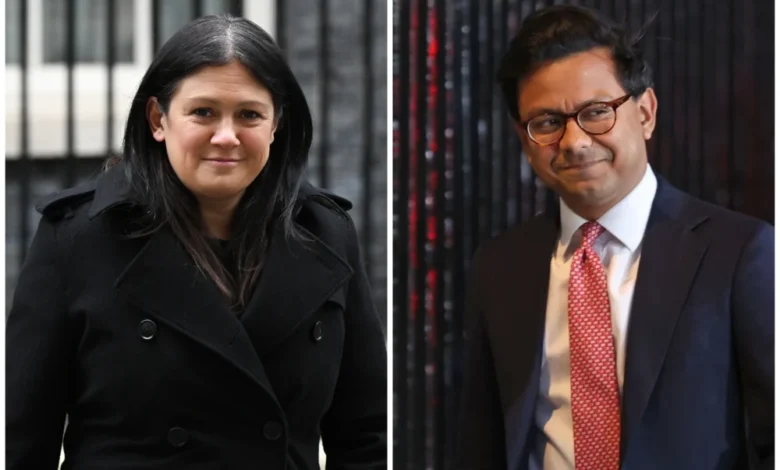
London, UK – [Date of publication] – In a significant move following Prime Minister Andy Burnham’s comprehensive cabinet reshuffle, incumbent Culture Secretary Lisa Nandy has been confirmed to remain in her post, a decision signaling a degree of continuity at a critical juncture for the United Kingdom’s creative industries. Nandy, a Member of Parliament for Wigan since 2010, was first appointed to the Department for Culture, Media, and Sport (DCMS) by former Prime Minister Keir Starmer in July 2024, a few months after the Labour party secured a decisive victory in the general election. Her tenure, now spanning over two years, has positioned her as one of the longest-serving ministers in this frequently rotated ministerial role, a testament to her stability amidst a period of considerable flux. Prior to her current appointment, Nandy served with distinction in shadow cabinet positions, including as Shadow Secretary of State for International Development and Shadow Housing Minister, roles that provided her with valuable experience in policy formulation and parliamentary debate.
The landscape Nandy inherited upon taking office in July 2024 was fraught with challenges. The UK’s screen sector, a cornerstone of its cultural and economic output, was grappling with the lingering aftershocks of the Hollywood writer and actor strikes. These industrial disputes had a ripple effect, disrupting production schedules and impacting international co-productions. Compounding these issues were the persistent pressures of post-pandemic inflation, which squeezed budgets across the board, and a noticeable downturn in the advertising market, a vital revenue stream for many media organizations. Furthermore, broadcasters and streaming services, facing increased operational costs and evolving consumer habits, were compelled to implement significant budget cuts.
Nandy’s current responsibilities reflect the complexity of this environment. She is actively overseeing the renewal of the BBC’s royal charter, a process that involves intricate negotiations regarding its funding mechanism, a perennial point of public and political debate. The BBC, as a publicly funded broadcaster, faces ongoing scrutiny over its remit and financial sustainability, and the charter renewal process will determine its operational framework for the next decade. Beyond the BBC, Nandy is also deeply involved in the UK arm of the proposed merger between Paramount and Warner Bros. Discovery. This colossal consolidation in the global media landscape has significant implications for content creation, distribution, and competition within the UK. Nandy’s expressed sentiment that she was "minded to intervene" underscores the government’s awareness of the potential antitrust and market competition concerns arising from such a large-scale merger, particularly its impact on independent production companies and the diversity of content available to British audiences.
The broader media M&A landscape in the UK has been exceptionally dynamic. A particularly significant development, which Nandy’s department will be closely monitoring, is Comcast-owned Sky’s recent acquisition of public service broadcaster ITV. This acquisition, pending regulatory approval, represents a seismic shift in the UK media ownership structure, potentially consolidating significant power and influence within a single entity. The implications for public service broadcasting, advertising, and content diversity are substantial and will be a key focus for regulators and the government. Furthermore, the impending spin-off of ITV’s highly successful production arm, ITV Studios, has already attracted considerable interest from potential bidders, signaling further consolidation and restructuring within the television production sector. Nandy’s department will be tasked with ensuring these transitions serve the long-term interests of the UK’s creative economy.
In parallel with these significant media sector developments, Prime Minister Burnham has also made a pivotal appointment in the burgeoning field of artificial intelligence. Kanishka Narayan has been named the first-ever Minister for AI, a role that will be jointly held within the Cabinet Office and the Department for Business, Innovation, Science, and Trade. This creation of a dedicated ministerial brief for AI highlights the government’s strategic focus on harnessing the transformative potential of this technology while also addressing its associated challenges. Narayan, previously the Parliamentary Under-Secretary of State in the Department for Science, Innovation, and Technology, brings a wealth of experience in the science and technology portfolio. His election as the MP for Vale of Glamorgan in July 2024 positions him as a key figure in shaping the UK’s future technological trajectory.
Continuity Amidst Shifting Political Tides
The retention of Lisa Nandy as Culture Secretary in Prime Minister Andy Burnham’s reshaped cabinet is a significant indicator of the government’s strategic priorities. Burnham, known for his pragmatic approach to governance, has opted for a degree of stability in a department that oversees a sector vital to the UK’s soft power, economic growth, and cultural identity. The DCMS portfolio is notoriously demanding, requiring a minister to navigate a complex web of stakeholders, from national broadcasters and global media conglomerates to independent film studios and the vibrant arts sector.
Nandy’s appointment by Keir Starmer in July 2024 occurred during a period of intense focus on the creative industries. Labour’s general election victory had ushered in a new era, with high expectations for government support and policy innovation. The immediate aftermath of the election saw the global entertainment industry still reeling from the prolonged Hollywood strikes, which had disrupted production pipelines and created significant economic uncertainty. Nandy, therefore, stepped into a role that demanded immediate engagement with pressing industry concerns.
Her track record as an MP for Wigan since 2010 provides a foundation of parliamentary experience. Her previous roles in the shadow cabinet, particularly in international development and housing, demonstrated her capacity for policy analysis and her commitment to public service. However, the DCMS brief presents a unique set of challenges, encompassing not only economic and regulatory matters but also the delicate balance of cultural policy and public interest.
Navigating a Turbulent Media Landscape
Nandy’s tenure has been characterized by her direct engagement with the profound transformations reshaping the media and entertainment sectors. The post-pandemic era has amplified existing trends, including the rapid growth of streaming services, the evolving advertising market, and the increasing consolidation of media ownership. The decline in advertising revenue, exacerbated by economic headwinds, has placed considerable pressure on traditional media outlets, necessitating a careful examination of their business models and a search for new revenue streams.
Her oversight of the BBC’s royal charter renewal is a particularly high-stakes undertaking. The BBC, a national institution, is constantly under scrutiny regarding its funding, impartiality, and the scope of its services. The charter renewal process, typically conducted every ten years, provides an opportunity for a comprehensive review of the BBC’s governance, editorial standards, and its role in the digital age. Nandy will be instrumental in shaping the future of public service broadcasting in the UK, a task that requires a delicate balancing act between public accountability and operational independence.
The proposed merger of Paramount and Warner Bros. Discovery represents a significant test of Nandy’s regulatory approach. Such a consolidation could reshape the global content landscape, impacting everything from film distribution and intellectual property rights to the availability of diverse storytelling. Her statement indicating a willingness to intervene suggests a proactive stance, aiming to safeguard competition and prevent any adverse effects on the UK market. This interventionist approach is crucial in ensuring that such large-scale corporate actions do not stifle innovation or limit consumer choice.
A New Frontier: The Rise of AI
Prime Minister Burnham’s establishment of a dedicated Minister for AI, with Kanishka Narayan at the helm, underscores the growing recognition of artificial intelligence as a transformative force. AI is poised to revolutionize industries, from creative content generation and media distribution to scientific research and public services. Narayan’s dual role within the Cabinet Office and the Department for Business, Innovation, Science, and Trade signifies the cross-governmental importance of this agenda.
The creation of this ministerial portfolio reflects a broader global trend of governments seeking to develop comprehensive AI strategies. These strategies typically aim to foster innovation, attract investment, and ensure that AI development aligns with ethical principles and societal values. For the UK, a strong AI sector is seen as crucial for maintaining its competitive edge in the global economy. Narayan’s mandate will likely involve promoting research and development, addressing skills gaps, and establishing regulatory frameworks to govern the responsible deployment of AI technologies.
The implications of this appointment are far-reaching. A coordinated approach to AI policy can unlock significant economic benefits, drive productivity gains, and enhance public services. However, it also necessitates careful consideration of potential risks, including job displacement, algorithmic bias, and data privacy concerns. The government’s commitment to appointing a dedicated minister suggests a serious intent to proactively manage these challenges and capitalize on the opportunities presented by AI.
Looking Ahead: Challenges and Opportunities
The continuity in the Culture Secretary role, coupled with the creation of a new AI minister, signals a government that is both seeking stability and embracing the future. Lisa Nandy’s continued leadership at DCMS will be crucial in steering the UK’s creative industries through ongoing economic and technological shifts. Her experience in navigating complex regulatory environments and her understanding of the sector’s challenges will be invaluable as she continues to oversee the BBC’s charter renewal and the implications of major media mergers.
The appointment of Kanishka Narayan as Minister for AI marks a bold step towards positioning the UK at the forefront of this rapidly evolving field. His expertise in science and technology, combined with his new ministerial remit, will be critical in shaping the nation’s AI strategy and fostering an environment conducive to innovation and responsible development.
Together, these appointments suggest a government that recognizes the interconnectedness of traditional media, emerging technologies, and the broader economic landscape. The coming years will undoubtedly present significant challenges, but also immense opportunities for the UK to solidify its position as a global leader in culture, media, and technological advancement. The success of Nandy and Narayan in their respective roles will be closely watched, as their decisions will shape the future of key sectors that are integral to the UK’s identity and prosperity. The stability offered by Nandy’s continued presence at DCMS, contrasted with the forward-looking appointment of Narayan, presents a balanced approach to governance in a rapidly changing world.