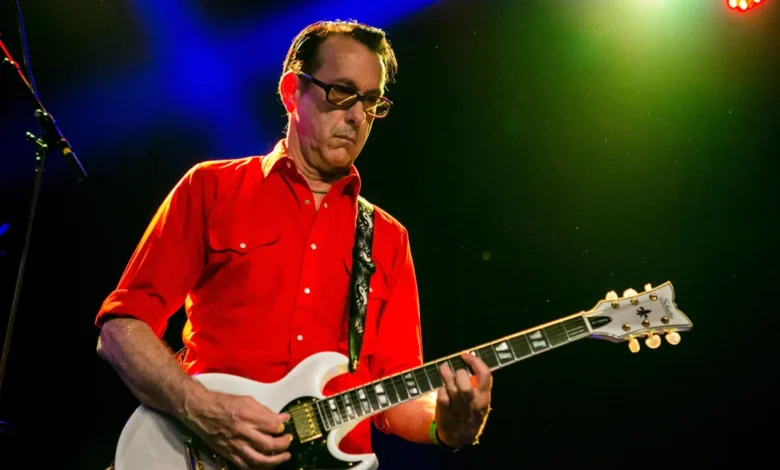
The enduring landscape of American punk rock was met with sobering news as representatives for the pioneering San Francisco band Dead Kennedys announced that founding guitarist East Bay Ray has been diagnosed with Parkinson’s disease. Despite the progressive neurological condition, the musician has indicated his intention to continue performing live alongside his bandmates for as long as his physical health and capabilities allow. The announcement, shared through the group’s official social media channels, highlights both the resilience of a seminal figure in underground music and the ongoing health challenges facing members of punk’s first generation as they enter their later years.
The disclosure arrives during an active period for the group, which currently has a series of West Coast tour dates scheduled to begin in October at Seattle’s Showbox at the Market and conclude at the Riverside Municipal Auditorium in Southern California. Management and band representatives have noted that East Bay Ray’s participation in these upcoming performances will depend directly on how his health permits.
A Foundational Force in Hardcore Punk
Born Raymond John Pepperell, East Bay Ray co-founded Dead Kennedys in San Francisco in 1978 during the explosive first wave of American punk rock. Characterized by his signature guitar style—which blended surf rock reverb, screeching feedback, jazz-influenced discordance, and razor-sharp political commentary—Ray helped define the sonic blueprint for hardcore punk and alternative rock.
Alongside original vocalist Jello Biafra, bassist Klaus Flouride, and the late drummer D.H. Peligro, Dead Kennedys produced some of the most influential and provocative music of the late 20th century. Their debut single, "California Über Alles" (1979), and subsequent anthems like "Holiday in Cambodia" (1980) established the band as fierce critics of American politics, corporate media, and right-wing authoritarianism. Their landmark 1980 debut album, Fresh Fruit for Rotting Vegetables, remains a cornerstone of punk history, celebrated for its raw energy and uncompromising lyrical bite.
The band originally disbanded in 1986 following internal tensions and legal battles over songwriting royalties and the commercial use of their catalog. However, in 2001, East Bay Ray, Klaus Flouride, and D.H. Peligro reunited under the Dead Kennedys moniker, enlisting a succession of frontmen—most notably Ron "Skip" Greer, who has served as the band’s lead vocalist since 2008. Drummer Steve Wilson joined the lineup following the death of D.H. Peligro in October 2022.
Understanding Parkinson’s Disease in the Performing Arts
Parkinson’s disease is a progressive disorder of the nervous system that affects movement, often developing gradually and starting with barely noticeable tremors in just one hand. As the condition progresses, symptoms can include muscle stiffness, slowness of movement (bradykinesia), impaired balance, and postural instability. While the disease does not inherently impair cognitive function in all patients, its physical manifestations can present severe hurdles for instrumental musicians who rely on fine motor control, hand-eye coordination, and physical stamina.
In recent years, the music community has increasingly confronted the reality of aging legacy artists managing neurodegenerative conditions. Musicians across genres—from heavy metal and rock to blues and jazz—have had to navigate public diagnoses of Parkinson’s and similar disorders, prompting conversations about accessibility, career longevity, and the therapeutic benefits of continued performance.
For East Bay Ray, the decision to continue touring reflects a deep-rooted commitment to live performance and the audience connections forged over more than four decades. According to the band’s statement, Ray expressed profound appreciation for the outpouring of support from fans worldwide following the announcement of his diagnosis.
A Year of Health Challenges for the Extended Dead Kennedys Family
The news of East Bay Ray’s diagnosis compounds a difficult year for the broader community surrounding Dead Kennedys. Earlier this year, Jello Biafra—the band’s iconic former frontman, who did not participate in the 2001 reunion and has maintained a decades-long estrangement from his former bandmates—suffered a stroke.
Updates provided through Biafra’s official social media channels in May offered a more encouraging outlook on his recovery, noting that his speech had largely returned to normal and that his cognitive functions remained intact. However, the update also acknowledged ongoing physical rehabilitation, specifically addressing lingering weakness on his left side.
The simultaneous health battles faced by two of the most pivotal architects of the Dead Kennedys catalog underscore the passage of time within the punk community. Artists who emerged as fierce, youthful iconoclasts in the late 1970s and 1980s are now navigating the complexities of aging, shining a light on the vulnerability of figures who once symbolized rebellious invulnerability.
Tour Logistics and Fan Expectations
As the Dead Kennedys prepare for their upcoming West Coast itinerary, concertgoers and industry observers alike are weighing the implications of the band’s touring future. The scheduled run includes prominent venues, beginning in Seattle and making stops across the Pacific Northwest and California.
While ticket holders have been advised that performances remain subject to East Bay Ray’s health status, the band’s willingness to be transparent about the diagnosis has fostered an environment of support and solidarity among their fanbase. Promoters and venue operators have not announced any immediate cancellations or alterations to the tour schedule, indicating that planning is proceeding with cautious optimism.
Legacy and Cultural Impact
The resilience demonstrated by East Bay Ray aligns with the DIY ethos that has defined his career for nearly half a century. From the independent release of their early material on Alternative Tentacles to navigating decades of industry disputes and lineup changes, Dead Kennedys have consistently operated on their own terms.
As the band prepares to take the stage under these new circumstances, the focus shifts from the logistical hurdles of touring to the enduring cultural footprint of a guitarist whose jagged chords and surf-infused punk stylings influenced generations of alternative musicians, from Nirvana to Green Day. Whether behind the mixing board, in the studio, or under the stage lights, East Bay Ray’s contribution to modern rock history remains indelible, anchored by a determination to keep playing for as long as his health permits.