A routine day in the agricultural fields of the Philippines took a dramatic and alarming turn for a local rice farmer when her right arm and leg suddenly began to shake uncontrollably. The incident, which lasted approximately one minute, occurred without any preceding symptoms such as a severe headache, acute confusion, or localized bodily weakness. Despite feeling entirely well moments before, the sudden focal motor seizure prompted the patient to seek urgent medical attention at a local emergency department. Upon arrival, attending physicians conducted a comprehensive physical examination, which initially yielded unremarkable results, showing no obvious neurological deficits or systemic abnormalities. However, subsequent neuroimaging unveiled an unexpected and startling medical diagnosis: parasitic worm eggs embedded within her cerebral tissue.
Detailed findings of the case were recently documented in a medical report published in the New England Journal of Medicine. According to the treating physicians, the patient presented with classic indicators of neuroschistosomiasis, a rare and potentially debilitating neurological complication arising from an infection by parasitic blood flukes belonging to the genus Schistosoma. In the specific geographic context of the Philippines, infections are predominantly attributed to Schistosoma japonicum. While the species name references Japan, rigorous public health initiatives have successfully eliminated the parasite from that country; it remains endemic, however, in select regions of China, parts of Indonesia, and various rural agricultural communities throughout the Philippines.
The Diagnostic Journey and Hospital Admission
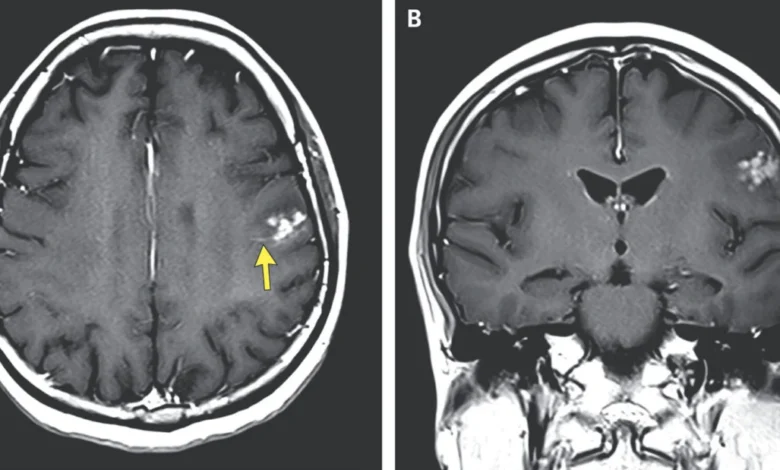
Following the initial unremarkable physical examination, the medical team opted to perform advanced diagnostic imaging to investigate the underlying cause of the patient’s sudden seizure. Magnetic resonance imaging (MRI) of the brain provided a clear and revealing visualization of the neurological structures within the left frontal lobe. The scan exposed a distinct, bright cluster of nodules surrounded by localized fluid accumulation, known clinically as edema.
Medical professionals immediately recognized the distinct radiological signature, suspecting that the clusters were not tumors or vascular malformations, but rather the deposition of parasitic worm eggs. The presence of these foreign bodies in the cerebral cortex explained the sudden disruption of electrical activity in the brain, which manifested as the uncontrollable shaking of her right limbs. Neuroschistosomiasis occurs when parasite eggs, which typically travel through the venous system to the liver and intestines, aberrantly migrate or are carried by blood flow into the central nervous system, where they trigger inflammatory immune responses and granulomatous lesions.
The Complex Life Cycle of Schistosoma japonicum
To fully understand how a rice farmer in a rural community contracted a brain parasite, medical experts examine the intricate and complex life cycle of Schistosoma japonicum. The parasitic cycle begins when infected mammalian hosts—which can include humans, water buffalo, rodents, and other livestock—shed parasite eggs through their feces or urine into freshwater environments.
Once introduced to water under favorable environmental conditions, the microscopic eggs hatch into a free-swimming larval stage known as miracidia. These larvae actively seek out specific species of amphibious or aquatic freshwater snails, which serve as the obligatory intermediate host. Upon locating a suitable snail, the miracidia bore into its soft tissues and undergo significant biological development, passing through two distinct larval stages within the mollusk.
Following this intra-molluscan development phase, late-stage larvae, designated as cercariae, emerge en masse from the snail host. These free-swimming cercariae possess a characteristic forked tail that aids in propulsion as they search for a definitive mammalian host. Unlike many other waterborne parasites that must be ingested, Schistosoma cercariae possess the remarkable and dangerous biological capability to directly penetrate intact human skin.
Pathways of Infection and Migration Within the Human Body
The moment a human host wades, bathes, or works in infested water—such as flooded rice paddies—cercariae attach to the skin and secrete proteolytic enzymes that allow them to burrow through the epidermal layers. This mode of transmission directly links agricultural occupations in endemic regions to a high risk of exposure.
Once inside the vascular system, the transformed larvae begin a complex migration through the human body. They navigate the bloodstream, passing through the lungs and the heart before establishing residence in the intrahepatic portal system—the large blood vessels leading to the liver. In these vascular environments, the larvae mature into adult male and female worms.
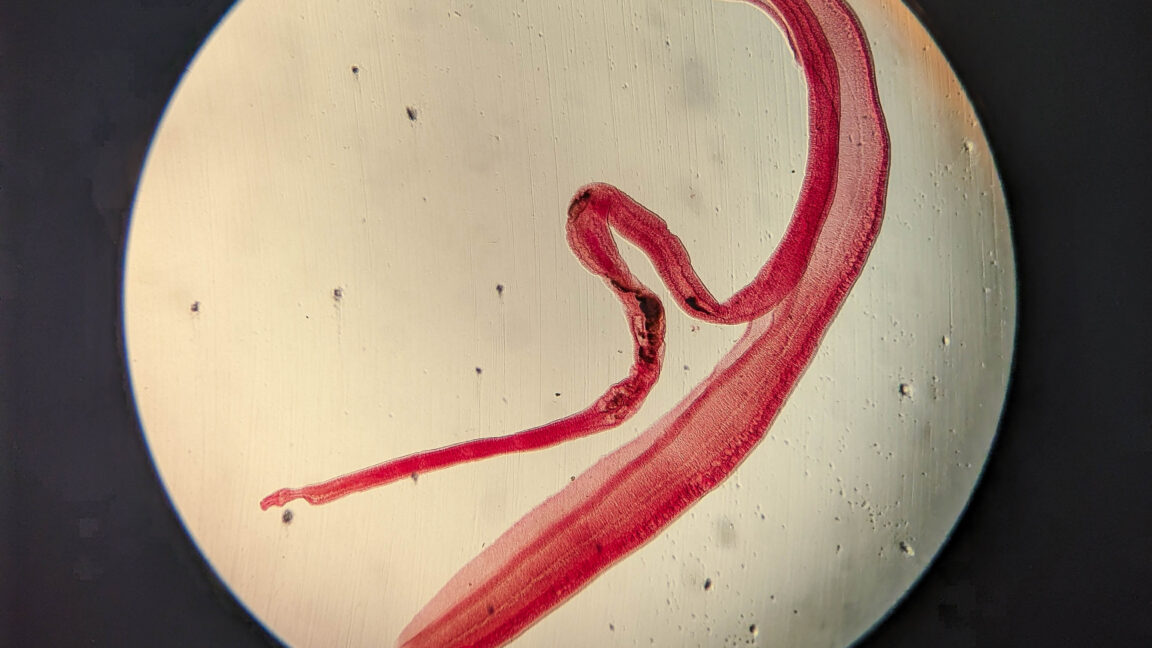
The adult parasites form permanent physical pairings, with the slender female worm residing securely within a specialized ventral groove (the gynecophoral canal) of the larger male worm. These paired adults ultimately migrate to the mesenteric venules surrounding the intestines. Here, the females begin producing hundreds of eggs daily. While many eggs successfully pierce the intestinal walls to be excreted and perpetuate the life cycle, a fraction of the eggs can become dislodged from the portal circulation, entering arterial pathways that carry them to ectopic locations, including the lungs, spinal cord, and brain. When eggs lodge in cerebral blood vessels, they provoke severe localized inflammation, leading to clinical manifestations such as seizures, cognitive impairment, or focal neurological deficits.
Broader Public Health Implications and Endemic Risks
The case of the Filipino rice farmer underscores the persistent public health challenges posed by schistosomiasis in tropical and subtropical agricultural regions. Worldwide, hundreds of millions of people remain at risk of schistosomiasis, with rural workers, fishermen, and children facing the highest exposure levels due to daily contact with untreated water sources utilized for irrigation and domestic chores.
Public health authorities emphasize that occupational exposure in agriculture remains a primary driver of transmission. Rice farming, which requires workers to spend extended periods knee-deep in flooded, stagnant, or slow-moving water where amphibious snails thrive, creates an ideal environment for the persistence of the parasite cycle. Without adequate sanitation infrastructure, protective footwear, and widespread access to anthelminthic treatments like praziquantel, rural populations remain highly vulnerable to both intestinal schistosomiasis and its rare ectopic complications, such as neuroschistosomiasis.
Medical Analysis and Treatment Protocols
In managing cases of neuroschistosomiasis, multidisciplinary medical teams must balance antiparasitic therapy with interventions designed to control neurological inflammation. The primary pharmacological intervention typically involves the administration of praziquantel, an oral medication effective against adult blood flukes. However, killing adult worms or clearing localized egg deposits can sometimes provoke a transient exacerbation of inflammatory responses as the immune system reacts to dying parasitic tissue.
Consequently, clinicians frequently combine antiparasitic medications with a course of corticosteroids to reduce cerebral edema and manage associated symptoms such as seizures. For the rice farmer in the Philippines, prompt emergency evaluation, precise neuroimaging diagnostics, and targeted therapeutic management are essential steps toward mitigating long-term neurological damage and preventing recurrent seizures.
Public health officials and infectious disease specialists continue to advocate for comprehensive control strategies in endemic zones. These measures include mass drug administration campaigns in high-risk communities, improved sanitation facilities to prevent water contamination, snail control initiatives to disrupt the transmission cycle, and educational outreach aimed at agricultural workers regarding the risks of occupational water exposure. Through these concerted efforts, medical and public health communities aim to reduce the incidence of severe complications like neuroschistosomiasis and ultimately move closer to the elimination of the disease in the Western Pacific region.