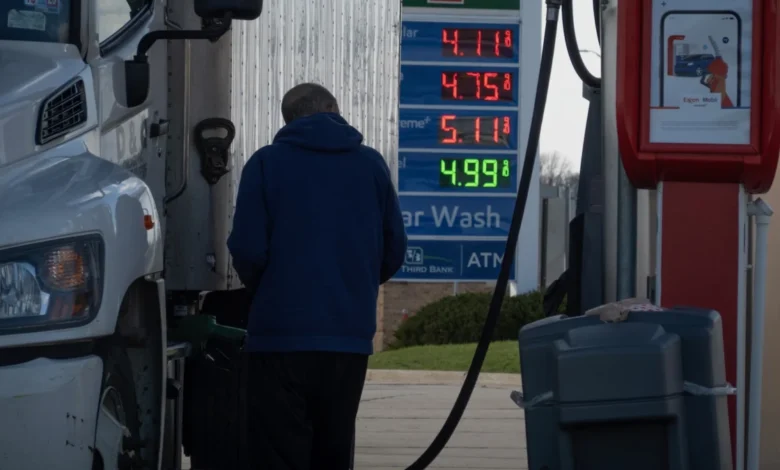
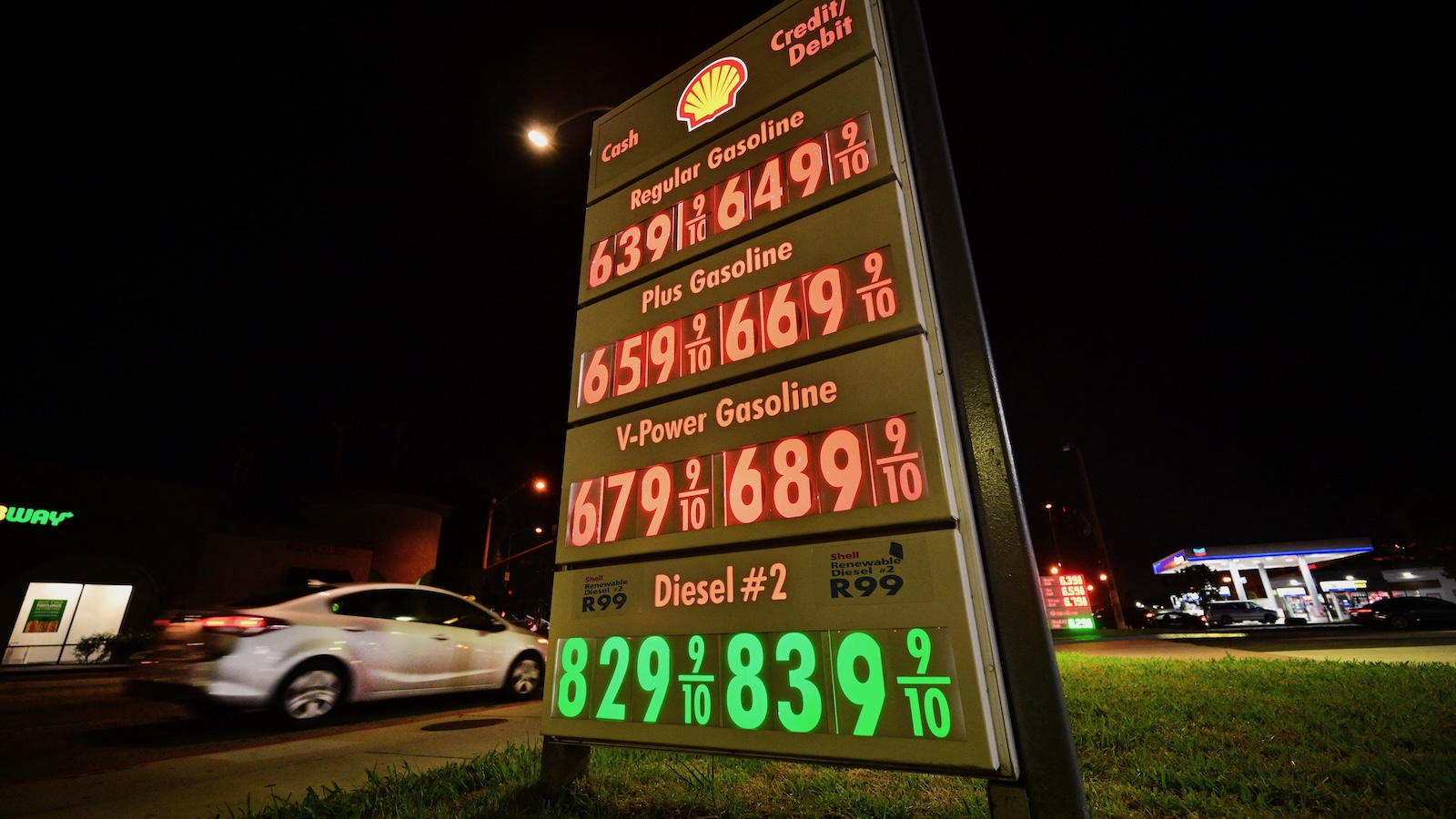
The national average price for diesel fuel has reached an unprecedented $6.52 per gallon, marking a consistent upward trend that has gripped the United States throughout the month. This historic surge, exacerbated by the ongoing conflict between the United States, Israel, and Iran, has reignited a fierce political debate over whether the federal government should implement a ban on the export of domestic diesel to stabilize the supply chain. President Donald Trump, speaking from the sidelines of the United Nations General Assembly in New York, officially threw his support behind the proposal, signaling a potential shift in administration policy that has pitted populist economic strategies against traditional market-based energy sector practices.
While gasoline prices often dominate headlines, the rapid escalation in diesel costs represents a more fundamental threat to the U.S. economy. As the primary propellant for the nation’s heavy-duty trucking fleets, freight rail, maritime shipping, and agricultural machinery, diesel is the lifeblood of domestic logistics. The recent 80 percent increase in prices since the onset of the conflict in the Middle East has effectively acted as a tax on nearly every consumer good, from grocery store produce to construction materials. With prices rising by approximately one dollar per gallon in September alone, the pressure on policymakers to intervene has reached a breaking point.
A Chronology of the Crisis
The current volatility in the energy market can be traced back to the initial military engagements between the U.S.-Israel coalition and Iran earlier this year. The geopolitical instability significantly disrupted global shipping lanes and oil transit points, creating an immediate ripple effect in the distillates market.
- Early 2026: Initial hostilities break out, leading to immediate fluctuations in global crude prices.
- Mid-2026: As the war persists, diesel inventories in the United States fail to keep pace with high demand, causing the first significant price spikes of the year.
- September 2026: Diesel prices begin setting record highs on a daily basis. The national average surpasses the $6.00 mark, triggering alarm among industry leaders and agricultural groups.
- September 22, 2026: President Trump publicly endorses an export ban during the UN General Assembly, stating, "I’ve said let’s not send out the diesel. I’ve called for it within my people."
The Legislative Push and Economic Impact
The political appetite for an export ban is gaining traction among lawmakers representing rural and agricultural states. Senator Chuck Grassley, a Democrat from Iowa, has been a vocal proponent of the measure, drawing a direct parallel between the current energy situation and the federal government’s restrictions on high-tech exports. "If our government can embargo chips to China, it can embargo diesel to help American farmers and truckers," Grassley wrote on the social media platform X.
His sentiment is shared by prominent Republican leaders, including Representative Ashley Hinson and Senate Majority Leader John Thune of South Dakota. The logic behind their advocacy is rooted in the basic principle of supply and demand: by keeping domestically refined diesel within U.S. borders, the total available supply would increase, theoretically lowering the price for local consumers.
Data from the Watson Institute’s "Iran War Cost" tracker, which monitors the economic fallout of the conflict, indicates that the crisis has already cost the average American household nearly $400 in direct fuel-related expenses. The aggregate cost to the U.S. economy has ballooned to over $51 billion, a figure that analysts warn could continue to rise as long as supply remains constrained and global demand stays high. Jeff Colgan, a political scientist at Brown University, suggests that an export ban could serve as a necessary, albeit drastic, circuit breaker to prevent further economic deterioration.
The Opposition: Market Realities and Industry Pushback
Despite the political appeal, the proposal faces significant resistance from industry experts and free-market economists. Patrick De Haan, head of petroleum analysis for GasBuddy, argues that the global nature of the energy market renders a domestic export ban largely ineffective. "U.S. diesel prices are determined not by a U.S. supply and demand balance, but a global one," De Haan stated. "Keeping distillates and diesel home does not change the world price."
The American Fuel & Petrochemical Manufacturers (AFPM) association has been even more explicit in its criticism. In a formal press release, the organization warned that such a policy would be counterproductive, potentially harming the very industries it intends to protect. "Export bans do not create more fuel for Americans," the statement read. "They reduce U.S. fuel production, put upward pressure on prices, weaken energy security, and hand market share to foreign competitors."
Within the administration and the Republican caucus, there is also notable skepticism. Senator John Cornyn of Texas, representing the nation’s largest oil-producing state, characterized the move as a "gimmick." Meanwhile, Interior Secretary Doug Burgum has warned that such an intervention could result in unintended negative consequences for the American economy, echoing concerns that market manipulation rarely produces the desired outcome in a globalized commodity sector.
Historical Context: The 1975 Precedent
The current discourse is not without historical precedent. Following the OPEC oil embargo in the 1970s, the U.S. Congress passed the Energy Policy and Conservation Act of 1975, which effectively prohibited the export of crude oil. That ban remained in place for four decades, serving as a pillar of American energy policy until it was repealed in 2015 during the Obama administration.
Proponents of the current ban argue that the 1975 act proved that the government has the tools to protect domestic energy security during times of crisis. However, opponents emphasize that the global energy landscape in 2026 is vastly different from that of the 1970s. Modern refineries are highly integrated into global supply chains, and reversing the liberalization of the oil market could lead to retaliatory measures from trade partners and long-term damage to the U.S. refining sector.
A Call for Nuanced Policy
As the debate continues to unfold, some energy policy experts are advocating for a more moderate path. Tyson Slocum, energy program director at the consumer advocacy group Public Citizen, argues that the current "all-or-nothing" framing of the debate is insufficient. Slocum suggests that a total ban may not be necessary, but that targeted, partial restrictions on the volume of diesel shipped overseas could provide relief without causing the market distortions feared by industry leaders.
"The debate is so absurdly simplistic," Slocum remarked. "There are many options in-between, including how much diesel gets shipped overseas rather than cutting off that supply entirely." He contends that even modest, temporary limitations on exports could yield a significant short-term reduction in domestic prices, providing a much-needed buffer for truckers, farmers, and logistics companies struggling to maintain operations.
Implications and Future Outlook
The road ahead remains uncertain. While the White House initially signaled that it was not considering an export ban, the President’s recent public comments have injected new volatility into the discussion. The effectiveness of any potential ban would depend heavily on the specifics of the executive action or legislation, as well as the reaction of global energy markets.
For now, the American public remains caught in the middle of a complex geopolitical and economic tug-of-war. Senator Peter Welch, a Democrat from Vermont, offered a stark assessment of the political maneuvering surrounding the issue, suggesting that focusing on the symptoms of the price spike rather than the root cause—the conflict with Iran—is a strategic miscalculation. "If he’s serious about lowering prices of oil, gas, and home heating oil, he needs to end his illegal war with Iran," Welch said.
As the administration weighs its options, the cost of diesel remains a critical indicator of the nation’s economic health. Whether the government chooses to rely on traditional market mechanisms or turns toward the protectionist policies of the past, the outcome will have profound implications for the cost of living, the stability of the supply chain, and the broader U.S. position in the global energy market. The coming weeks will likely see increased pressure on Congress to either move toward a legislative solution or for the executive branch to clarify its stance on the viability of an export ban.