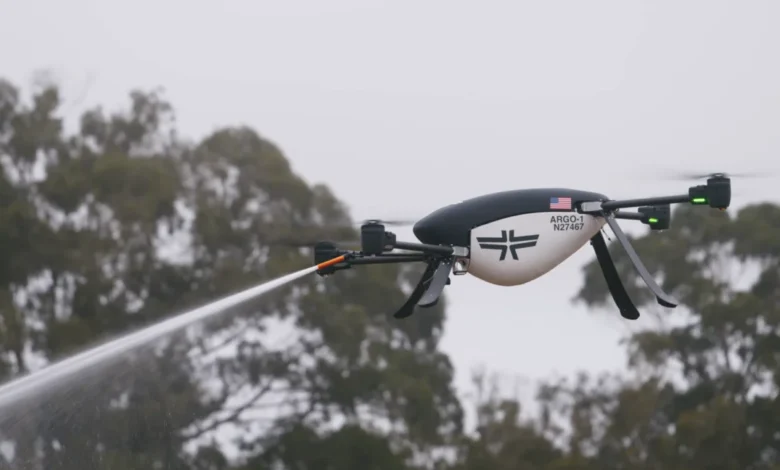
Drones capable of spraying water and fire retardants have undergone extensive practice sessions this summer in California and Alaska, demonstrating their potential as a rapid-response tool to combat wildfires early, a critical development as climate change transforms wildfire season into a nearly year-round risk across much of the United States. These trials highlight a significant shift in firefighting strategy, aiming to leverage advanced robotics for initial attack operations, a crucial phase in preventing small fires from escalating into catastrophic blazes.
The intensifying frequency, scale, and destructiveness of wildfires across North America, particularly in the Western United States and boreal regions of Alaska, underscore an urgent need for innovative suppression technologies. Traditional firefighting methods, while indispensable, face increasing challenges from longer dry seasons, higher temperatures, and an expansion of the wildland-urban interface. It is against this backdrop that autonomous drone systems are being rigorously evaluated, not as a replacement for human firefighters or large airtankers, but as a vital augmentation to existing capabilities, particularly for rapid initial attack.
The Escalating Wildfire Threat and the Imperative for Innovation
The statistics paint a stark picture of the escalating wildfire crisis. According to the National Interagency Fire Center (NIFC), the United States has seen an average of over 60,000 wildfires burning approximately 7.5 million acres annually over the past decade. California, in particular, has experienced several of its largest and most destructive fire seasons in recent memory, with billions of dollars in property damage, significant loss of life, and widespread air quality degradation. The Mendocino Complex Fire in 2018, the August Complex in 2020, and the Dixie Fire in 2021 each surpassed one million acres, illustrating the unprecedented scale of modern wildfires. Alaska, with its vast and remote landscapes, also contends with massive fires, often consuming millions of acres of forest and tundra, posing unique logistical challenges due to its sparse infrastructure.
Climate change is widely recognized as the primary driver behind this phenomenon. Rising global temperatures contribute to more frequent and intense droughts, earlier snowmelt, and increased evaporation, drying out vegetation and creating abundant fuel loads. Furthermore, insect outbreaks, exacerbated by warmer winters, weaken forests, making them more susceptible to ignition. The convergence of these factors has extended the traditional "fire season" into a nearly continuous threat, placing immense strain on firefighting resources and personnel. This prolonged and intensified threat necessitates a re-evaluation of current strategies and a concerted push towards technological solutions that can enhance speed, safety, and efficiency in suppression efforts.
Groundbreaking Field Tests in California and Alaska
This summer’s field tests represent a significant leap forward in integrating uncrewed aerial systems (UAS) into wildfire management. The California Department of Forestry and Fire Protection (CAL FIRE), a leading agency in wildfire suppression, conducted a pivotal demonstration on July 15. This exercise involved a coordinated swarm of five autonomous drones, which collectively deployed between 500 and 1,000 gallons of fire-suppressing foam. The demonstration, reported by TV station KPMH, was organized in collaboration with the nonprofit FireWERX and Seneca, a California-based company at the forefront of developing these drone technologies. Seneca plans to make its drones commercially available starting in 2026, signaling a near-term transition from experimental deployment to operational use.
Similar tests have been conducted in Alaska, where the vast, often roadless terrain presents unique challenges for rapid response. While specific details of the Alaskan trials remain under wraps, the focus there has largely been on the ability of drones to access remote ignitions quickly, potentially in areas inaccessible to ground crews or too distant for immediate manned aircraft deployment. The rugged topography and extreme weather conditions in Alaska provide a robust testing ground for the durability and operational reliability of these autonomous systems.
The Seneca Argo-1: A Closer Look at the Technology
At the heart of these demonstrations is Seneca’s Argo-1 drone, a specialized UAS designed for initial attack operations. Each Argo-1 drone is capable of carrying approximately 100 pounds of water or fire retardant, equivalent to about 12 gallons. While this payload is significantly smaller than the thousands of gallons carried by large airtankers, the strategic advantage lies in the drones’ ability to operate in coordinated swarms. Typically, four to six Argo-1 drones work in tandem, allowing for a combined payload delivery that can be crucial in the nascent stages of a fire.
The operational sequence of these drones exemplifies their advanced autonomy. Once a human operator uploads a GPS waypoint corresponding to a detected ignition, the drones autonomously navigate to the target area. Utilizing an array of onboard sensors, including thermal and optical cameras, they are programmed to detect the heat signature of a fire, pinpointing its exact location and size. As reported by HeliOps Magazine, the drones then determine the optimal hovering altitude before executing a sequential spray pattern, with each drone lining up to deliver its payload one after the other. This coordinated approach ensures efficient coverage and maximizes the impact of the distributed retardant.
The technical specifications of the Argo-1 highlight both its strengths and current limitations. With a fully loaded round trip range of approximately 10 miles and an average cruising speed of about 30 miles per hour, these drones are ideally suited for localized, rapid deployment. Their relatively short flight range necessitates either pre-positioning in fire-prone areas or transportation by ground vehicle to the vicinity of an ignition. However, their design facilitates ease of deployment: each drone can fit comfortably in the back of a standard pickup truck with the tailgate down, and two individuals can manually carry an empty unit, emphasizing their logistical flexibility and ability to reach remote locations quickly.
The XPRIZE Wildfire: Catalyzing Innovation
Further accelerating the development and integration of advanced wildfire technologies is the $11 million XPRIZE Wildfire competition. Launched with the ambitious goal of "developing novel, autonomous, and integrated solutions for rapid, accurate, and safe detection and suppression of wildfires within the first 10 minutes of ignition," the competition underscores the global recognition of the need for transformative solutions. The "10-minute rule" is a critical concept in wildfire suppression, emphasizing that fires contained within this initial window are far less likely to grow into uncontrollable blazes. The XPRIZE seeks to foster breakthroughs in AI, robotics, and sensor technology to achieve this rapid response ideal.
Organizations like FireWERX, a non-profit dedicated to fostering innovation in wildfire management, play a crucial role in bridging the gap between technological development and operational implementation. By facilitating collaborations between private companies like Seneca and public agencies like CAL FIRE, FireWERX helps ensure that emerging technologies are rigorously tested in real-world scenarios and meet the practical demands of frontline firefighters. Their involvement in the CAL FIRE demonstration highlights the importance of multi-stakeholder partnerships in addressing complex environmental challenges.
Implications for Firefighter Safety and Operational Efficiency
The integration of autonomous drone swarms holds profound implications for firefighter safety. Wildfire suppression is one of the most dangerous professions, with firefighters regularly exposed to extreme heat, hazardous smoke, falling debris, and unpredictable fire behavior. By deploying drones for initial attack, particularly in areas with steep terrain, dense vegetation, or immediate danger to human crews, the risk to human life can be significantly mitigated. Drones can operate in conditions that might be too dangerous or inaccessible for ground personnel or even manned aircraft, providing a vital first line of defense.
From an operational efficiency standpoint, the speed of drone deployment is a game-changer. The ability to launch a swarm of drones within minutes of an ignition report can mean the difference between a small, manageable fire and a rapidly expanding inferno. While manned aircraft can deliver larger payloads, they require longer dispatch times, larger runways, and are subject to stricter operational windows, particularly regarding visibility and night flying. Drones, with their smaller footprint and potential for distributed deployment, offer a nimbler, more localized response capability.
Furthermore, the cost-effectiveness of drone operations, particularly for frequent, small-scale deployments, could prove substantial over time. The operational costs associated with large airtankers and helicopters, including fuel, maintenance, and highly trained pilots, are considerable. While the initial investment in drone technology and infrastructure may be significant, the long-term potential for reduced operational expenses and averted catastrophe costs presents a compelling economic argument.
Challenges and the Path Forward
Despite their immense potential, the widespread adoption of firefighting drones faces several challenges. Regulatory hurdles are prominent, particularly concerning the integration of Unmanned Aircraft Systems (UAS) into national airspace, especially in the vicinity of active wildfires where Temporary Flight Restrictions (TFRs) are often in place. Ensuring safe coexistence with manned firefighting aircraft, establishing clear communication protocols, and obtaining approvals for Beyond Visual Line of Sight (BVLOS) operations are critical regulatory considerations. The Federal Aviation Administration (FAA) is actively working with industry and public safety agencies to develop appropriate frameworks, but this remains a complex and evolving area.
Technical limitations also exist. The current payload capacity and flight range of drones like the Argo-1 mean they cannot replace large airtankers for massive fire suppression efforts in remote areas. Their effectiveness is primarily in the initial attack phase. Weather conditions, such as high winds, heavy rain, or extreme heat, can impact drone performance, battery life, and flight stability. Dense smoke can also challenge sensor accuracy and communication links.
The future of wildfire suppression will likely involve a multi-layered, integrated approach. Autonomous drone swarms are envisioned as one crucial component within a comprehensive system that includes advanced satellite and ground-based detection systems, AI-powered predictive modeling, traditional ground crews, and manned aerial assets. Drones could be pre-positioned at strategic locations, acting as forward operating bases for rapid deployment. They could also serve complementary roles, such as conducting real-time aerial surveillance, mapping fire perimeters, identifying hotspots, and providing critical intelligence to human incident commanders.
The ongoing trials in California and Alaska represent a pivotal moment in the evolution of wildfire management. As climate change continues to intensify the threat, the development and deployment of sophisticated autonomous systems like Seneca’s Argo-1 drones offer a beacon of hope. By augmenting human capabilities and providing a rapid, precise, and safer initial attack option, these technologies are poised to become an indispensable tool in the global effort to protect communities, ecosystems, and natural resources from the devastating impact of wildfires. The journey from demonstration to widespread operational integration is challenging, but the imperative for innovation has never been clearer.