Rescue crews across Afghanistan are engaged in a desperate search for survivors and the deceased amidst the debris of homes obliterated by devastating flash floods. Authorities have confirmed the deaths of nearly two dozen people, with more than 100 individuals still unaccounted for, following the deluge that swept through the eastern province of Nuristan. The unfolding tragedy underscores Afghanistan’s profound susceptibility to extreme weather events, a vulnerability amplified by decades of conflict, inadequate infrastructure, and the intensifying impacts of global climate change.
Devastation Strikes Nuristan Province
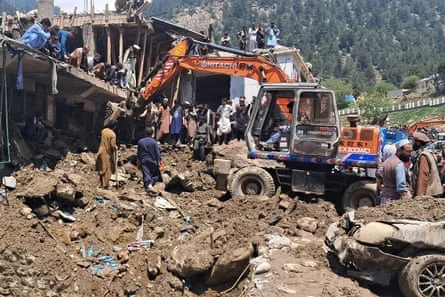
The catastrophe unfolded on Monday when torrents of water and mud engulfed communities in Nuristan, a rugged and remote province nestled in the Hindu Kush mountains. On Tuesday, Afghanistan’s national disaster management authority released grim figures, reporting that 23 lives had been lost, 80 people had sustained injuries, and over 100 remained missing. The provincial capital city of Parun was among the hardest-hit areas, where an undetermined number of buildings, many constructed from traditional mud and stone, crumbled under the force of the floodwaters. The scale of destruction suggests that entire villages may have been severely impacted, isolating residents and complicating rescue efforts in an already challenging terrain.
The immediate aftermath has seen local communities, often with limited resources and equipment, attempting to dig through the wreckage in a frantic effort to locate loved ones. Their resilience, though profound, is often overshadowed by the overwhelming nature of such disasters. Roads and communication lines, already tenuous in this mountainous region, have been severed, further impeding the deployment of professional search and rescue teams and the delivery of critical aid. The images emerging from Nuristan depict scenes of widespread devastation: homes reduced to rubble, personal belongings scattered across vast swathes of mud, and the visible despair of those who have lost everything.
A Chronology of Catastrophe and Lingering Threats
The flash floods in Nuristan on Monday were not an isolated incident but rather the latest in a series of extreme weather events plaguing Afghanistan. The immediate reporting from the national disaster management authority on Tuesday confirmed the initial casualty figures and the ongoing search. Crucially, this disaster unfolded against a backdrop of severe meteorological warnings. The Ministry of Transport and Civil Aviation’s meteorology department had, on Monday evening, issued an urgent forecast for more extreme weather. This forecast predicted heavy rain, thunderstorms, strong winds accompanied by dust and sand, and further flash floods across 10 of the country’s 34 provinces. The ministry explicitly cautioned residents to avoid riverbanks and other areas identified as high-risk for inundation, a warning that tragically proved prescient for Nuristan.
The rapid onset and destructive power of flash floods are particularly dangerous. Unlike riverine floods that develop over days, flash floods can occur within minutes or hours of intense rainfall, offering little to no time for evacuation. This characteristic makes them exceptionally lethal, especially in regions with steep terrain and poorly constructed housing. The Monday evening warning from the meteorological department highlighted the systemic challenge Afghanistan faces: predicting such events is one thing, but effectively communicating those warnings and enabling timely preventative action in remote, infrastructure-poor regions is another entirely. The concurrent forecast of dust and sand storms also points to broader atmospheric instability, often a precursor or companion to severe weather patterns in arid and semi-arid regions.
Afghanistan’s Acute Vulnerability: A Confluence of Factors
Afghanistan is consistently ranked among the countries most vulnerable to the impacts of climate change, despite being one of the lowest emitters of greenhouse gases. The recurring cycle of natural disasters—from devastating flash floods and landslides to severe droughts and harsh winters—is intrinsically linked to a complex interplay of geographical, environmental, socio-economic, and political factors.
Geographically, much of Afghanistan is mountainous, characterized by steep valleys and arid or semi-arid plains. This topography makes the country highly susceptible to flash floods. When heavy rainfall occurs, particularly after periods of drought which harden the soil, water runs off rapidly, accumulating quickly into destructive torrents. Seasonal snowmelt, especially in spring, also contributes significantly to river swelling and flood risks.
The environmental degradation in Afghanistan exacerbates these natural vulnerabilities. Decades of conflict have led to widespread deforestation, as trees were cut for fuel or to clear land. Forests act as natural sponges, absorbing rainwater and stabilizing soil. Their absence means rainwater runs off faster, increasing the volume and speed of floodwaters and leading to severe soil erosion and landslides. This loss of natural protective barriers directly amplifies the destructive power of flash floods.
Economically, Afghanistan remains one of the poorest nations globally, with limited resources to invest in disaster preparedness, early warning systems, resilient infrastructure, or effective response mechanisms. Many rural communities, like those in Nuristan, live in homes built from traditional materials such as mud, which offer scant protection against sudden deluges. These structures, while culturally significant and locally appropriate for certain climates, are inherently fragile against the immense force of floodwaters. The lack of robust infrastructure extends to roads, bridges, and communication networks, which are frequently damaged or destroyed during disasters, isolating affected areas and hindering relief efforts.
Furthermore, decades of continuous conflict have severely crippled the country’s institutional capacity and diverted resources away from essential public services and infrastructure development. The ongoing political instability and international isolation following the Taliban’s takeover in August 2021 have only compounded these challenges. International aid, while crucial, often faces logistical hurdles and political complexities, making sustained and comprehensive disaster risk reduction efforts difficult to implement. The repeated cycle of destruction and reconstruction drains already scarce national resources, perpetuating a state of perpetual crisis for many communities.

Recurring Crises: A Pattern of Devastation
The Nuristan floods are part of a grim pattern of escalating natural disasters in Afghanistan. In 2024 alone, the country has endured a particularly severe season of extreme weather. Earlier this year, springtime flash floods claimed the lives of more than 300 people, a stark reminder of the widespread vulnerability. These devastating floods, which occurred primarily in May, saw torrents of water and mud crash through villages, wiping out homes, livestock, and agricultural land in several provinces, including Baghlan, Takhar, and Badakhshan. This single event highlighted the immense human cost and the fragile livelihoods of Afghan communities.
Prior to the springtime catastrophe, the country had already grappled with significant flooding and landslides. In the earlier months of the year, at least 110 people were killed by widespread flooding in various parts of the country. These events consistently disproportionately affect remote and impoverished rural areas, where communities have limited means to protect themselves or recover from such shocks. The cumulative impact of these successive disasters is immense, leading to widespread displacement, food insecurity, and a deepening humanitarian crisis for millions of Afghans already struggling with poverty and instability. The recurring nature of these events means that communities have little time to rebuild before the next disaster strikes, trapping them in a cycle of vulnerability and destitution.
Official Response and Ongoing Challenges
The immediate response to the Nuristan floods has focused on search and rescue operations, led by the national disaster management authority and local emergency services. However, the operational capacity is often stretched thin, particularly in remote and difficult-to-access regions like Nuristan. The challenging terrain, coupled with damaged infrastructure, makes it arduous to deploy heavy machinery, medical teams, and humanitarian aid. Helicopters, where available, become crucial for accessing isolated communities, but their operational range and availability are limited.
Statements from Afghan authorities consistently highlight the severe constraints they face. The government, operating under significant economic strain and international sanctions, possesses limited financial resources to mount large-scale, sustained disaster relief efforts. This often necessitates appeals for international assistance. Humanitarian organizations, both international and local, play a vital role in bridging these gaps, providing emergency shelter, food, clean water, medical aid, and psychological support to affected populations. However, their operations too are often hampered by security concerns, logistical challenges, and funding shortfalls.
The Ministry of Transport and Civil Aviation’s meteorology department’s proactive warning on Monday evening, while commendable, underscores the broader challenge of effective disaster risk reduction. While forecasting capabilities are improving, the critical link between early warning and early action remains weak in many parts of Afghanistan. This gap is due to a combination of factors: limited communication infrastructure in rural areas, lack of community-level preparedness plans, and insufficient resources for rapid evacuation or protective measures. The warning to avoid riverbanks is a standard, yet often difficult to adhere to, piece of advice in areas where communities live in close proximity to water sources essential for their livelihoods.
The Broader Humanitarian and Economic Aftermath
The immediate aftermath of the Nuristan floods, like previous disasters, will inevitably trigger a cascade of humanitarian crises. Thousands of people are likely to be displaced, their homes destroyed, leaving them without shelter, food, or clean water. The loss of livestock, which constitutes a primary asset for many rural families, will cripple livelihoods and exacerbate food insecurity. Agricultural land, essential for sustenance, may be rendered unusable due to siltation and erosion.
The health implications are also significant. Contaminated water sources, damaged sanitation facilities, and overcrowded temporary shelters create fertile ground for the spread of waterborne diseases such such as cholera and acute watery diarrhea. The lack of access to medical care in remote areas, compounded by damaged roads, further complicates the response to health emergencies. Children and the elderly are particularly vulnerable in such situations, facing heightened risks of malnutrition, exposure, and illness.
Economically, these recurrent disasters represent a significant setback for Afghanistan’s already struggling economy. The costs of search and rescue operations, emergency relief, and eventual reconstruction efforts place an immense burden on national coffers. The destruction of infrastructure, agricultural assets, and private property leads to long-term economic hardship for individuals and communities, hindering development and trapping people in cycles of poverty. For a nation heavily reliant on subsistence farming, the loss of crops and livestock can have catastrophic long-term effects on food security and national stability.
Towards Resilience Amidst Recurring Crises
The recurring nature and escalating intensity of natural disasters in Afghanistan demand a comprehensive and multi-faceted approach to disaster risk reduction and climate adaptation. This includes:
- Strengthening Early Warning Systems: Investing in robust meteorological monitoring and communication systems that can effectively reach remote communities, coupled with community-level preparedness plans and evacuation drills.
- Climate-Resilient Infrastructure: Prioritizing the construction of flood-resistant homes, roads, bridges, and irrigation systems. This also involves implementing nature-based solutions like reforestation and watershed management to reduce runoff and soil erosion.
- Livelihood Diversification and Protection: Supporting communities in diversifying their livelihoods beyond traditional rain-fed agriculture and providing mechanisms for asset protection, such as flood-resistant granaries and livestock shelters.
- International Cooperation and Funding: Given Afghanistan’s limited domestic resources, sustained international humanitarian aid and development funding are crucial for building long-term resilience. This requires overcoming political complexities to ensure aid reaches those most in need.
- Policy and Governance: Developing national policies that integrate disaster risk reduction and climate change adaptation into all sectors of development planning, with a strong emphasis on community participation.
The tragedy unfolding in Nuristan is a stark reminder of the urgent need for action. As rescue efforts continue, the international community and Afghan authorities face the daunting task of not only responding to the immediate crisis but also addressing the deeper systemic vulnerabilities that leave millions of Afghans at the mercy of an increasingly unpredictable climate. The human cost of inaction is simply too high.