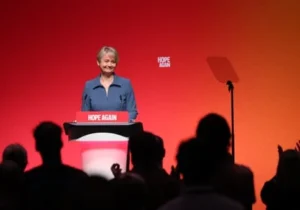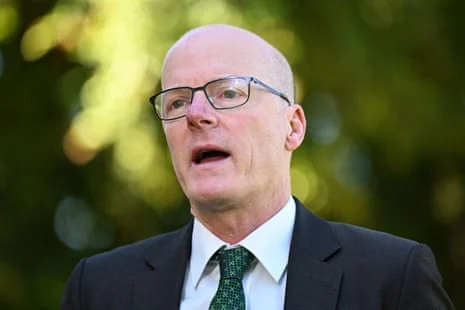
Federal opposition leader Angus Taylor has committed to enacting one of the most substantial reductions to immigration in modern Australian history, aiming to sharply restrict population growth as part of a broader conservative platform. Speaking before the New South Wales Liberal Party state council in Sydney on Saturday, Taylor launched a fierce critique of the federal Labor government, labeling it as “socialist in all but name” and accusing the administration of failing the country on multiple fronts. The address, delivered six months ahead of the upcoming New South Wales state election, serves as a clear strategic maneuver by the Coalition to energize its core base, reclaim disillusioned conservative voters from minor parties such as One Nation, and reframe national policy debates around economic management, cultural identity, and border control.
The high-stakes political speech comes at a time of mounting domestic pressure over housing affordability, infrastructure strain, and cost-of-living challenges—issues that critics and opposition figures frequently link to high net overseas migration numbers. By staking out a hardline position on population intake, Taylor is attempting to outpace the federal government’s recent policy adjustments and position the Coalition as the definitive authority on border integrity and national sovereignty.
Background Context and Political Motivations
The political landscape in Australia has grown increasingly volatile over the past four years, characterized by persistent economic headwinds, high inflation, and a critical shortage of housing stock relative to population growth. Immigration levels, which rebounded aggressively following the reopening of international borders post-pandemic, have become a primary flashpoint in federal and state politics.
In response to public anxiety surrounding housing availability and rental vacancy rates, the federal Labor government recently unveiled its own suite of stricter immigration measures. These policies include plans to transform a former quarantine facility into a dedicated detention center and restrictions designed to prevent international students from bringing family dependents to Australia. Rather than accepting these steps as sufficient, Taylor seized the moment to escalate the rhetoric, promising a significantly more aggressive contraction of the migrant intake.

Political analysts note that the Coalition’s strategy is heavily influenced by the shifting dynamics in state politics, particularly in New South Wales. With the state election looming in March, the Liberal-National Coalition faces mounting pressure from right-wing populist groups, notably One Nation, which have capitalized on voter discontent regarding cultural shifts and economic pressures. By addressing sensitive cultural topics—such as the prominence of Indigenous flags at official press conferences, the preservation of Australia Day, and proposed legislative adjustments regarding gender identity—Taylor is directly courting conservative voters who feel alienated by progressive social policies.
Key Elements of Taylor’s Address
During his wide-ranging speech in Sydney, Taylor acknowledged that the previous coalition government experienced policy shortcomings during its tenure, seeking to project a pragmatic approach while contrasting it sharply with the current administration’s record.
Focusing heavily on federal policies, Taylor asserted that Canberra has drifted toward heavy-handed state intervention over the past four years. “For the past four years, we’ve had a government in Canberra which is socialist in all but name,” Taylor told the packed state council.
On the cultural front, the opposition leader criticized the visual backdrop utilized by Labor ministers during public briefings. He argued that it was "divisive" for government leaders to conduct press conferences flanked by the Aboriginal and Torres Strait Islander flags alongside the Australian national flag, framing the practice as an erosion of national unity. Furthermore, he vowed to fiercely protect Australia Day and implement legislative reforms concerning gender recognition, stating: “We will not allow the ideologues and activists to deny the truth. Under a Coalition government I lead, we will end this lunacy.”
The centerpiece of his policy announcements, however, remained his pledge regarding population management. Reassuring party faithfuls of the Coalition’s resolve, Taylor declared unequivocally: “I will deliver one of the biggest cuts to immigration in Australian history.”

Chronology of Recent Political Events
To understand the trajectory of the current political debate, it is helpful to examine the sequence of events leading up to Taylor’s weekend address:
- Late 2024 to 2025: Persistent housing shortages and soaring rental costs dominate Australian news cycles, with economists and public policy institutes debating the correlation between high net overseas migration and housing market pressures.
- Mid-2026: The federal Labor administration introduces tighter visa regulations, targets international student dependent visas, and announces plans for specialized detention infrastructure to manage unauthorized arrivals and visa overstayers.
- September 2026: Federal opposition leader Angus Taylor delivers his keynote address to the NSW Liberal Party state council in Sydney, outlining aggressive plans for historical immigration cuts and cultural preservation.
- March 2027 (Upcoming): New South Wales state election scheduled, where the Coalition hopes to leverage its federal platform to recapture conservative electorates from minor parties.
Implications and Fact-Based Analysis
The implications of Taylor’s proposed immigration cuts, should the Coalition win power at the next federal election, would be profound across multiple sectors of the Australian economy.
Economists and industry groups often present a complex view of deep immigration reductions. On one hand, a significantly smaller intake could alleviate immediate pressure on metropolitan housing markets, public transport networks, and healthcare infrastructure. Critics of current migration rates argue that rapid population growth has outpaced the nation’s capacity to build adequate housing and deliver essential public services, leading to declining living standards in major urban centers.
On the other hand, business leaders, universities, and agricultural sectors frequently warn that drastic cuts to migration can trigger acute labor shortages. Australia’s aging population and reliance on overseas workers to fill gaps in aged care, agriculture, hospitality, and higher education mean that sudden reductions can restrict economic output and reduce tax revenue. Higher education institutions, in particular, rely heavily on international student fee revenues to fund research and institutional operations, making them vulnerable to restrictive visa caps.
Furthermore, Taylor’s cultural and social positioning carries distinct electoral risks and rewards. While these messages are tailored to consolidate the conservative base and attract voters leaning toward One Nation, they risk alienating moderate, inner-city voters who favor socially progressive policies and multicultural inclusivity. As the countdown to the New South Wales election continues, the political fallout from Saturday’s convention will likely shape campaign strategies across the political spectrum, forcing both major parties to carefully balance economic pragmatism with ideological appeals to their respective bases.