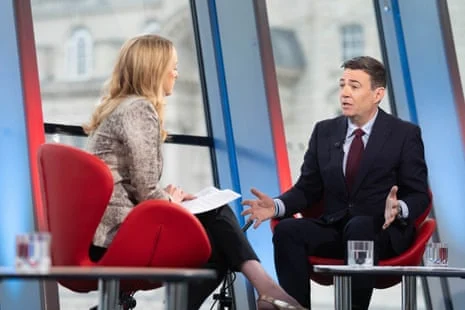
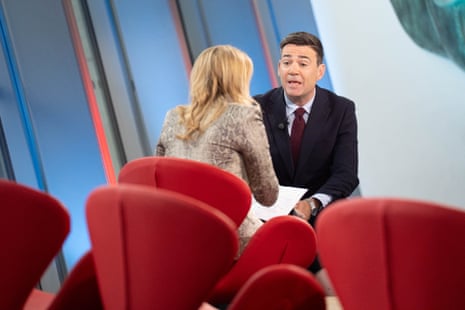
As the Labour Party conference formally opened in Liverpool under the banner of a renewed political landscape, Prime Minister Andy Burnham used a high-profile media appearance to outline a cautious, long-term roadmap for adult social care reform. Speaking on the BBC’s Sunday with Laura Kuenssberg, Burnham confirmed that sweeping structural overhauls to the care system would not be implemented prior to the next general election scheduled for 2029. Instead, he emphasized that his administration intends to build a comprehensive plan, seek cross-party consensus, and put the proposals directly to the British electorate for a mandate.
The announcement comes amidst a flurry of policy rollouts at the annual gathering, where the government has sought to cement its political turnaround following a challenging period that saw surging support for rival populist movements. With recent polling data indicating a significant stabilization for Labour, the leadership is attempting to tackle some of the nation’s most deeply entrenched structural deficits. Burnham’s remarks on social care have ignited a fresh debate regarding the intersection of public financing, healthcare sustainability, and political courage.
The Roadmap for Social Care Reform
Burnham made it clear that while the ambition to overhaul adult social care remains a cornerstone of his political vision, the process must be handled with meticulous care to maintain public trust. Addressing questions about potential tax rises, he confirmed that the government would strictly adhere to the commitments laid out in the Labour manifesto, which explicitly rule out increases to income tax, national insurance, and value-added tax (VAT).
When pressed on whether a special, ring-fenced tax could be introduced to fund a national care service operating on NHS principles—free at the point of delivery—Burnham stressed the necessity of transparency and public consent.

"Trust is really important to me here. I don’t think you can reform this system without it, without consensus," Burnham told the BBC. "So I’m saying to you that I will develop a very clear plan, and I will put that plan to the public at a general election. That will be where the plan gets tested. And people will then be able to decide."
The Prime Minister acknowledged that this approach might carry political risks, admitting he is prepared to court unpopularity to achieve lasting change. Rather than rushing legislation that could be vulnerable to political misrepresentation or scaremongering—such as opposition claims regarding a "dementia tax"—Burnham stated that a broad vision would be introduced during the conference, followed by detailed drafting aided by figures like Baroness Casey ahead of cross-party consultations.
Economic Pressures and Interconnectivity with the NHS
The state of England’s social care sector has long been described as a ticking time bomb, inextricably linked to the operational capacity of the National Health Service. Burnham warned that failing to address the crisis in social care would ultimately precipitate the collapse of the NHS itself, pointing to the persistent reality of "corridor care" and delayed hospital discharges.
According to data cited from health sector foundations, a universal care system could require substantial financial investment, though Burnham rejected claims that the net cost would reach prohibitive figures like £18bn without factoring in the existing financial burdens borne by individuals. Families across England currently face steep care charges, often depleting lifelong savings and losing residential properties to pay for essential support.
"Social care in England is as unfair as American health care, where the most vulnerable in society can lose everything," Burnham argued, drawing a sharp contrast between current practices and the universality of healthcare provision. He argued that preventative spending—keeping elderly and vulnerable citizens supported safely within their homes—would ultimately reduce unnecessary A&E admissions and alleviate acute pressures on public finances.
Context, Chronology, and Conference Developments
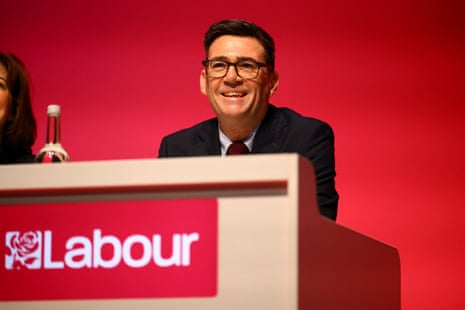
The timing of Burnham’s intervention coincides with the formal commencement of the Labour Party conference in Liverpool, an event heavily marked by strategic policy announcements designed to address housing, welfare, and public safety.
Chronologically, the government’s current policy framework has evolved rapidly since the leadership transition. Earlier in the week, Labour unveiled several key initiatives:
- Your First Home Scheme: A revived equity loan program aimed at assisting first-time buyers with a modest 2.5% deposit, designed to bypass the reliance on the "bank of mum and dad."
- Expanded Jobs Guarantee: An extension of the employment support program, set to offer guaranteed voluntary roles, mental health mentoring, and wage subsidies from April 2027 to young individuals on health benefits.
- Empty Dwelling Management Orders (EDMOs): Empowering local councils to take over properties left vacant for more than six months to combat housing shortages and property degradation.
These domestic initiatives are running parallel to broader governmental challenges, including managing public sector expenditures, navigating ongoing geopolitical tensions affecting economic stability, and addressing domestic security concerns.
Immigration, Public Order, and Welfare Spending
Beyond social care, Burnham’s interview covered several high-stakes domestic policy areas, notably immigration and public order. Responding to questions regarding recent protests and the emergence of masked anti-migrant demonstrations in southern English towns, Burnham condemned the actions as "unacceptable" and warned against the cultivation of fear and intimidation on British streets.
While acknowledging the public’s genuine concerns regarding immigration management, the Prime Minister highlighted positive statistical trends under the current administration, noting that net migration has decreased significantly compared to previous legislative eras, and small boat crossings have experienced a notable decline year-on-year. However, he sidestepped direct inquiries regarding offshore processing models such as sending asylum seekers to Albania, choosing instead to praise the ongoing enforcement strategies managed by Home Secretary Shabana Mahmood.
On the subject of welfare reform, Burnham expressed a desire to see overall spending decrease sustainably by the time of the next election, though he cautioned against implementing "crude cuts." He argued that arbitrary reductions would only destabilize vulnerable individuals, ultimately shifting fiscal burdens to other parts of the public sector. Instead, the government is leaning into vocational education pathways and specialized reviews, such as the forthcoming findings by Alan Milburn, to reduce the cohort of young people not in education, employment, or training (NEETs).
Broader Implications and Political Analysis
Burnham’s deliberate choice to defer social care reform until a post-2029 electoral mandate highlights a strategic calculation: avoiding the legislative missteps and political fallout that plagued previous administrations attempting similar overhauls. By committing to a transparent, manifesto-backed approach, the Prime Minister is attempting to rewrite the playbook on how structural generational reforms are negotiated in Westminster.
Political analysts note that while this strategy insulates the government from immediate fiscal shock and accusations of broken tax promises, it also leaves millions of aging citizens and strained local authorities waiting years for systemic relief. The success of Burnham’s strategy will depend heavily on whether his administration can successfully cultivate cross-party consensus and convince a skeptical public that a restructured financing model offers genuine fairness over the status quo. As the conference proceeds in Liverpool, attention will now turn to Burnham’s upcoming address, where the broader philosophical outlines of his reform agenda will face their first major test before party delegates and the nation at large.