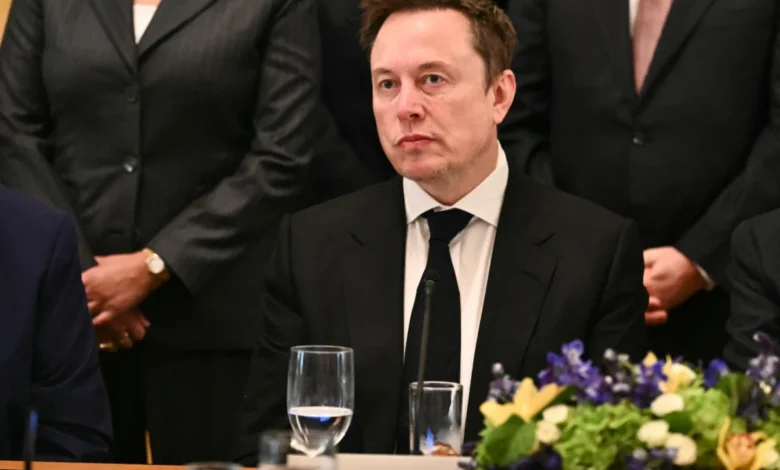
Months after billionaire entrepreneur and X owner Elon Musk publicly criticized acclaimed filmmaker Christopher Nolan and vowed to produce a rival adaptation of Homer’s ancient epic, the first fruits of that promise have materialized. Grok Imagine, the artificial intelligence media generation tool integrated into the X platform, has released the first seven minutes of a project titled The Odyssey.
The release marks the latest chapter in a high-profile cultural clash that bridges Hollywood box office dominance, online political discourse, and the rapid advancement of generative artificial intelligence technologies. While Nolan’s cinematic vision has reaped unprecedented financial rewards and critical acclaim, Musk’s AI-driven counter-offensive has reignited debates regarding historical authenticity, artistic integrity, and the commercial viability of AI-generated cinema.
The Genesis of a Cinematic Feud
The roots of this technological and cultural rivalry trace back to June, when Christopher Nolan’s multi-million-dollar adaptation of The Odyssey premiered in theaters worldwide. The film, helmed by the director known for complex narratives and massive practical-effects spectacles, immediately dominated the global box office. However, the casting choices within the production drew fierce criticism from conservative commentators and social media figures.
At the center of the backlash was the casting of Academy Award-winning actress Lupita Nyong’o as Helen of Troy, alongside Elliot Page in the role of Sinon. The casting decisions prompted sharp rebukes across various digital platforms. Elon Musk himself took to X to voice his displeasure, accusing Nolan of pandering to industry awards bodies through casting choices that Musk characterized as racially motivated and historically inaccurate.
"He wants the awards," Musk posted on X, a sentiment that resonated with millions of users on right-leaning digital forums. Shortly thereafter, in July, Musk issued a public challenge to the Hollywood establishment. He announced that Grok Imagine would spearhead the production of a "full-length movie of The Odyssey that is historically accurate and true to the art of Homer" before the end of the year.
The Release of the Seven-Minute Premiere
As months passed with no further updates regarding Musk’s promised cinematic counter-offensive, many industry analysts and tech observers assumed the project had quietly stalled. However, on a Friday afternoon, the first seven-minute installment of the AI-generated adaptation was published directly through Grok on X.
According to promotional metadata and introductory credits attached to the release, the project is billed as a "creative collaboration with Wonder Studios X and director Dev Walker." Despite Musk’s original pledge that the film would serve as a historically accurate homage to the ancient Greek text, the preliminary footage immediately drew scrutiny for failing to meet those specific criteria.
Rather than utilizing reconstructed ancient Greek or implementing historical linguistic models, the characters speak contemporary English. Furthermore, early viewers and film critics quickly noted that the narrative structure and visual aesthetics appear heavily derivative, drawing substantial inspiration from Nolan’s theatrical release while lacking the visual depth, scale, and cinematic coherence of a traditional studio production.
Critical Reception and Audience Reactions
Within hours of its digital premiere, the first installment of Grok’s The Odyssey garnered massive visibility, accumulating over four million views by the following morning. Despite the high view count, the critical reception within the comments section and across broader tech forums was decidedly mixed, leaning toward unfavorable.
Common descriptors utilized by viewers—including those generally tolerant of or enthusiastic about generative AI tools—included "soulless," "wooden," and visually inconsistent. Critics pointed out that while generative video models have advanced significantly in rendering complex lighting and textures, they still struggle fundamentally with long-form narrative pacing, emotional resonance, and naturalistic character performances.
The contrast between the AI-generated experiment and its theatrical inspiration is stark. While Grok’s preview secured millions of digital impressions, Christopher Nolan’s The Odyssey has continued its historic theatrical run, surpassing $600 million at the domestic U.S. box office and grossing more than $1.78 billion worldwide.
Chronology of Events
- June: Christopher Nolan’s adaptation of The Odyssey premieres globally, dominating box office charts.
- June: Elon Musk criticizes Nolan’s casting decisions on X, labeling the director’s choices as politically motivated.
- July: Musk formally announces that Grok Imagine will produce a "historically accurate" feature-length version of The Odyssey by the end of the year.
- July through October: A multi-month hiatus follows with no official updates, production stills, or teasers released regarding Musk’s promised film.
- Friday: Grok publishes the first seven-minute installment of the AI-generated epic in collaboration with Wonder Studios X and director Dev Walker.
Broader Implications for AI and Entertainment
The release of Grok’s The Odyssey highlights a growing intersection—and collision—between traditional Hollywood filmmaking and the burgeoning field of generative artificial intelligence. As tech companies invest heavily in text-to-video and multimodal generation tools, platforms like X are increasingly positioning themselves as alternative content ecosystems capable of challenging legacy media giants.
However, industry experts suggest that the underwhelming technical and artistic reception of Musk’s project underscores the current limitations of AI in storytelling. While generative tools can rapidly mimic surface-level visual styles, replicate existing cinematic tropes, and generate high volumes of content at minimal cost, they currently lack the authorial intent, thematic depth, and emotional nuance required to rival major motion pictures.
As the debate over artificial intelligence in the creative arts intensifies, the future of Musk’s cinematic venture remains uncertain. Whether Grok Imagine will complete the remainder of the feature-length adaptation or scale back its ambitions following the mixed reception of the first installment will likely depend on continued user engagement and technological breakthroughs in generative video synthesis. For now, the experiment serves as a high-profile testament to both the expansive reach of AI tools and the enduring dominance of traditional cinematic craftsmanship.