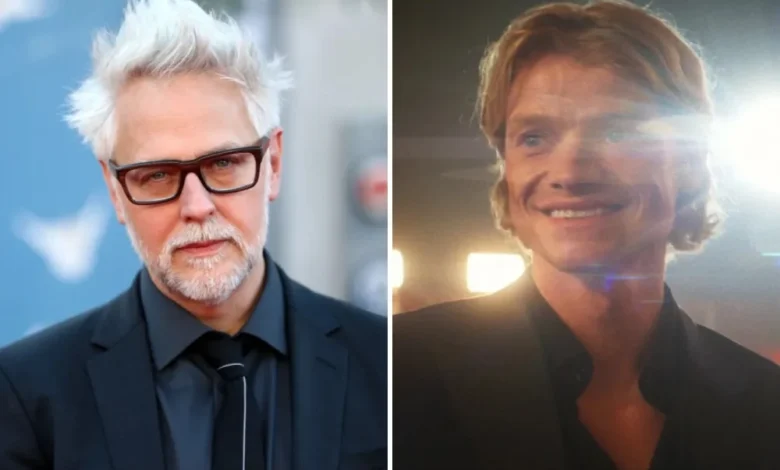
DC Studios co-head James Gunn has pushed back against ongoing fan criticism regarding the structure of the newly minted DC Universe (DCU), defending his choice to prioritize standalone stories over a relentless build toward a massive, franchise-defining crossover event. Addressing the discourse head-on via social media, Gunn articulated a creative philosophy that values individual cinematic experiences over formulaic universe-building, sparking a wider industry conversation about the modern superhero genre’s reliance on interconnected continuity.
The debate ignited over the weekend when a user on Threads shared a promotional lineup of upcoming and recent DCU projects—including Superman, Peacemaker, Supergirl, Creature Commandos, Clayface, and Lanterns—and posed a blunt question: "What is this building towards???"
Rather than outlining a grand Avengers-style convergence, Gunn responded by dismantling the premise that shared cinematic universes must always function as stepping stones to a singular destination.
"I couldn’t agree more," Gunn wrote to a commenter who defended the lack of a forced overarching setup. "DCU is just an alternate universe; we can enter at any location or time and tell THAT story. I dislike the idea that individual stories aren’t meaningful unless they lead to something else. People not understanding this is strange to me, because ‘Star Wars’ has essentially been doing this for 50 years across movies, shows, games and books, admittedly without the tonal variety."
The Evolution of the DC Universe Strategy
When James Gunn and producer Peter Safran were appointed as the co-chairmen and co-CEOs of DC Studios in late 2022, they inherited a fractured cinematic landscape. The previous iteration of the franchise, known informally as the DC Extended Universe (DCEU), had experienced severe box office volatility, critical inconsistency, and narrative fatigue. Fans and studio executives alike had grown exhausted by the pressure to replicate Marvel Studios’ highly serialized, continuity-heavy model, which many critics argued prioritized long-term Easter eggs over satisfying individual films.
Gunn and Safran set out to correct this trajectory by introducing Chapter 1 of the DCU, titled "Gods and Monsters." While the slate featured marquee heroes like the Man of Steel and the Maid of Steel, it also deliberately embraced eccentric, risky, and niche properties. Animated series like Creature Commandos and television projects like Peacemaker were designed to coexist in the same continuity without demanding that casual viewers complete a rigorous homework assignment before buying a ticket.
The release of the psychological horror-tinged feature Clayface has served as a primary testing ground for this philosophy. Hitting theaters as a distinct genre piece rather than a traditional superhero blockbuster, the film has forced audiences to reevaluate what a comic book adaptation can look like within a shared corporate framework.
Balancing Connectivity and Creative Autonomy
Gunn was careful to clarify during his social media exchange that his rejection of forced crossovers does not mean the DCU lacks narrative threads entirely. He noted that certain characters will naturally cross paths and that specific character arcs will span multiple films. For instance, the Superman saga will naturally flow from Gunn’s 2025 blockbuster into the upcoming sequel, Superman: Man of Tomorrow, incorporating figures introduced elsewhere in the canon.
However, the filmmaker emphasized that these connections should feel organic rather than obligatory.
"That doesn’t mean those other stories only exist to set up what’s happening there," Gunn explained. "I would love people to be seeing Clayface because it’s a great, fun horror movie unto itself, not because of where else Clayface will show up three movies from now."
This mindset reflects a growing sentiment among filmmakers and audiences who have suffered from "franchise fatigue." For over a decade, major studios have conditioned moviegoers to view standalone storytelling as secondary to post-credit scenes and cinematic universe orchestration. By intentionally leaning into genre diversity—ranging from cosmic adventures and political thrillers to gritty psychological horror—DC Studios is attempting to position its IP library as a playground of distinct filmmaker-driven visions rather than a single conveyor belt.
Box Office Reception and Critical Response to Clayface
The debate over the DCU’s structural integrity comes on the heels of the box office debut of Clayface, which arrived in North American theaters on Friday. Directed by filmmaker James Watkins, the film marks a significant departure from standard comic book fare.
Focusing on Matt Hagen, a rising movie star portrayed by Tom Rhys Harries, the narrative tracks Hagen’s desperate descent after his face is severely disfigured, leading him to volunteer for a dangerous, experimental medical procedure. The cast features prominent supporting performances from Naomi Ackie, David Dencik, Max Minghella, and Eddie Marsan.
Prior to its release, industry analysts questioned whether a relatively minor Batman rogue who had never previously anchored a standalone feature film could command mainstream box office attention. Those doubts were largely quieted when Clayface captured the No. 1 spot at the domestic box office, pulling in $24 million across 3,458 theaters during its opening weekend.
Critics have largely praised the film’s willingness to stand apart from the traditional superhero template. In a review for Variety, critic Guy Lodge described the movie as "its own ugly animal; perhaps the characters and conflicts introduced here would pall if given the franchise treatment, but in the context of a single, genre-melding romp, they’re fresh and ickily enjoyable."
The Broader Implications for Hollywood IP Management
Gunn’s defense of the DCU’s flexible architecture highlights a broader cultural shift in how Hollywood manages intellectual property. As audiences grow increasingly sophisticated and weary of formulaic studio mandates, the pressure to deliver infinite, interconnected content has begun to yield diminishing returns across multiple major studios.
By looking to models like Star Wars—which has sustained a multi-generational fanbase through isolated storytelling epochs, disparate chronological settings, and varied tones—DC Studios is betting that long-term brand health depends on the quality of individual stories rather than the tightness of a narrative web.
Whether this approach can permanently win over a fandom trained on serialized puzzle boxes remains to be seen. However, initial financial returns and critical reception suggest that audiences are willing to embrace comic book adaptations that prioritize mood, genre experimentation, and character-driven depth over corporate table-setting.
As the studio prepares for its next major theatrical milestone—the scheduled July 9, 2027 release of Superman: Man of Tomorrow—all eyes will remain on James Gunn and Peter Safran to see if they can successfully maintain this delicate balance between a cohesive universe and unchained cinematic storytelling.