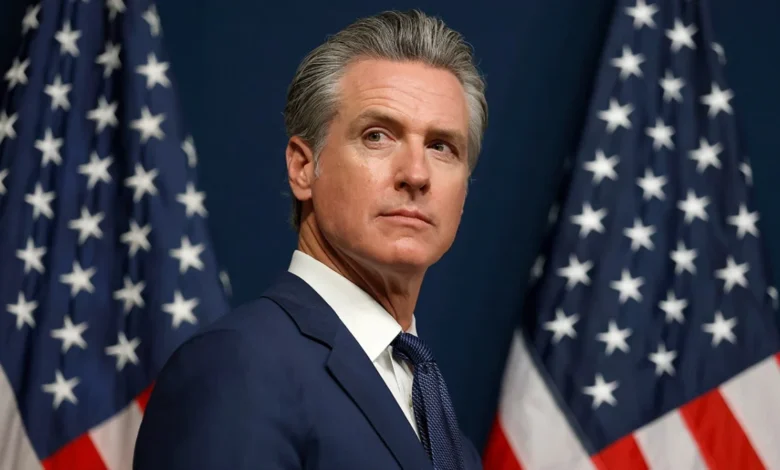
In a landmark executive action that effectively ends capital punishment in the most populous state in the United States, California Governor Gavin Newsom announced on Thursday that he will commute the sentences of all 548 inmates currently held on the state’s death row. This sweeping decision marks the culmination of a long-standing ideological campaign by the Democratic governor to dismantle the machinery of death in California, transitioning all capital sentences to life imprisonment without the possibility of parole.
The move, which follows years of incremental steps toward abolition, transforms the legal landscape for the largest death row population in the country. By clearing the entirety of death row, Governor Newsom has effectively signaled that while these individuals will remain incarcerated, the state will no longer pursue the ultimate penalty as a tool of justice.
The Rationale for Executive Clemency
In a formal letter addressed to his constituents, Governor Newsom articulated the philosophical and moral basis for his decision. Citing his three decades of public service, the governor argued that the state’s capital punishment system is fundamentally broken, prone to irreparable error, and inconsistent with the ethical standards of modern California.
"After nearly 30 years in public office, I have come to understand the limits of what government can justly accomplish," Newsom wrote. "I take this action because I firmly believe that state-sanctioned killing is incompatible with California’s values, undermines the foundations of our legal system, and diminishes each of us."
The governor’s office emphasized that the decision was not merely a matter of personal conviction but a response to systemic failures, including the exorbitant financial cost of maintaining the death penalty, the risk of executing innocent individuals, and the arbitrary nature of capital sentencing.

A Chronology of California’s Death Penalty Moratorium
The path to Thursday’s announcement was paved by a series of executive and legislative maneuvers that have defined the Newsom administration’s approach to criminal justice reform.
- 2006: California conducts its last execution, carrying out the death sentence of Clarence Ray Allen. Since that time, a combination of legal challenges, court-ordered halts, and logistical hurdles kept the state’s execution chamber dormant.
- 2019: Shortly after his inauguration, Governor Newsom issued an official moratorium on the death penalty. As part of this executive order, he dismantled the execution chamber at San Quentin State Prison, signaling a definitive shift away from capital punishment.
- 2020–2025: Throughout his tenure, the governor faced pressure from both sides of the aisle. While the death row population remained static due to the lack of executions, the legal status of those inmates remained in limbo.
- 2026: The formal announcement of mass commutation occurs, effectively resolving the legal status of the remaining 548 inmates and transitioning them into the general prison population or long-term specialized housing.
Supporting Data and Statistical Context
California’s death row has historically been the largest in the nation, housing more condemned inmates than most other states combined. According to data from the California Department of Corrections and Rehabilitation (CDCR), the cost of maintaining the death penalty system has been a point of intense fiscal debate.
Studies by the Death Penalty Information Center and independent legislative analysts have suggested that California spends significantly more on capital cases than on cases resulting in life without parole. This is largely due to the prolonged appeals process, the requirement for specialized legal counsel, and the higher security protocols necessary for death row housing.
Despite these expenditures, the state’s inability to carry out executions since 2006 led to a "de facto" abolition that frustrated both proponents and opponents of the system. With this latest move, the state shifts its focus entirely to the financial and operational integration of these inmates into the broader state prison system, which will likely result in a significant restructuring of the state’s correctional budget.
Victim Advocacy and Public Response
The announcement has triggered a polarized response from the public and advocacy groups. For many, the decision is seen as an affront to the victims of the crimes that landed these individuals on death row.
Marc Klaas, whose 12-year-old daughter, Polly, was abducted and murdered in 1993, has emerged as a vocal critic of the governor’s action. Richard Allen Davis, the man convicted of the kidnapping and murder of Polly Klaas, is among those whose sentences have been commuted.

"He just gave the gift of life to hundreds of people who took the gift of life from their victims," Klaas stated in an interview. "I don’t understand his rationale behind it, but it’s the same old tired stuff that he said when he did his moratorium. He has definitely secured the serial killer vote now."
Conversely, abolitionist groups and human rights organizations have hailed the decision as a moral victory. Reverend Jeff Hood, a spiritual advisor to numerous death row inmates, lauded the governor’s courage.
"The silence after the very breath of a human is violently wrestled out of them is deafening," Hood said in a statement. "Today, Governor Newsom has courageously chosen to break that silence. These commutations represent the height of moral leadership. Cruelty is laid down. Now, I’m left with one prayer: God, don’t let any of the governors in the other executing states get any sleep until they find the ethical stamina to follow Newsom’s lead."
Broader Implications for the American Legal System
The decision in California carries significant weight in the broader national dialogue regarding the death penalty. With the United States experiencing renewed debate over the ethics of capital punishment—fueled recently by high-profile cases and discussions surrounding the potential for "botched" executions—California’s move provides a template for other states considering similar action.
The issue of "botched" executions, such as the recent case involving Christa Pike in Tennessee, has brought the technical and ethical failures of lethal injection to the forefront. These incidents have provided ammunition for critics who argue that the state’s inability to administer the death penalty in a "humane" fashion serves as a fundamental indictment of the practice itself.
From a legal perspective, the mass commutation is expected to face limited, if any, reversal capability, given the governor’s broad constitutional power to grant clemency. However, it may trigger a wave of political litigation as conservative lawmakers and victim advocacy groups explore avenues to challenge the scope of such an executive order.

Furthermore, the decision forces a conversation about the purpose of incarceration. By eliminating the possibility of execution, the state is effectively committing to the permanent confinement of these individuals. This raises questions about the long-term logistical management of an aging inmate population and the potential for parole board reviews in the future, even if those possibilities are currently excluded by the nature of the commutations.
Conclusion
Governor Gavin Newsom’s decision to commute the sentences of all 548 inmates on California’s death row represents a defining moment in the state’s history. It is a decisive move that prioritizes a policy of life imprisonment over the state’s authority to execute. As California navigates the logistical and emotional fallout of this decision, the nation will be watching closely to see if this marks the beginning of a broader legislative trend across the United States or if it remains an outlier driven by the specific political and moral climate of the Golden State.
The coming months will likely see intense scrutiny from legal experts regarding the implementation of these commutations and the long-term impact on the families of victims who expected a finality that the state has now formally removed. As the debate continues, the governor’s action serves as a stark reminder of the deeply divided opinions that define the American approach to justice, punishment, and the value of human life.