In the modern landscape of urban living, where square footage is a premium commodity, the traditional home office has undergone a radical transformation. Gone are the days when a dedicated room was a prerequisite for professional productivity. Today, the rise of hybrid work models and the shrinking average size of metropolitan apartments have forced a reevaluation of residential architecture and interior design. Consequently, the market for compact furniture has shifted from a niche segment to a cornerstone of the home office industry, with manufacturers prioritizing modularity, vertical utility, and multi-functional design to meet the needs of the space-constrained professional.

The evolution of the "micro-office" has been accelerated by post-pandemic workplace trends. As of 2024, data from various real estate and workplace research firms indicate that over 25 percent of the professional workforce continues to operate on a hybrid or fully remote basis. This shift has created a significant demand for workstations that do not dominate a living space or bedroom, leading to an influx of innovative, space-saving furniture designs.
The Engineering of Compact Workspaces
Designing a desk for a small footprint requires a delicate balance between ergonomics and physical volume. Engineering teams have increasingly turned to materials that provide structural integrity without the bulk of traditional hardwoods or heavy steel frames. Modular systems, such as the Branch Daily Desk, represent this trend by utilizing a minimalist framework that acts as a canvas for user-defined add-ons. By offering optional features like caster legs and privacy panels, manufacturers allow the consumer to customize the desk’s utility based on the specific constraints of their environment.

This modular approach is not merely an aesthetic choice; it is a response to the "nothing unnecessary" design philosophy that has permeated contemporary Scandinavian and minimalist furniture movements. By decoupling the core structure from auxiliary storage components, designers can keep the physical footprint low while maintaining the functional requirements of a high-performance workstation.
Ergonomics and Height-Adjustability Trends
The integration of height-adjustable technology into smaller desk models has historically been a challenge, as motorized lifts often require bulky power supplies and thick frames. However, recent advancements in manual lift mechanisms have allowed brands like Article to offer standing desk solutions that mimic the aesthetic of residential furniture rather than industrial office equipment. The Torme Height Adjustable Desk, for instance, utilizes a hidden mechanism to facilitate sit-to-stand transitions, effectively bridging the gap between home-office wellness and interior design.

From a physiological perspective, the importance of these adjustments cannot be overstated. Health studies consistently demonstrate that alternating between sitting and standing throughout the workday reduces the risk of musculoskeletal disorders, particularly in the lower back and neck. In a compact home setup, where users might otherwise be confined to a kitchen chair or a couch, the availability of a proper height-adjustable surface is a significant upgrade to personal health.
Strategic Space Utilization and Furniture Multi-functionality
In apartments where a desk must serve as a dining surface or a vanity after business hours, the requirement for aesthetic cohesion becomes paramount. The Castlery Sloane Desk is a prime example of the "dual-use" furniture category. By incorporating design elements such as fluted panels and discreet, integrated drawer storage, such pieces can effectively disappear into the decor of a living room or bedroom.

The chronological adoption of this style can be traced back to the mid-2010s, but it has reached a peak in the 2020s as designers recognize that "work-from-home" is a permanent feature of modern life. The implication for interior design is clear: furniture must now be as versatile as the inhabitants of the space.
The Role of Verticality in Small-Space Planning
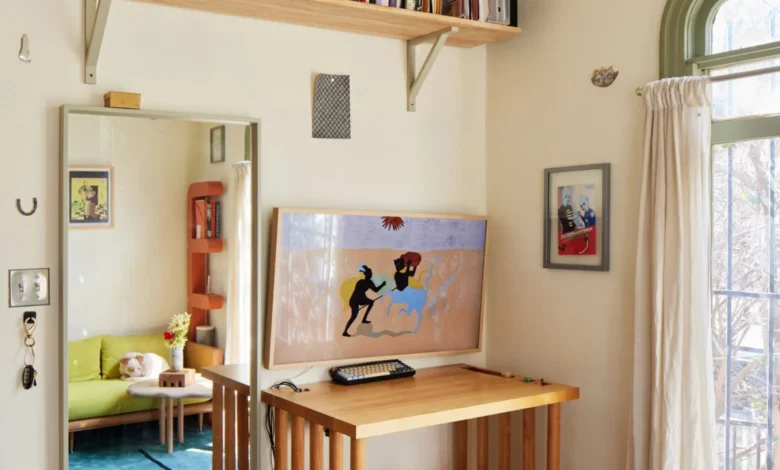
When floor space is non-existent, professional interior designers invariably turn to verticality. Wall-mounted desks, such as the West Elm Pierce, utilize wall studs to provide a stable work surface without requiring floor-based legs. This design choice effectively clears the floor, making a room feel significantly larger. Historically, wall-mounted furniture was associated with permanent built-ins; however, modern manufacturing has made these units accessible and relatively easy to install for the average renter, provided they have permission to mount fixtures.

The efficiency of vertical storage—placing shelves above the workspace—allows users to keep essential documents and tech equipment within reach while leaving the desk surface clear for a laptop and a mouse. This is a crucial distinction from traditional desk designs that rely on under-desk drawers, which can obstruct legroom and make a small space feel cluttered.
Investment Pieces and Long-Term Value
While entry-level folding desks, such as the Wohomo, offer immediate, low-cost solutions for temporary needs, there remains a market for high-end, durable pieces that serve as long-term home fixtures. The Design Within Reach Line Mini Desk serves as a case study in high-end compact design. With a price point exceeding $2,000, such items are positioned as heirloom-quality furniture. The rationale behind this investment is longevity; whereas a budget desk may need replacement after several moves or changes in living arrangements, a well-constructed, solid-wood piece is designed to be a permanent part of the home’s interior architecture.

Addressing the Ergonomic FAQ
Industry experts frequently emphasize that the "best" desk is not just about the size of the surface, but how that surface interacts with the user’s body. According to guidelines from the Occupational Safety and Health Administration (OSHA) and ergonomic research from firms like Branch, the ideal desk height should facilitate a 90-degree angle at the elbows while typing. This is a persistent hurdle in small spaces where height-adjustable equipment is often too expensive or too large.
For those unable to invest in a full standing desk, converters have emerged as a viable middle ground. These devices sit atop existing surfaces, providing the necessary height adjustment for standing without the need to replace the underlying furniture. This solution is particularly popular among renters who may not want to commit to a heavy, permanent desk purchase.

Future Implications for Urban Architecture
As cities continue to densify and residential units become smaller, the furniture industry is expected to continue its shift toward "smart" and "convertible" designs. We are already seeing the emergence of furniture that integrates charging pads, cable management systems, and acoustic dampening materials directly into the desk frame.
The societal implication of these design shifts is a blurring of the line between the workspace and the living space. While this allows for greater flexibility, it also raises questions about work-life balance. Interior designers now suggest that the ability to "hide" or "close" a desk—whether through a folding mechanism or a dedicated wall-mounted cabinet—is essential for mental health. By allowing the work tools to be stowed away, the resident can reclaim their living space for leisure and relaxation.

In conclusion, the market for small-space desks is not merely a reaction to a trend but a fundamental adjustment to the changing nature of work. Whether through the minimalist modularity of the Branch system, the industrial-meets-residential aesthetic of the Article Torme, or the space-saving utility of wall-mounted and folding designs, the current options allow for a high degree of personalization. The key to successful implementation in a small apartment remains careful measurement of the available space, a strategic assessment of power access, and a prioritization of both physical health and psychological separation between the office and the home. As these furniture designs continue to evolve, they will undoubtedly play an even larger role in how we define, design, and utilize our personal living environments in the years to come.