Methane has quietly emerged as one of the most critical and pressing focal points in contemporary environmental science and climate policy. As an invisible, odorless gas found naturally in wetlands and generated through modern industrial, agricultural, and waste management practices, it stands as the second most influential greenhouse gas driving global heating, second only to carbon dioxide. While global policy discussions have historically prioritized carbon dioxide reductions, scientists, environmental analysts, and international bodies increasingly emphasize that addressing methane is the most effective lever available to rapidly curb atmospheric warming over the next two decades. Understanding the sources, measurement challenges, and multifaceted impacts of methane is essential for comprehending the trajectory of the modern climate crisis and the urgent policy interventions required to avert catastrophic global temperature thresholds.
Scientific Foundations and Chemical Properties of Methane
Chemically, methane is a hydrocarbon composed of a single carbon atom bonded to four hydrogen atoms, representing the primary component of natural gas. It is naturally abundant and forms through both geological and biological pathways. Geologically, subterranean methane is produced over millions of years as heat and pressure transform decomposing organic matter buried deep within the earth, forming the primary source reservoirs for commercial natural gas. Additionally, abiotic methane forms deep underground without organic precursors through inorganic geochemical processes.
Biologically, methane is generated via methanogenesis, an anaerobic respiration process executed by specialized microorganisms known as archaea. These oxygen-free environments exist naturally in wetlands, freshwater bodies, and the digestive tracts of ruminant animals such as cows, sheep, and goats, as well as termites. In natural settings, these emissions are balanced by atmospheric and soil sinks—principally the troposphere and hydroxyl radicals, which chemically break down methane into carbon dioxide and water vapor, alongside soil-dwelling methanotrophic bacteria.

However, the delicate equilibrium between natural sources and sinks has been decisively disrupted since the onset of the Industrial Revolution. Anthropogenic activities—particularly intensive agriculture, fossil fuel extraction, and expansive waste storage—have injected methane into the atmosphere at rates far exceeding the natural capacity of planetary sinks to absorb it. According to the World Meteorological Organization (WMO) and international climate monitoring agencies, atmospheric methane concentrations reached 1,934 parts per billion (ppb) in recent tracking periods, marking a staggering 265 percent surge compared to pre-industrial levels. Approximately 60 percent of current atmospheric methane is directly attributable to human activities, driving roughly one-third of contemporary global heating.
The Measurement Paradigm: Bottom-Up Versus Top-Down Methodologies
Accurately quantifying global methane emissions has historically presented a formidable challenge for scientists and regulatory bodies. Emissions are monitored primarily through two distinct methodologies: bottom-up and top-down approaches. Bottom-up inventories aggregate localized measurements or mathematical estimations based on general operational parameters. For instance, national agricultural agencies estimate livestock emissions by multiplying livestock headcounts by standardized emissions factors per animal. Similarly, energy regulators estimate oil and gas sector leaks by multiplying the count of operational equipment by standard leakage rates.
Conversely, top-down approaches utilize atmospheric measurements captured by airplanes, high-altitude research platforms, and increasingly sophisticated satellite constellations. By analyzing atmospheric concentrations alongside known wind patterns and regional sinks, scientists generate comprehensive macro-level emission models. The integration of high-resolution satellite imagery has revolutionized methane monitoring by exposing systemic blind spots in traditional bottom-up inventories.
Data reveals that conventional equipment-based estimations routinely fail to capture "super-emitting" incidents—catastrophic leaks and intentional venting events that defy standard operational averages. Scientific studies indicate that the top five percent of extraordinary leaks typically account for over 50 percent of total industrial leakage volume. Consequently, direct measurements from ground-based sensors and aerial platforms frequently reveal that actual fossil fuel emissions significantly outpace official regulatory estimates. For example, comprehensive studies of United States oil and gas operations have demonstrated that direct measurements can exceed U.S. Environmental Protection Agency inventory estimates by 60 percent, highlighting the critical necessity of advanced, observation-based monitoring to effectively regulate the sector.

Climate Implications: Potency, Lifespan, and the 2030 Horizon
The primary urgency surrounding methane mitigation lies in its unique physical properties regarding atmospheric potency and lifespan. While carbon dioxide remains in the atmosphere for centuries, driving long-term planetary heating, methane is a short-lived climate pollutant with an atmospheric lifespan of approximately 12 years. However, its near-term heat-trapping capacity is extraordinarily high. Over a 20-year timescale, methane possesses a global warming potential (GWP) 86 times greater than an equivalent mass of carbon dioxide; over a 100-year timescale, its relative potency is still substantial at 28 to 34 times that of carbon dioxide.
This dual profile—extreme short-term potency combined with a rapid decay rate—means that aggressive reductions in methane emissions yield immediate cooling benefits. The Intergovernmental Panel on Climate Change (IPCC) and the Global Methane Assessment have concluded that rapid, sustained reductions in methane are the single most effective strategy available to mitigate global heating over the next twenty years. To maintain a viable pathway toward limiting global temperature increases to 1.5 degrees Celsius above pre-industrial levels, the IPCC calculates that global methane emissions must be slashed by approximately 34 percent by 2030 compared to 2019 levels.
Primary Anthropogenic and Natural Emission Sources
Human-caused emissions account for roughly 60 percent of total atmospheric methane, while natural sources comprise the remaining 40 percent. More than 90 percent of anthropogenic emissions originate from three core sectors: agriculture, fossil fuel operations, and waste management.

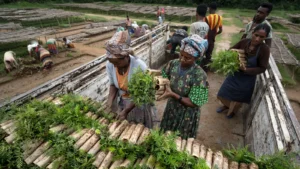
Agriculture stands as the largest human-driven source, responsible for approximately 40 percent of anthropogenic methane emissions. Livestock production alone drives 32 percent of these emissions, primarily resulting from enteric fermentation—a digestive process wherein ruminant animals break down fibrous plant material via microbial fermentation, producing methane as a byproduct. Cattle raised for beef and dairy production are the principal contributors within this category. Additionally, the intensive storage and management of livestock manure, particularly within large swine and cattle feedlot operations, release significant volumes of methane. Cultivated rice paddies represent another major agricultural source, accounting for approximately eight percent of human-caused emissions; the flooded conditions of rice cultivation create oxygen-depleted environments that stimulate methanogenic microbial activity.
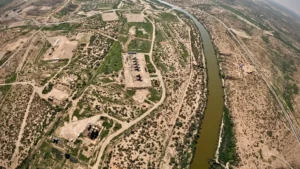
Fossil fuel operations contribute approximately 35 percent of anthropogenic methane emissions. The extraction, processing, and long-distance transport of oil and natural gas account for 23 percent, driven largely by intentional venting—the release of unwanted associated gas during extraction—and fugitive leaks across pipeline infrastructure. Coal mining operations account for another 12 percent of emissions, with methane released directly from exposed coal seams, ventilation systems designed to prevent underground explosions, and abandoned, unsealed mines. Furthermore, fossil fuel extraction sites are frequent culprits behind massive super-emitter events; international researchers utilizing satellite imaging have identified thousands of high-volume leaks globally, with individual anomalies occasionally spewing hundreds of metric tons of methane per hour.
Landfills and waste management systems generate approximately 20 percent of anthropogenic methane emissions. As municipal solid waste and organic matter decompose within oxygen-deprived municipal landfills and wastewater treatment facilities, microbial activity generates substantial quantities of gas. With rapid urbanization and population growth, particularly in developing economies, waste-related emissions are projected to expand faster than any other major methane source.
Natural sources, accounting for 40 percent of total emissions, are dominated by wetlands, which cover roughly six percent of the Earth’s land surface. The water-saturated soils of tropical and Arctic wetlands foster ideal conditions for methanogenesis. However, climate change has initiated concerning feedback loops within these natural sinks. Rising global temperatures and shifting precipitation patterns have accelerated wetland emissions, a phenomenon known as the wetland methane feedback. Permafrost thaw in the Arctic similarly unfreezes ancient organic material and dormant microbial communities, releasing additional greenhouse gases into the atmosphere and threatening to push the global climate system past critical tipping points.
The Bridge Fuel Myth: Natural Gas and Liquefied Natural Gas Expansion

For decades, proponents of natural gas championed the fossil fuel as a clean-burning "bridge fuel" capable of facilitating the transition from carbon-intensive coal power to renewable energy sources. This argument rested on the premise that burning natural gas emits roughly half the carbon dioxide per kilowatt-hour produced by burning coal. Driven by this narrative and the rapid expansion of hydraulic fracturing ("fracking") technologies in North America, global natural gas production surged, accompanied by a massive infrastructure buildout dedicated to the export and import of liquefied natural gas (LNG).
However, this conventional accounting framework systematically ignores the pervasive leakage of methane throughout the entire natural gas supply chain. Because methane is such a potent greenhouse gas, even minimal leakage rates severely undermine the climate benefits of switching from coal to gas. Scientific analyses indicate that if fugitive methane leakage exceeds a mere 0.2 percent across the production and distribution lifecycle, the climate-warming impact of LNG equals or exceeds that of coal over a 20-year timeframe. Comprehensive field studies and satellite observations indicate that actual leakage rates vastly exceed this threshold. A prominent 2023 scientific evaluation demonstrated that when full-lifecycle methane leaks are factored into the equation, LNG possesses a global warming potential 33 percent greater than coal over a 20-year period. Furthermore, official energy analyses, including evaluations by the U.S. Department of Energy, have concluded that expansive LNG export buildouts frequently displace future investments in renewable energy rather than merely displacing coal generation.
Public Health and Environmental Co-Benefits of Mitigation
Beyond its profound impact on global temperature stability, reducing methane emissions delivers immediate, quantifiable benefits for public health and regional environmental quality. Methane acts as a primary chemical precursor in the formation of tropospheric ozone—commonly known as ground-level ozone—a hazardous pollutant formed when methane reacts with other atmospheric gases in the presence of sunlight.
Ground-level ozone is a severe respiratory irritant that damages human lung tissue, exacerbates chronic obstructive pulmonary disease (COPD), triggers asthma attacks, and significantly diminishes agricultural crop yields. Current estimates attribute approximately half a million premature human deaths annually to methane-induced ground-level ozone exposure. Economists and public health experts calculate that for every million metric tons of methane emissions avoided, society secures substantial averted damages, including thousands of prevented hospitalizations, reduced emergency room visits for pediatric asthma, and the preservation of hundreds of thousands of metric tons of staple agricultural crops such as wheat, rice, maize, and soybeans.

Comprehensive Mitigation Strategies Across Sectors
Curbing global methane emissions requires a diversified suite of interventions spanning regulatory enforcement, technological innovation, and structural economic transformations. According to the International Energy Agency, deployment of existing, commercially available technologies could reduce human-caused methane emissions by up to 45 percent by 2030, aligning global trajectories with the IPCC’s 1.5-degree Celsius warming limit.
Within the energy sector, phasing out fossil fuel reliance remains the ultimate long-term objective. In the interim, deploying mandatory leak detection and repair (LDAR) protocols, replacing outdated pneumatic devices that intentionally vent gas, requiring vapor recovery units, and capturing or flaring fugitive gases can slash oil and gas sector emissions by up to 70 percent. For the coal industry, mandatory installation of degasification wells, methane capture systems in active underground mines, and the rigorous capping of abandoned coal shafts and gas wells can prevent substantial fugitive releases.
Within agriculture, structural transformations include reducing food waste—which accounts for massive upstream methane generation—and shifting dietary consumption patterns toward plant-rich diets in developed nations, thereby dampening global demand for ruminant livestock products. For active livestock operations, enteric fermentation can be curtailed through specialized feed additives, such as specific chemical inhibitors (e.g., 3-NOP) and seaweed supplements (such as Asparagopsis taxiformis), which have demonstrated the capacity to reduce cattle methane emissions by 40 to 82 percent without compromising animal health or productivity. Manure management can be similarly revolutionized through the widespread adoption of anaerobic digesters that capture biogas for clean energy production while neutralizing raw emissions.
In the waste management sector, transitioning toward zero-waste circular economies, diverting organic waste from municipal landfills toward centralized composting facilities, installing comprehensive landfill gas capture systems, and upgrading municipal wastewater treatment plants with secondary and tertiary biological treatment processes represent highly effective mitigation pathways.

International Commitments, Policy Frameworks, and the Implementation Gap
Recognition of the critical role methane plays in climate stability has catalyzed international diplomatic action. Most notably, at the COP26 United Nations Climate Change Conference in Glasgow, the United States and the European Union jointly launched the Global Methane Pledge. As of early 2025, the pledge has expanded to encompass 159 participating nations, whose governments have formally agreed to undertake voluntary domestic actions aimed at reducing global methane emissions by 30 percent below 2020 levels by 2030. Achieving this target would avert approximately 0.2 degrees Celsius of global warming by 2050.
Despite the proliferation of diplomatic pledges and corporate sustainability targets, a significant "implementation gap" persists between stated political ambitions and real-world emissions reductions. Global methane emissions have continued to climb, breaking successive historical records in recent years. Analysts note that as of recent tracking periods, only a small fraction of total global methane emissions is bound by legally enforceable domestic reduction policies. Closing this implementation gap requires governments to transition from voluntary corporate frameworks to mandatory, legally binding regulations, robust continuous monitoring mandates, and strict financial penalties for unauthorized venting and fugitive leaks across all industrial sectors.
Conclusion
Methane emissions represent both a severe compounding threat to global climate stability and an unprecedented strategic opportunity for rapid environmental intervention. Because of its extreme short-term heat-trapping potency and relatively brief atmospheric persistence, aggressive and immediate action to curtail methane emissions offers the most viable mechanism to decelerate the pace of global heating over the coming critical decades. By deploying existing technological fixes across the energy, agricultural, and waste sectors, enforcing rigorous satellite-backed monitoring, and holding political and industrial leaders accountable to international commitments, the global community possesses the necessary tools to tame the methane threat and secure a stable climate future.