For more than half a century, Sesame Street has maintained a peerless tradition of bridging high-culture music, legendary guest stars, and childhood education. From Stevie Wonder’s visionary performances in the early 1970s to Tony Bennett playfully refashioning his timeless standard "Fly Me to the Moon" into an interplanetary adventure for the show’s resident worm character, Slimy, the program has continually demonstrated an uncanny ability to connect contemporary and classic sounds with early childhood development. Over decades on the air, the series has welcomed luminaries from across the musical spectrum. The Fugees reimagined their themes of inclusion with "Just Happy to Be Me," blues legend B.V. King offered a soulful ode to the letter B, and opera icon Marilyn Horne famously delivered an orchestral rendition of "C Is for Cookie" on an elaborate mock-Egyptian stage while wearing a tiara adorned with a bouncing confection.
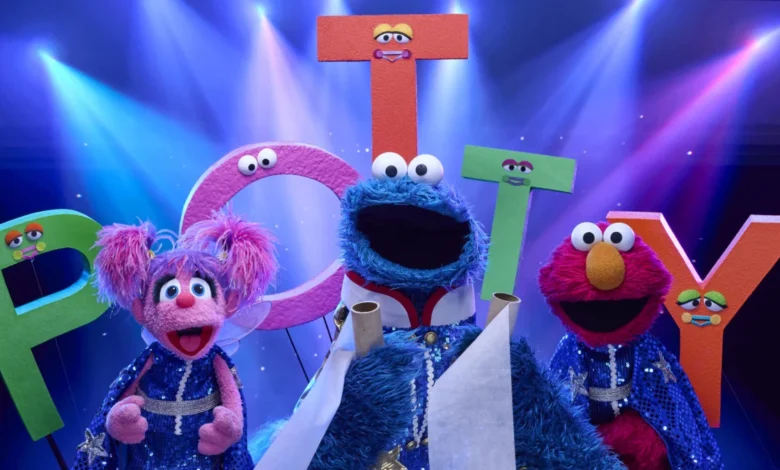
This rich lineage of musical adaptation continues nearly 57 years after the iconic children’s television program first broadcasted on public television. In a newly released video that has quickly captured the attention of both toddlers and pop music aficionados, the creative minds behind Sesame Street have transformed Chappell Roan’s explosive modern pop anthem "HOT TO GO!" into an educational, potty-training masterclass titled "Got to Go." Led by the inimitable, gravelly vocals of the Cookie Monster, the track successfully bridges the gap between contemporary mainstream pop culture and foundational developmental milestones for preschoolers.
A Note-for-Note Parody Rooted in Early Childhood Education
The newly unveiled segment does not merely borrow the rhythm of Roan’s original track; it delivers a remarkably faithful, note-for-note musical homage. The production replicates the pulsing synth-pop beats and infectious energy that made the original song a ubiquitous radio and streaming hit, while layering in playful lyricism tailored specifically to the urgent needs of toddlers navigating the transition out of diapers.
True to the structure of the original track, the Sesame Street rendition features spirited call-and-response sections and harmonic backing vocals from fan-favorite Muppets Elmo and Abby Cadabby. While the human-led choreography of Roan’s original music video famously features crowd members spelling out the song’s title with synchronized arm gestures, the children’s television adaptation offers a whimsical linguistic twist. Instead of human limbs forming the letters, a chorus of singing letters enthusiastically spells out P-O-T-T-Y. Adding to the characteristic surrealist humor of the program, the musical number even opens with anthropomorphized versions of the numbers one and two providing a brief, cheerful preamble.
Cookie Monster assumes the lead vocal responsibilities, delivering the modified lyrics in his trademark broken English with an urgency that parents across the globe will instantly recognize as universally relatable. The lyrics cleverly mirror the bodily awareness required during potty training:
"Stop and listen to me body / It’s saying that it’s time for potty,
There’s a growing feeling in my tummy, that me gotta go pee, me gotta go pee…
There they go again, now me legs are grooving / There might be a mess if me don’t get movin’…"
The chorus then explodes into a joyful, educational sing-along:
"P-O-T-T-Y, woah-oh, your body knows when you’ve got to go…"
The Evolution of Musical Parody on Children’s Television
The integration of current pop culture hits into educational children’s programming is a calculated pedagogical strategy refined by Sesame Workshop, the non-profit organization behind Sesame Street. For decades, the show has recognized that utilizing familiar melodies lowers the cognitive barrier for young learners. When children hear a melody that is already popular in their household environments—whether through older siblings, parents, or radio broadcasts—their engagement levels spike.
Historically, these parodies have served multiple functions: entertaining the adult viewers who frequently watch alongside their children, validating contemporary musical trends, and delivering essential social, emotional, and physical lessons in an easily digestible format. By tackling potty training—a notoriously stressful milestone for both children and caregivers—through the lens of a chart-topping pop song, the producers have leveraged cultural capital to alleviate domestic anxiety.
The Cultural Phenomenon of Chappell Roan and Industry Response
The source material for the parody, "HOT TO GO!" by Chappell Roan and co-writer and producer Dan Nigro, stands as one of the defining pop culture breakthroughs of the 2020s. Propelled by explosive streaming numbers, viral social media choreography, and massive festival performances, Roan’s distinct brand of theatrical synth-pop has dominated the global music landscape. Translating such a culturally significant track into a preschool-centric educational sketch underscores the breadth of Roan’s contemporary footprint.
When contacted for comment regarding the Sesame Street adaptation, a representative for Chappell Roan indicated that the artist had no official statement to offer. Industry analysts note that no statement was truly necessary; granting official permission for her work to be utilized in such an imaginative, whimsical, and publicly beneficial manner serves as a powerful endorsement in its own right. Allowing a burgeoning pop anthem to be adapted into a potty-training guide for young children demonstrates a cultural generosity that aligns well with Roan’s community-oriented public persona.
Broader Implications and the Longevity of Sesame Street
The release of "Got to Go" arrives at a critical juncture for children’s media consumption habits. As young audiences increasingly migrate toward fragmented digital platforms and algorithmically generated content, legacy educational institutions like Sesame Street face mounting pressure to remain culturally relevant. By continually updating their musical vocabulary to include contemporary icons like Chappell Roan—alongside historical nods to Stevie Wonder, the Fugees, and Tony Bennett—the program bridges generational divides.
Furthermore, the viral nature of such video releases generates cross-generational appeal. Parents who grew up watching the Muppets in the 1980s and 1990s now share these modern digital segments with their own toddlers, reinforcing brand loyalty and ensuring the longevity of the franchise. The intersection of high-energy pop music and foundational bodily autonomy instruction proves that Sesame Street’s core formula—combining world-class musicianship with unpretentious, empathetic education—remains as potent in its sixth decade as it was at its inception.