Across Europe, a relentless surge of wildfires is forcing mass evacuations and straining emergency services, with France, Spain, and Scotland declaring major incidents as blazes rage uncontrollably. Authorities are grappling with conditions described as "unprecedented," with leaders explicitly linking the ferocity and scale of the fires to the accelerating climate crisis.

France Mobilizes as Bordeaux Suburbs Face Evacuation
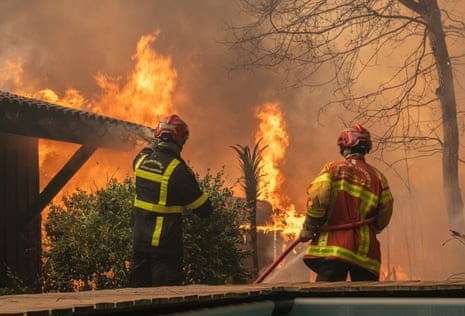
In southwestern France, thousands of residents from suburbs near Bordeaux were ordered to evacuate on Saturday as wildfires showed no signs of abating. The local administration of La Nouvelle-Aquitaine et de la Gironde, led by Sophie Brocas, confirmed on X (formerly Twitter) that areas including Le Haillan, Eysines, and Merignac were being cleared out. This latest wave of evacuations adds to an already staggering number, with French Prime Minister Sébastien Lecornu stating that over 141,000 people have been displaced from the Gironde and Landes regions, where the fires first erupted earlier this week.

Prime Minister Lecornu underscored the gravity of the situation, remarking on X, "The fires which are hitting our country have reached a level that has never been seen before." In response to the escalating crisis, the French army has been deployed to assist with firefighting efforts, a testament to the extraordinary challenge faced by civilian emergency services. Further bolstering the response, Lecornu requested the armed forces to expedite the deployment of an Airbus A400M military transport aircraft for firefighting operations in Gironde. Le Monde reported that the aircraft’s use was initially scheduled for a later date, pending technical preparations and tests, but the urgent need necessitated an earlier activation.
The broader picture in France reveals a country under siege. On Friday, President Emmanuel Macron activated the EU’s civil protection mechanism, appealing for international assistance. This plea quickly garnered support, with reinforcements expected to arrive in the form of two Croatian aircraft, two Portuguese planes, and two heavy helicopters from the Czech Republic and Slovakia. French Interior Minister Laurent Nuñez reported that 32 wildfires were actively burning across the nation, having scorched a devastating 50,000 hectares so far this year. This figure is nearly four times the total area burned by the same date last year, highlighting the dramatic escalation of the wildfire threat.
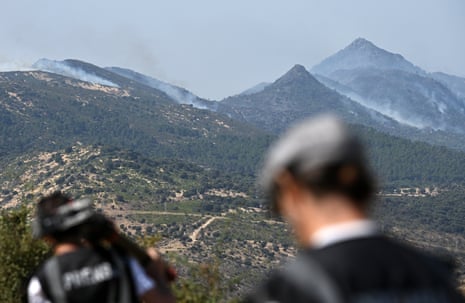
Adding to the complexities, the extensive smoke plumes from the Gironde fires have drifted far beyond the immediate burn zones. Helena Horton, reporting from the Dordogne region, over 100 miles east of Gironde, described the air as "thick with smoke." Local fire departments in Dordogne have been reassuring mayors and hotel operators that while the smoke is visible, there is no immediate threat of fire in their area, indicating the vast geographical impact of the blazes.
Amidst the crisis, French Minister for Francophone, International Partnerships, and French Nationals Abroad, Éléonore Caroit, urged tourists not to cancel their travel plans. Speaking on BBC Radio 4’s Today programme, Caroit acknowledged the "exceptionally intense" fire season and the "tragedy" of 50,000 hectares burned, but stressed that many regions remained unaffected. She advised visitors to stay informed about local conditions, seeking to mitigate the potential economic fallout on the country’s vital tourism sector.
The extreme heat and prolonged drought that have fueled these fires are also taking a heavy toll on France’s natural environment. Kim Willsher’s report highlighted that rivers across France are shrinking or drying up entirely, imperiling wildlife and prompting volunteers to embark on urgent rescue missions for fish stranded in dwindling waterways. The Loire, France’s longest river, is at a historical low, with some branches reduced to mere trickles. Two weeks prior, 16% of French rivers were reported dry, with a quarter of small streams stagnant or vanished, an alarming indicator of the profound ecological impact of the current climatic conditions.
Spain Declares National Emergency Amid "Complex" Madrid Wildfires

Spain is confronting an equally dire situation, with wildfires near Madrid prompting the government to declare a national emergency on Thursday evening – only the second such declaration in the country’s history, the first being during a nationwide blackout in April 2025. This declaration grants the central government exceptional control over regional powers and responsibilities to coordinate the crisis response.
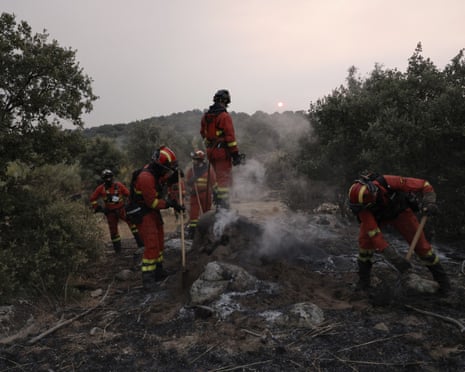
The wildfires near Madrid have already devastated nearly 25,000 hectares (approximately 62,000 acres) of land, forcing the evacuation or confinement of over 63,000 people. The regional government of Madrid described the situation as one of "extreme gravity," warning that at least four active fires could advance "beyond current extinguishing capacity." On Friday, Spanish authorities cautioned that "very little time left" before two merged blazes outside Madrid combined with a third fire in the neighboring province of Ávila, threatening to create a mega-fire. Carlos Novillo, Madrid’s regional environment minister, stated that the fire had reached "a critical moment" and was "beyond our extinguishing capability," emphasizing that the immediate priority was "protecting people, helping those who have been evacuated, and making the most of windows of opportunity."
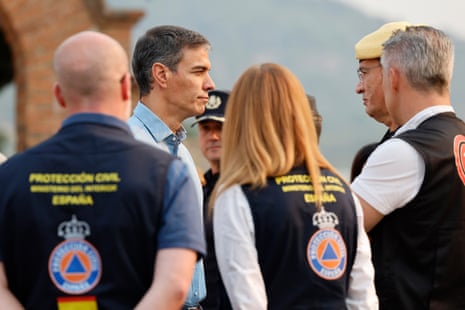
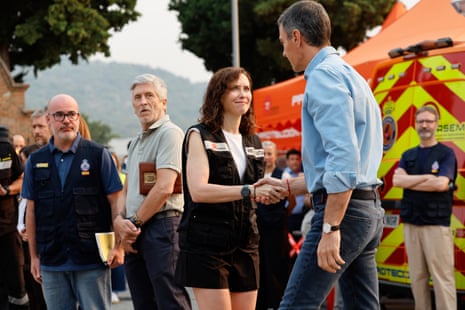
Spanish Prime Minister Pedro Sánchez visited the affected areas on Saturday morning, acknowledging the "complex" wildfire situation. He expressed uncertainty about the trajectory of the wind, despite a recent drop in temperatures. According to El País, Sánchez reiterated his urgent call for a "national pact against the climate emergency," urging the public to "accept and understand" that climate change is causing increasingly severe and intense forest fires that are even "exceeding scientific predictions."
Sánchez’s visit comes as Spain faces a year of unprecedented fire devastation. According to the Spanish environment ministry, 32 large wildfires have occurred so far this year (January 1 to July 25), a stark increase compared to just seven over the same period last year. The total land burned in Spain this year has reached 131,113 hectares, a dramatic rise from 24,133 hectares during the same period in the previous year. Sánchez further revealed that 130,000 hectares (321,000 acres) of land have already burned since January, exceeding the annual average of 100,000 hectares over the last decade. This alarming data underscores the critical need for comprehensive climate action.
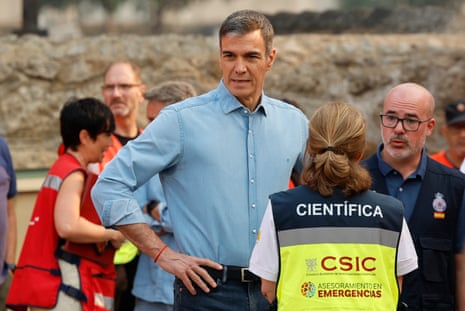
In an effort to mitigate the ongoing threat, Prime Minister Sánchez had previously proposed a 10-point plan to tackle the climate crisis. This plan includes initiatives such as establishing a state civil protection agency for coordinated crisis responses, creating a network of climate refuges, and fundamentally rethinking forest management and land use strategies. Sánchez stressed that only through immediate and decisive action could the country hope to avert similar disasters or significantly reduce their impacts. While weather conditions in the early hours of Saturday offered a "real opportunity" for firefighters to gain control, with a drop in temperature, easing winds, and increased humidity, Francisco Martín, the government delegate in Madrid, warned that "erratic gusts" forecast later in the day could quickly render the situation "difficult" again.
Scotland Battles Wildfire in Cairngorms National Park
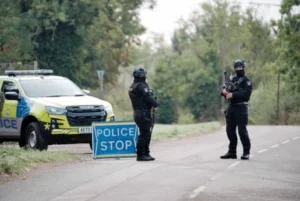
The wildfire crisis is not confined to Southern Europe. In the United Kingdom, a major incident has been declared in Scotland following a wildfire in the Cairngorms National Park that forced the evacuation of hundreds of people. The village of Nethy Bridge, home to approximately 600 residents, was evacuated as a precautionary measure on Friday night, with all access roads to the village closed by police.
Scotland’s First Minister, John Swinney, chaired an emergency meeting of the Scottish Government Resilience Room (SGORR) to address the unfolding situation. Swinney described the Cairngorms wildfire as a "very serious situation," acknowledging the understandable worry among "residents, businesses and people staying in the affected areas." He extended his thoughts to those impacted and thanked them for their cooperation.
Police Scotland declared a major incident after shifting wind conditions intensified the pace of the wildfire’s spread. Superintendent Judy Hill of Police Scotland stated, "The weather conditions experienced within the Cairngorms over the last 24 hours have added further complexities to this situation. With evidence suggesting the fire is spreading towards Nethy Bridge, the decision has been taken to declare a major incident and evacuate residents as a precaution."
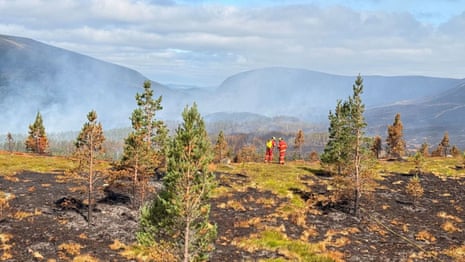
Swinney reported that Scottish Fire and Rescue Service resources are focused on establishing a firebreak to protect Nethy Bridge, a measure successfully implemented overnight. Additional police resources have been deployed to assist with evacuations, including identifying vulnerable residents requiring extra support. While changing winds on Saturday morning reduced the immediate threat to Nethy Bridge, allowing firefighting teams to concentrate on containment and creating new firebreaks, Swinney cautioned, "This demonstrates how these situations can change very quickly and dramatically." The wildfire, which ignited in the Glenmore area of the Cairngorms over a week ago, has been so extensive that The Scotsman newspaper reported calls for military support, despite a large-scale response involving over 500 firefighters and emergency personnel.

Broader Impact and Implications of Climate Breakdown
The widespread and intensifying wildfires across Europe are stark reminders of the profound and escalating impact of climate breakdown. Scientists unequivocally state that human-induced climate change is triggering more frequent and extreme weather events globally. Europe, in particular, is experiencing warming at approximately twice the global average rate, making it exceptionally vulnerable to phenomena like heatwaves and droughts that fuel these catastrophic blazes.
The implications are far-reaching:
- Environmental Degradation: Evaporating soils and waterways lead to desertification, loss of biodiversity, and severe damage to delicate ecosystems, as seen in the drying French rivers.
- Human Cost: Beyond the immediate danger of fire, the associated heatwaves contribute to thousands of excess deaths, impacting public health infrastructure. Mass evacuations disrupt communities, cause psychological trauma, and lead to significant economic losses for affected residents.
- Economic Strain: The destruction of forests, homes, and infrastructure, coupled with the cost of emergency response, places immense financial pressure on national and regional governments. Sectors like tourism and agriculture suffer severe setbacks, impacting livelihoods and regional economies.
- Resource Depletion: The scale of these fires stretches the capacity of emergency services, requiring the deployment of military assets and international aid, indicating a significant drain on national resources.
- Future Preparedness: The "unprecedented" nature of these fires, as noted by leaders, highlights that current predictions and preparedness measures are being "exceeded," necessitating a fundamental rethink of climate adaptation and mitigation strategies. This includes re-evaluating land management practices, investing in early warning systems, and strengthening international cooperation.
As Europe endures another summer of extreme heat and devastating fires, the calls from leaders like Pedro Sánchez for a "national pact against the climate emergency" resonate with increasing urgency. The current crisis serves as a powerful and undeniable signal that climate action is not merely an environmental concern but a critical imperative for human security and national resilience.