
Fortnite Rocket League Tesla Cybertruck: The Unlikely Crossover Dream
The intersection of popular gaming franchises and iconic real-world automotive designs often sparks imagination, and few concepts are as potent as a Fortnite Rocket League Tesla Cybertruck. This speculative crossover, while not officially confirmed, taps into the shared ethos of futuristic aesthetics, high-octane performance, and a dedicated global fanbase. Fortnite, a battle royale titan, and Rocket League, the universally adored vehicular soccer game, each possess a distinct yet complementary appeal that makes the Cybertruck a surprisingly fitting addition to their digital universes. Examining the potential integration of the Tesla Cybertruck into these games involves dissecting its design language, its existing in-game representations (or lack thereof), the gameplay mechanics of each title, and the immense marketing and fan engagement opportunities such a collaboration would unlock. The Cybertruck’s polarizing, angular, and industrial design immediately conjures images of both a formidable combat vehicle in Fortnite’s chaotic arenas and a sleek, powerful machine dominating the pitch in Rocket League.
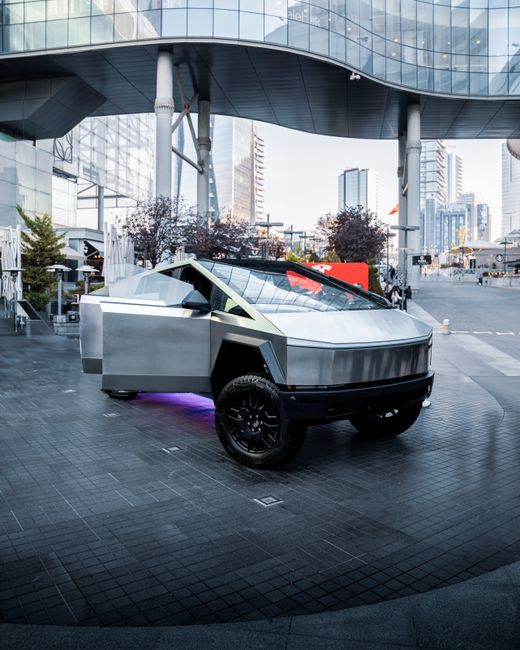
The Tesla Cybertruck, with its exoskeletal stainless-steel construction and sharp, geometric lines, stands out as a stark departure from conventional automotive design. This uniqueness is precisely what makes it a compelling candidate for integration into video games that thrive on distinct visual identities and imaginative concepts. In Fortnite, where players encounter a vast array of fantastical weaponry, vehicles, and cosmetic items, the Cybertruck could be envisioned as a premium vehicle obtainable through special events, battle pass tiers, or direct purchase. Its armored aesthetic lends itself perfectly to the game’s combat-focused gameplay, potentially offering unique defensive capabilities or integrated offensive functionalities. Imagine the Cybertruck’s reinforced hull shrugging off enemy fire, or its powerful engine providing a tactical advantage for quick evasive maneuvers or aggressive charges. The aesthetic alone is a strong selling point; the Cybertruck’s silhouette is instantly recognizable and carries a futuristic cachet that resonates with Fortnite’s established brand of edgy, forward-thinking design. Furthermore, Fortnite has a history of collaborating with major brands and popular culture phenomena, from Marvel superheroes to Star Wars characters. Introducing the Cybertruck would be a logical, albeit ambitious, extension of this strategy, tapping into the significant overlap between automotive enthusiasts and gamers.
Rocket League, on the other hand, presents a different, yet equally exciting, canvas for the Cybertruck. The game is fundamentally about physics-based vehicular acrobatics and precision. The Cybertruck’s unique shape and perceived weight could translate into distinct handling characteristics. Its low center of gravity might offer exceptional stability for aerial plays, while its angular body could create unpredictable bounces off the ball or the arena walls, leading to emergent gameplay opportunities. While current Rocket League cars are highly stylized and often exaggerated, the Cybertruck’s inherent boldness allows it to fit within this established visual language. Developers could meticulously recreate the Cybertruck’s signature look, from its sharp creases to its unpainted stainless-steel finish, ensuring a faithful representation for fans. The potential for customisation is also vast; imagine offering various paint finishes, decal packs inspired by Cybertruck concepts or even fictional modifications that enhance its in-game performance. The Cybertruck’s imposing presence on the Rocket League pitch would undoubtedly be a spectacle, drawing attention and excitement from both existing players and potential new ones attracted by the novelty of driving this iconic electric truck.
The technical implementation of the Cybertruck in either game would require careful consideration of physics engines and gameplay balance. In Fortnite, this would involve designing its hitboxes, acceleration, braking, and weapon integration to feel distinct yet fair within the existing ecosystem of vehicles. Its size might make it a larger target, but its unique design could also offer strategic advantages in terms of cover or traversal. For Rocket League, the challenge lies in translating its real-world perceived weight and dimensions into predictable and engaging in-game physics. Developers would need to experiment with its turning radius, jump height, boost consumption, and aerial maneuverability to ensure it feels like a viable, fun, and balanced option alongside the game’s established roster of cars. The "hitbox" of a car in Rocket League is a critical factor affecting how it interacts with the ball and other cars, and recreating the Cybertruck’s distinct proportions would necessitate careful calibration to avoid it feeling overpowered or underpowered.
Beyond the in-game mechanics, the marketing and fan engagement potential of a Fortnite Rocket League Tesla Cybertruck collaboration is colossal. Tesla, as a brand, has cultivated a strong following that often overlaps with the tech-savvy, forward-thinking demographic that engages with these games. Partnering with Epic Games (Fortnite) and Psyonix (Rocket League) would expose the Cybertruck to millions of active players worldwide, generating immense brand awareness and potentially driving future real-world interest in the vehicle. The announcement of such a crossover would undoubtedly generate significant buzz across social media platforms, gaming news outlets, and automotive publications. Imagine teaser trailers showcasing the Cybertruck’s cinematic entry into a Fortnite match or its thunderous debut on a Rocket League arena. Fan-created content, memes, and discussions would explode, further amplifying the reach of the campaign. This kind of cross-promotional synergy is a powerful tool for both the gaming companies and Tesla, offering a unique way to connect with consumers on a cultural level.
The absence of official confirmation does not diminish the fervent speculation and desire within both fanbases for such a collaboration. Online communities are rife with discussions, concept art, and hypothetical feature lists for a Cybertruck in Fortnite or Rocket League. This organic interest signals a clear market demand and a receptive audience ready to embrace this digital manifestation of an iconic vehicle. The success of past in-game vehicle integrations, such as the Ford F-150 in Fortnite or various licensed car models in Rocket League, provides a precedent for how well such crossovers can perform. The Cybertruck, with its avant-garde design and association with innovation, represents the next logical step in this trend, offering a visually striking and conceptually intriguing addition to the virtual worlds of Fortnite and Rocket League.
Considering the technical aspects, the stainless-steel exoskeleton of the Cybertruck could be visually represented with unique material shaders in-game, providing a distinct metallic sheen and texture that sets it apart from other vehicles. In Fortnite, this could translate into an aesthetic that feels both rugged and futuristic, fitting seamlessly into the game’s diverse biomes and combat scenarios. Imagine the Cybertruck parked amidst the ruins of a dilapidated structure or speeding across the vibrant landscapes of the current Fortnite island. For Rocket League, the angularity could be leveraged for new visual effects, such as reflecting stadium lights in unusual patterns or creating distinct shadow profiles. The aerodynamic (or perhaps, anti-aerodynamic) design could also influence how the ball interacts with it, creating unique deflections and spins that add a new layer of strategic depth to the game.
The potential for unique in-game abilities or cosmetics tied to the Cybertruck is another avenue of exciting speculation. In Fortnite, this could manifest as a special ability unlocked by driving the Cybertruck, such as a temporary shield boost or a localized EMP blast that temporarily disables enemy vehicles. Cosmetic items could include unique Cybertruck-themed pickaxes, gliders, or even character outfits inspired by Tesla’s minimalist aesthetic or the Cybertruck’s rugged appeal. In Rocket League, while the core gameplay revolves around car-to-ball interaction, cosmetic customization is a massive part of the player experience. Beyond different paint jobs, the Cybertruck could receive themed decals inspired by its real-world design cues, such as its tire treads, its unique lighting signatures, or even fictional sci-fi inspired modifications. Boost trails could be reimagined to reflect electric energy, and goal explosions could be designed with a futuristic, industrial flair.
The narrative potential for integrating the Cybertruck is also worth exploring. In Fortnite, its introduction could be tied to a specific in-game event or storyline. Perhaps it’s a vehicle discovered in a secret research facility or a new mode of transport introduced by a mysterious benefactor. In Rocket League, while the game is primarily gameplay-driven, a narrative framing for new car releases can add to the excitement. It could be presented as a revolutionary new vehicle that has "crashed" into the Rocket League arena, or a prototype designed for extreme off-world sports. Such narrative elements, however minor, can contribute to the overall immersion and engagement for players. The inherent "cool factor" of the Cybertruck would undoubtedly elevate the desirability of any associated in-game content, making it a sought-after item for collectors and competitive players alike. The ongoing evolution of both Fortnite and Rocket League, with their regular content updates and seasonal events, provides fertile ground for such a collaboration to be introduced and sustained. The anticipation for a Fortnite Rocket League Tesla Cybertruck crossover is a testament to the power of iconic design and the enduring appeal of imaginative gaming experiences.

