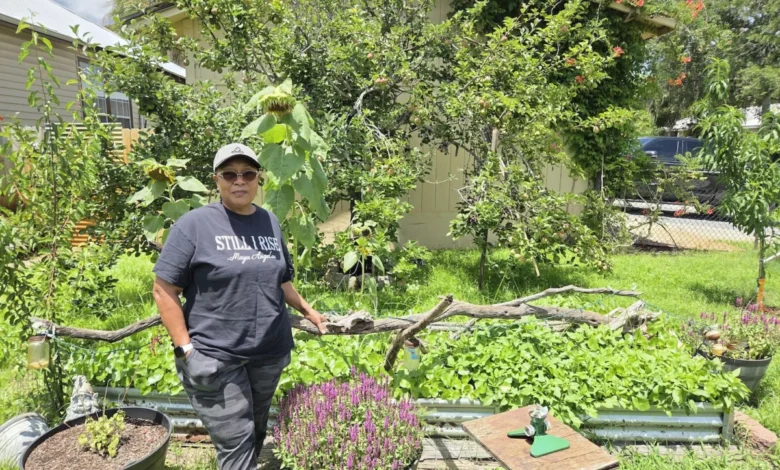
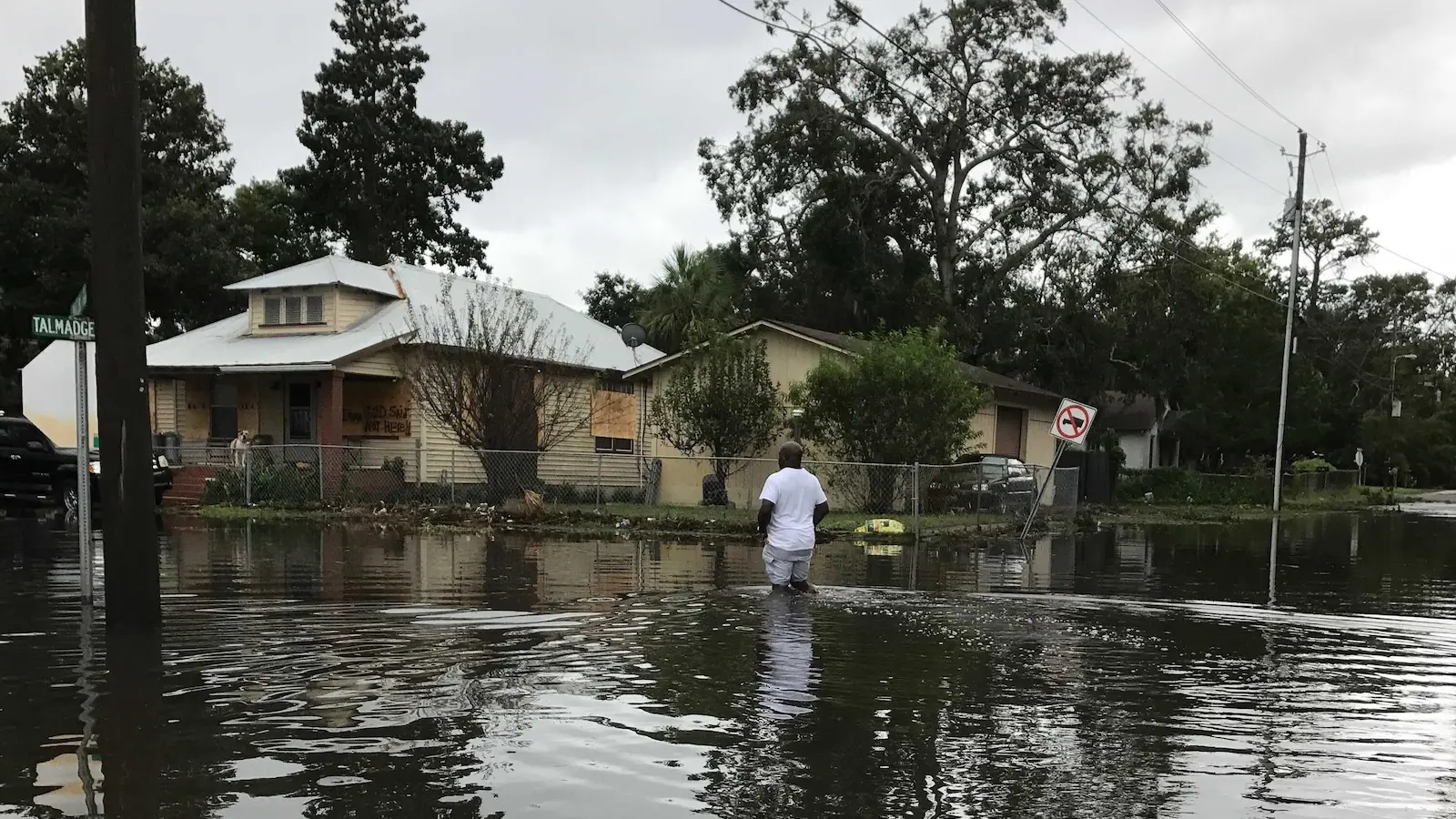
Semona Holmes lives in a home in Brunswick, Georgia, defined by a delicate balance between coastal beauty and industrial peril. Her property is adorned with fruit trees, vibrant potted flowers, and a tranquil fish pond, but this serenity is frequently shattered by the encroaching tides. When heavy rains fall or the Atlantic tide surges, the road outside her house transforms into what she describes as a river, with floodwaters occasionally rising to knee height. Following one particularly severe hurricane, the flooding was so profound that her neighbor navigated the neighborhood street in a canoe. While these recurring floods present a logistical nightmare, Holmes’ primary concern is not the water itself, but what the water carries.
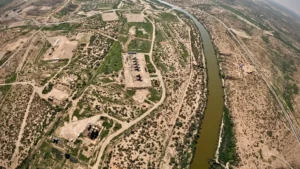
Living less than half a mile from a former pesticide plant that has long been designated a federal Superfund site, Holmes is one of thousands of residents in Glynn County grappling with the invisible threat of legacy pollution. As the climate changes and sea levels rise, the risk of these toxins being unearthed and distributed into residential neighborhoods has shifted from a theoretical concern to an urgent public health crisis. In response, a powerhouse coalition of six research institutions is launching Georgia’s first dedicated Superfund research center. Backed by a $15 million grant from the National Institute of Environmental Health Sciences (NIEHS), the team aims to dissect the complex relationship between industrial contamination, human health, and the accelerating impacts of climate change.
The Scope of the Five-Year Research Initiative
The newly established center represents a collaborative effort between Emory University, the University of Georgia, Georgia Institute of Technology, Morehouse School of Medicine, Spelman College, and Texas Tech University. This multidisciplinary team will spend the next five years focused on the four primary Superfund sites located within Glynn County. The project is designed to bridge the gap between environmental science and public health, seeking to provide residents with concrete answers that have been decades in the making.
Noah Scovronick, a professor of public health at Emory University, serves as a lead researcher on the project. According to Scovronick, the initiative is built upon two foundational pillars: retrospective analysis and prospective mitigation. The team intends to first understand the long-term health effects of past chemical exposures on the local population. Simultaneously, they will develop strategies to reduce or eliminate future exposures as environmental conditions shift.
The research will involve extensive environmental sampling, where scientists will collect and analyze air, soil, and water samples from across the county. By mapping the concentration and movement of toxins, the team hopes to identify specific pathways of exposure—whether through the inhalation of dust, the ingestion of contaminated groundwater, or contact with flood-borne sediments.
A History of Contamination: The Glynn County Context
To understand the urgency of this research, one must look at the industrial history of Brunswick and Glynn County. For much of the 20th century, the region served as a hub for chemical manufacturing and wood preservation. While these industries provided jobs and economic growth, they left behind a legacy of environmental degradation that persists today.
The four Superfund sites in Glynn County—the LCP Chemicals site, the Hercules 009 Landfill, the Terry Creek Dredge Spoil Areas, and the Brunswick Wood Preserving site—contain a cocktail of hazardous substances. These include mercury, polychlorinated biphenyls (PCBs), toxaphene (a now-banned pesticide), and various polycyclic aromatic hydrocarbons (PAHs).
The LCP Chemicals site, perhaps the most notorious of the four, was a former chlor-alkali plant that dumped massive amounts of mercury and other toxins into the surrounding marshes for decades. Despite millions of dollars spent on remediation and the "capping" of contaminated sediments, the site remains a focal point of concern. Residents like Holmes fear that these caps, which are essentially underwater lids designed to keep toxins buried, are not built to withstand the increasing frequency of "sunny day" flooding and storm surges.
Chronology of Industrial Impact and Remediation Efforts
The timeline of Glynn County’s environmental struggle is marked by decades of industrial activity followed by slow-moving federal intervention:
- 1940s–1970s: Intensive industrial expansion occurs in Brunswick. Plants like Hercules and LCP Chemicals operate with minimal environmental oversight, discharging waste directly into local waterways and unlined landfills.
- 1980: The Comprehensive Environmental Response, Compensation, and Liability Act (CERCLA), known as Superfund, is passed by Congress, giving the EPA the authority to clean up contaminated sites.
- 1983–1995: The four Glynn County sites are officially added to the National Priorities List (NPL). Initial investigations reveal extreme levels of mercury and toxaphene in the local food chain, particularly in fish and shellfish.
- 1990s–2010s: Remediation efforts begin, including the removal of thousands of tons of contaminated soil and the implementation of "monitored natural recovery" and sediment capping. Fishing advisories become a permanent fixture for the Turtle River and surrounding estuaries.
- 2020–2023: Residents report increased flooding incidents. Community advocacy groups call for more comprehensive testing to determine if floodwaters are transporting legacy toxins into residential yards.
- 2024: The NIEHS awards the $15 million grant to the Georgia-based research consortium, marking the beginning of the most comprehensive health and climate resilience study in the county’s history.
Climate Change as a Catalyst for Toxic Exposure
The intersection of climate change and legacy pollution is the most volatile aspect of the new research. Coastal Georgia is currently experiencing some of the fastest-rising sea levels on the Atlantic coast. According to data from the National Oceanic and Atmospheric Administration (NOAA), sea levels in the region are projected to rise by another 10 to 12 inches by 2050.
This rise in sea level, coupled with more intense precipitation events, creates a "flushing" effect. When Superfund sites are inundated by seawater or heavy rain, the hydrological pressure can breach containment structures. Noah Scovronick emphasizes that "resilience" is the keyword for the future. The research team will use advanced computer modeling to simulate how various climate scenarios—ranging from Category 3 hurricanes to sustained sea-level rise—will affect the stability of the toxic materials stored at these sites.
The goal is to ensure that the remediation strategies currently in place are not just temporary fixes, but are robust enough to protect the community for the next century. If a cap is found to be vulnerable to erosion from rising tides, the research will provide the data necessary to advocate for more permanent solutions, such as total removal of the contaminants.
Community Health and Environmental Justice
For the residents of Brunswick, the research is about more than just data; it is about validation and safety. The community has long suspected that high rates of respiratory issues, cancers, and developmental delays in children are linked to the industrial sites. Holmes, who has six grandchildren, expresses a fear common among local families: the safety of playgrounds and schoolyards.
"We want them to be healthy," Holmes said. "And you don’t want to worry that they’re playing on a playground that has contaminated soil."
The involvement of the Morehouse School of Medicine and Spelman College is particularly significant in this regard. These institutions bring a focus on environmental justice, ensuring that the research accounts for the disproportionate impact of pollution on low-income and minority communities. Historically, industrial sites were often situated near marginalized neighborhoods, and the residents of these areas frequently lack the resources to relocate or mitigate exposure on their own.
One of the study’s specific aims is to investigate the "body burden" of toxins in the local population. This involves analyzing blood and tissue samples to determine if the chemicals found at the Superfund sites are present in the residents themselves. This data will be critical in establishing a direct link between the industrial legacy and current public health outcomes.
Official Responses and the Path to Accountability
While the EPA and the Georgia Environmental Protection Division (EPD) have overseen the cleanup of these sites for decades, the progress has often been criticized as too slow and overly reliant on "leaving the waste in place." The new research center operates independently of these regulatory agencies, though it intends to share its findings to influence future policy.
The companies responsible for the contamination—including Honeywell (which acquired the liabilities of LCP Chemicals) and Hercules—have spent millions on court-ordered cleanups. However, Holmes and other advocates argue that financial remediation does not equate to moral or social accountability.
"It shows that you care about humanity," Holmes said, referring to the need for companies to acknowledge the full extent of the damage. "And that you are able to acknowledge that, ‘Yeah, by our actions, we have possibly contaminated an entire county.’"
The researchers hope that by providing an objective, peer-reviewed assessment of the situation, they can create a framework for continued action that holds responsible parties accountable for the long-term monitoring and maintenance of these sites in the face of a changing climate.
Broader Implications for National Policy
The work being done in Glynn County serves as a pilot for the rest of the United States. There are over 1,300 Superfund sites on the National Priorities List across the country, many of which are located in coastal areas or floodplains. As climate change accelerates, the "Brunswick Model"—a multi-institutional, community-focused, and climate-resilient approach—could become the gold standard for managing legacy pollution nationwide.
The project also highlights a shift in federal funding priorities toward "One Health" initiatives, which recognize that human health is inextricably linked to the health of the environment. By studying the soil and water of Glynn County, researchers are not just protecting a single community; they are gathering data that will help scientists understand how toxins behave in a warming world.
As the five-year study commences, the residents of Brunswick remain cautiously optimistic. For people like Semona Holmes, the hope is that the "rivers" in her street will one day carry nothing more than rainwater, and that the legacy of the pesticide plant will finally be laid to rest, documented, and remediated once and for all.