
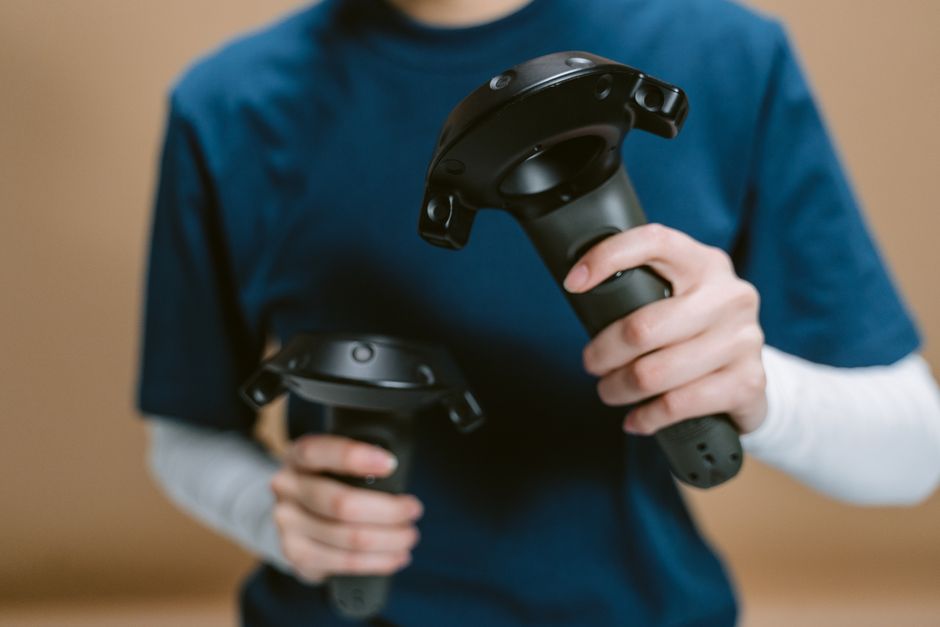
HTC Vive Pro Eye: The Apex of Immersive VR
The HTC Vive Pro Eye represents a significant evolutionary leap in virtual reality hardware, specifically targeting professional users and VR enthusiasts who demand unparalleled visual fidelity, precise tracking, and enhanced user interaction. At its core, the Vive Pro Eye is an iteration of the already highly-regarded Vive Pro, but with the critical addition of integrated eye-tracking technology. This feature is not merely a novelty; it unlocks a suite of advanced capabilities that fundamentally alter the VR experience, from improved rendering performance and more natural social interactions to sophisticated data analytics for training and research.
The most transformative aspect of the Vive Pro Eye is its built-in eye-tracking system. Utilizing miniature infrared cameras positioned within the headset, the system precisely monitors the user’s gaze direction. This data is then relayed to the VR application, allowing for a variety of groundbreaking functionalities. For visual performance, eye-tracking enables foveated rendering. This technique, inspired by human vision, means the GPU can dedicate its full rendering power to the exact point where the user is looking, while rendering the periphery at a lower resolution. The human eye naturally focuses on a small central area, with peripheral vision being less detailed. Foveated rendering mimics this, drastically reducing the computational load on the graphics card without a perceptible decrease in visual quality for the end-user. This leads to smoother frame rates, the ability to run more graphically intensive scenes, and ultimately, a more believable and less fatiguing VR experience. The reduction in rendering demand is particularly crucial for pushing the boundaries of VR resolution and detail.
Beyond performance enhancements, eye-tracking revolutionizes user input and interaction. Instead of solely relying on physical controllers, users can now interact with virtual objects and menus simply by looking at them. This "gaze-and-click" or "look-to-select" functionality offers a more intuitive and faster method of navigation, especially in complex interfaces or when hands are occupied with other tasks. In social VR environments, eye-tracking allows for realistic avatar eye movement. When an avatar’s eyes move in sync with the user’s, it creates a much deeper sense of presence and allows for more nuanced non-verbal communication. Understanding where someone is looking can convey attention, agreement, confusion, or interest, adding a layer of social depth previously unattainable in VR. This is a critical development for applications in remote collaboration, virtual meetings, and immersive training scenarios where conveying subtle social cues is important.
The display specifications of the Vive Pro Eye are instrumental in its premium positioning. The headset boasts dual AMOLED displays, each offering a resolution of 1440 x 1600 pixels per eye, for a combined resolution of 2880 x 1600 pixels. This pixel density translates to a remarkably sharp and detailed image, significantly reducing the screen-door effect – a common artifact in earlier VR headsets where the gaps between pixels are visible. The AMOLED technology provides deep blacks, vibrant colors, and excellent contrast ratios, contributing to a more immersive and visually stunning experience. The refresh rate is a fluid 90Hz, ensuring smooth motion and minimizing motion sickness for most users. The field of view (FOV) is approximately 110 degrees, which is a good balance between immersion and avoiding distortion at the edges. While not the absolute widest FOV on the market, it is sufficient for most applications and avoids the compromises associated with ultra-wide lenses.
Tracking accuracy is a cornerstone of any high-fidelity VR system, and the Vive Pro Eye excels in this regard through its SteamVR Tracking 2.0 compatibility. Utilizing external base stations (sold separately or as part of a bundle), SteamVR Tracking provides sub-millimeter precision and a large tracking volume. The Vive Pro Eye supports up to four base stations, allowing for an expansive play area that can be configured to suit various environments, from small home offices to large industrial simulation spaces. This robust tracking is essential for applications that require precise movements, such as surgical simulations, architectural walkthroughs, or intricate design work. The inside-out tracking capabilities of some newer headsets are convenient, but for professional-grade accuracy and reliability, especially in complex or dynamic environments, lighthouse tracking remains the gold standard, and the Vive Pro Eye leverages it to its fullest.
Ergonomics and comfort are crucial for extended VR sessions, and the Vive Pro Eye addresses this with a well-designed headset. The weight distribution is optimized, and the head strap is adjustable, featuring a rear-dial fit system that allows for easy tightening and loosening. The facial interface is made of soft, breathable material, and the headset offers ample room for most glasses wearers, a significant consideration for many users. The adjustable IPD (interpupillary distance) dial ensures that the lenses can be precisely aligned with the user’s eyes, further enhancing visual clarity and comfort, and mitigating eye strain. The audio solution is also a key component, featuring integrated, high-resolution headphones that deliver rich, spatial audio, further immersing the user in the virtual environment. The sound quality is excellent, providing both realistic ambient soundscapes and clear directional cues.
The Vive Pro Eye’s target market is predominantly professional and enterprise users, and this is reflected in its advanced features and price point. Applications span a wide range of industries. In training and simulation, eye-tracking provides invaluable data on user attention, engagement, and learning patterns. For example, in pilot training, instructors can see precisely where a trainee is looking to identify areas of distraction or focus. In medical training, surgeons can have their gaze analyzed to refine their techniques. For design and engineering, the ability to interact with complex 3D models using gaze, coupled with the high resolution, makes it an ideal tool for visualization and iteration. Architects can perform immersive walkthroughs, and product designers can review prototypes with an unprecedented level of detail.
Research and development also benefit immensely. Psychologists can use the Vive Pro Eye to study human behavior, attention, and perception in controlled virtual environments. The precise gaze data can reveal subconscious reactions and cognitive processes. In collaboration and communication, the enhanced avatar expressiveness thanks to eye-tracking fosters more natural and engaging remote interactions. Teams can brainstorm and work together in shared virtual spaces with a greater sense of presence and understanding. The improved visual clarity and reduced latency are also beneficial for VR esports and high-fidelity gaming, although the primary focus remains professional.
From a hardware perspective, the Vive Pro Eye benefits from the mature SteamVR ecosystem. It is compatible with a vast library of VR applications and requires a powerful PC to run effectively. The recommended PC specifications are substantial, emphasizing the need for a high-end graphics card (NVIDIA GeForce GTX 1070 / AMD equivalent or better) and a robust processor to handle the demanding rendering and tracking requirements, especially when leveraging foveated rendering. The headset connects to the PC via a DisplayPort 1.2 and USB 3.0 connection, and the included link box provides a convenient way to manage these connections.
The Vive Pro Eye’s connectivity and setup are relatively straightforward for those familiar with PC VR. The SteamVR platform handles the software integration and library management. The base stations need to be strategically placed to ensure optimal line-of-sight tracking coverage. Once set up, the system is robust and reliable, offering consistent performance. The durability and build quality of the Vive Pro Eye are also noteworthy, designed for regular use in demanding environments.
When considering the competition, the Vive Pro Eye stands out due to its integrated eye-tracking and its focus on the professional market. While other headsets offer impressive displays and tracking, the eye-tracking capabilities provide a unique advantage for specific use cases. Standalone headsets like the Meta Quest Pro offer an all-in-one solution with some advanced features, but they typically do not match the raw visual fidelity and precise lighthouse tracking of the Vive Pro Eye. PC-tethered headsets from other manufacturers may offer comparable display resolutions or FOVs, but the Vive Pro Eye’s combination of eye-tracking, SteamVR Tracking, and high-end displays solidifies its position as a premium enterprise-grade VR solution.
The ongoing development of VR technology means that features like eye-tracking will become more prevalent, but the Vive Pro Eye was a pioneer in bringing this advanced capability to a commercial, albeit professional, product. The data generated by its eye-tracking system opens up new avenues for analysis and optimization in various fields, making it more than just an entertainment device; it’s a powerful tool for understanding human behavior and enhancing performance. The continued evolution of software that leverages eye-tracking will further unlock the potential of this hardware, making it an increasingly valuable investment for businesses and researchers. The seamless integration of eye-tracking with foveated rendering is a key technological achievement that significantly boosts performance and visual quality, making the Vive Pro Eye a compelling choice for those who require the absolute best in virtual reality immersion and interaction. The ability to precisely monitor user attention, combined with high-fidelity visuals and accurate tracking, makes the Vive Pro Eye a truly next-generation VR system.

