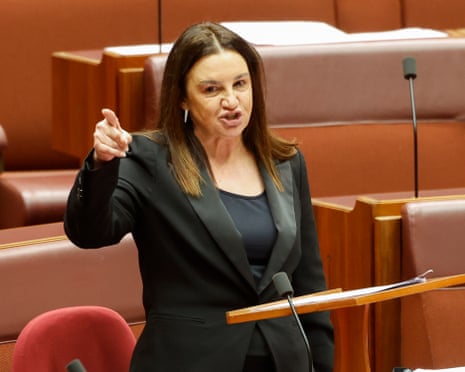
Federal politics in Canberra has descended into a fierce ideological clash, highlighted by an extraordinary parliamentary intervention from Tasmanian Senator Jacqui Lambie, who launched a scathing attack on One Nation leader Pauline Hanson. In a high-stakes adjournment speech delivered in the Senate, Senator Lambie implored the Australian electorate to reject what she characterized as the perilous and deceptive nature of populist politics. Drawing explicit parallels between the One Nation leader and international political figures such as Donald Trump and Nigel Farage, Lambie warned that the rise of right-wing populism systematically erodes the financial stability and well-being of the working class.

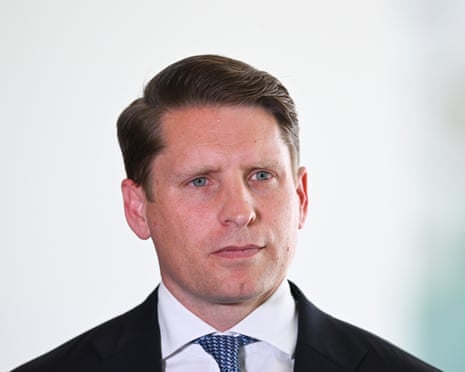
The Tasmanian senator’s fiery address was catalyzed by a wave of vitriolic online abuse directed at her following an impassioned public defense of Liberal MP Andrew Hastie. The friction between mainstream conservative figures and One Nation escalated dramatically after the minor party released an animated cartoon series that repeatedly targeted Hastie, labeling the former SAS captain and current shadow portfolio member a "traitor." The localized feud over Hastie’s Western Australian seat of Canning has since broadened into a national debate concerning the coarsening of political discourse and the adoption of imported American-style culture wars within the Australian parliamentary system.
Lambie did not mince words when analyzing the mechanics of populist movements, asserting that such leaders rely on manufacturing societal grievances and manufacturing scapegoats rather than delivering substantive policy solutions. Her critique extended to foreign policy, specifically condemning Donald Trump’s rhetoric regarding potential foreign entanglements and international conflicts, while fiercely rebuking Pauline Hanson for endorsing such positions. Lambie questioned whether the Australian public would willingly support dragging Australian defense personnel into protracted foreign conflicts abroad, dismissing Hanson’s foreign policy stances as fundamentally reckless.

The Rise of US-Style Politics and Parliamentary Rebukes
The fallout from One Nation’s aggressive campaigning tactics has triggered pushback across multiple political aisles. Andrew Hastie, speaking publicly on morning broadcast media, argued that the national political tone has experienced a significant and regrettable decline. He explicitly accused One Nation of importing "Maga-style" American politics into Australia, noting that the tactics employed are designed to personalize political attacks rather than engage in constructive debate.
Hastie confirmed that communication between himself and Hanson has completely broken down amid the escalating feud. While addressing the Coalition’s long-term electoral strategy, Hastie emphasized that the Liberal Party must remain intensely focused on rebuilding its primary vote foundation in what has increasingly become a complex three-cornered electoral contest. Rather than entertaining premature discussions regarding post-election coalitions or alliances with minor parties, Hastie maintained that the Liberal Party is currently fighting for its political survival and must prioritize standing on its own merits at the ballot box.
Political analysts note that the friction between the major conservative parties and One Nation underscores a deep strategic dilemma for the Coalition. As minor populist parties attempt to peel away working-class voters by tapping into economic anxieties and cost-of-living pressures, mainstream politicians are forced to balance the risk of alienating conservative base voters against the danger of legitimizing inflammatory rhetoric.
Regulatory Crackdowns and Corporate Accountability
While federal parliament wrestled with the implications of political populism, regulatory bodies in Canberra were busy enforcing strict statutory frameworks across other sectors. The Australian Communications and Media Authority (Acma) delivered a severe blow to the online wagering industry by issuing a massive fine exceeding $1 million against sports betting platform Dabble.
The penalty, totaling $1,069,200, was levied after an extensive regulatory investigation uncovered systemic failures in adhering to federal consumer protection laws. Acma found that Dabble had persistently transmitted more than 800 promotional messages to 165 vulnerable gamblers who had explicitly opted out of online wagering by enrolling in the federal government’s self-exclusion register, BetStop. Furthermore, the regulatory watchdog discovered that the betting operator failed to promptly close the wagering accounts of 157 individuals registered with the addiction-prevention service, while also dispatching thousands of push notifications that omitted mandatory statutory warnings and information regarding BetStop support services.
Acma authority figures emphasized that self-exclusion registers represent a cornerstone of the national harm-minimization strategy designed to combat problem gambling. Regulatory member Carolyn Lidgerwood stressed that wagering providers have a strict legal and ethical obligation to respect consumer self-exclusion decisions immediately. Alongside the multi-million-dollar financial penalty, Dabble was subjected to a court-enforceable undertaking mandating rigid future compliance measures, signaling that regulatory authorities are prepared to utilize the full extent of their legal powers to curb predatory marketing practices within the gambling sector.
State-Level Legislative Battles and Social Policy Debates
Simultaneously, state politics in New South Wales became a focal point for intense social policy debates, specifically regarding reproductive rights and tenancy reforms. The state leader of One Nation, Mike Newman, fronted a high-profile rally outside the NSW Parliament House to voice staunch opposition against what organizers termed "abortion up to birth." The demonstration coincided with parliamentary preparations for an anticipated upper house conscience vote on a private member’s bill introduced by Libertarian member John Ruddick, which seeks to restrict specific late-term procedures.
During the rally, Newman stumbled over his prepared remarks while attempting to outline his party’s platform, inadvertently generating widespread media commentary. Legislative sources indicated that the upcoming vote on Ruddick’s bill is expected to be remarkably tight, with crossbench absences potentially tipping the balance and leaving the legislation just short of the numbers required to pass. The anti-abortion rally mirrored similar demonstrations held earlier in the year that featured federal figures such as Barnaby Joyce, highlighting a coordinated effort by conservative and minor party actors to pressure state-level lawmakers.
In a contrasting legislative development aimed at easing cost-of-living pressures for citizens, the New South Wales government officially rolled out its statewide "Smart Rental Bonds" scheme. Designed to eliminate the crushing financial barrier of double-bond payments when transitioning between properties, the online initiative allows renters to transfer their existing bond directly from an outgoing lease to an incoming home. State housing authorities project that the scheme will alleviate financial strain for more than two million renters across New South Wales, potentially saving households up to $4,000 per move, though a nominal administrative fee is attached to the digital service.
Artificial Intelligence Policy and Strategic Defense Alignment
Technology, national security, and intellectual property also dominated policy discussions in Canberra, driven by rapid advancements in artificial intelligence and shifting geopolitical defense commitments. Shadow defence minister James Paterson used media appearances to advocate for Australia actively securing access to advanced United States frontier AI models. Paterson argued that integrating state-of-the-art computational infrastructure and advanced silicon chips is vital not only for national economic competitiveness but also for modern military defense, intelligence collection, and cyber security resilience.

However, Paterson’s enthusiasm for fast-tracking AI integration collided directly with ongoing domestic controversies regarding copyright protection and the rights of creative professionals. Leaked federal policy documents revealed that the government is actively evaluating frameworks that would permit AI developers to automatically utilize copyrighted works of artists and creators for model training unless individuals proactively execute an administrative "opt-out" procedure. Representatives of creative industries have fiercely criticized the proposed framework, warning that local creators risk being marginalized in the rush to attract hundreds of billions of dollars in foreign tech investments.
While acknowledging valid concerns regarding intellectual property rights, Paterson maintained that compensation mechanisms can be successfully negotiated, provided Australia acts decisively before investment windows in allied nations close. This sentiment was echoed by Deputy Prime Minister Richard Marles, who stated during an evening broadcast appearance that he found comfort in recent warnings issued by artificial intelligence executives calling for a measured slowdown in the technological arms race. Marles emphasized that the federal government’s primary objective is ensuring that rigorous regulatory safeguards are established ahead of technological capabilities to guarantee that AI development benefits the broader Australian community rather than undermining public security.

On the defense front, Marles also addressed emerging international reports regarding potential timeline adjustments within the trilateral AUKUS security pact. Responding to media queries concerning suggestions that the United Kingdom’s Labour government might delay the physical commencement of its attack submarine construction program by two years to 2028, the Deputy Prime Minister rejected any notion of strategic red flags. Marles asserted that the ultimate pacing of design maturation remains entirely on track, noting that the UK is fully positioned to cut steel for its inaugural SSN AUKUS vessel within the upcoming timeframe, ensuring a synchronized production pipeline that aligns seamlessly with Australia’s long-term maritime defense capabilities.
As the parliamentary sitting week progresses, the intersection of populist political rhetoric, regulatory enforcement, and technological disruption continues to shape the national agenda. Lawmakers across all political spectrums face mounting pressure to address economic anxieties while maintaining institutional stability ahead of forthcoming electoral contests.