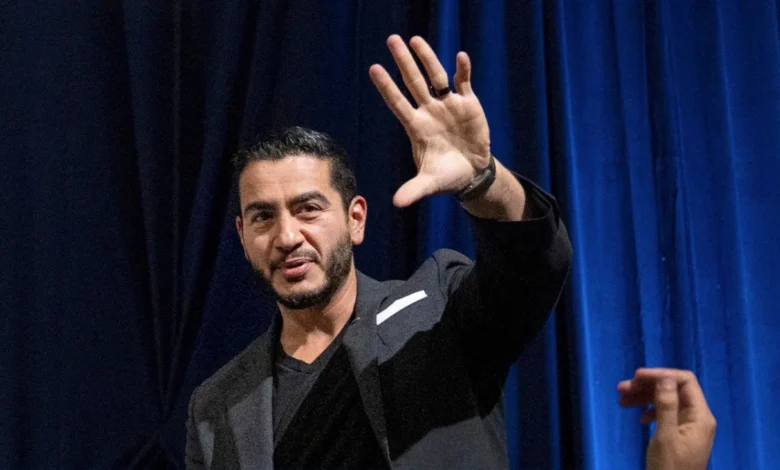
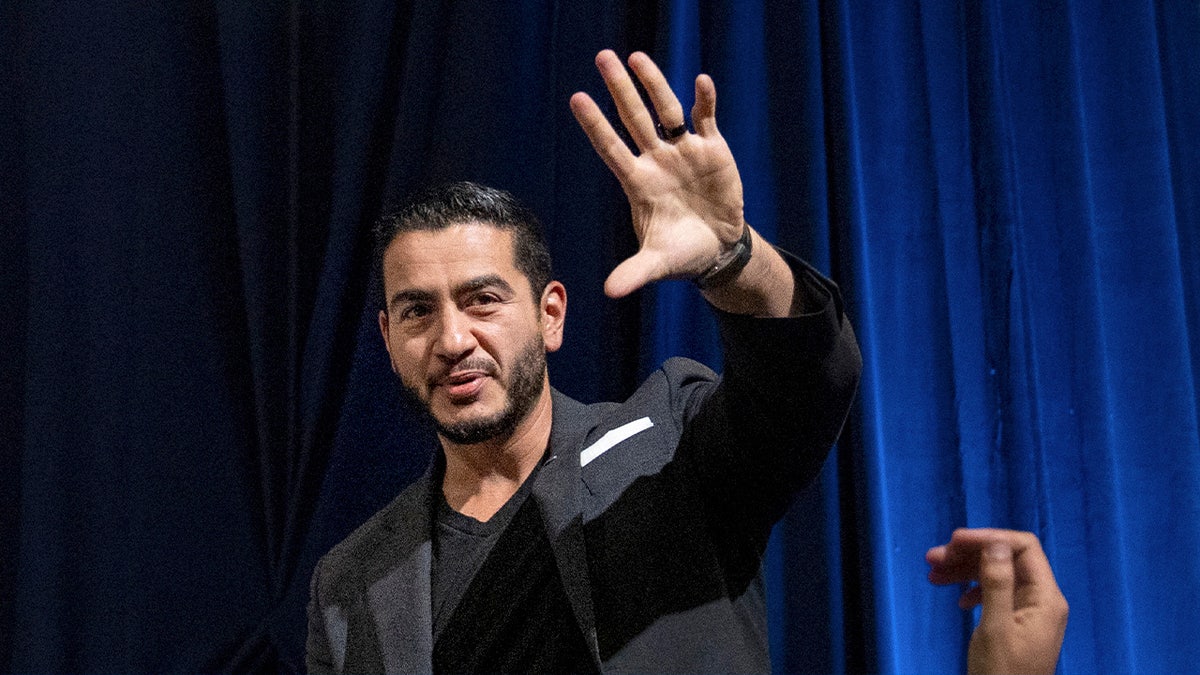
In the heat of one of the nation’s most competitive U.S. Senate races, Democratic nominee Abdul El-Sayed has placed the concept of systemic economic and social redress at the center of his platform. Speaking at a forum hosted by the Woman Difference Collaborative in Detroit this past Saturday, El-Sayed articulated a vision for governance that prioritizes what he termed "unpaid debts" owed to Black communities. His remarks, which underscored the complexities of his campaign strategy, highlight a concerted effort to solidify support among key Democratic constituencies while navigating a challenging political landscape against Republican nominee and former Congressman Mike Rogers.
The event, which brought together prominent women faith leaders in Detroit, served as a microcosm of the broader tensions and priorities defining the 2026 Michigan Senate race. As candidates finalize their strategies for the closing weeks of the campaign, the discourse surrounding racial equity, economic investment, and historical disenfranchisement has emerged as a significant point of divergence between the two parties.
Contextualizing the Call for Redress
El-Sayed’s assertion that there are "unpaid debts that have long since come due" reflects a growing movement within the Democratic Party to address the long-term impacts of systemic inequality. His comments were not merely abstract; they were framed within the context of his own tenure as a public health official. By drawing upon his experience as the former Wayne County health director, El-Sayed attempted to bridge the gap between abstract policy proposals and tangible, lived experience.
He specifically pointed to the disparities in infant and maternal mortality rates, the prevalence of childhood asthma in urban centers, and the ongoing crisis of lead exposure as evidence of historical policy failures. According to data from the Michigan Department of Health and Human Services, these issues continue to disproportionately affect minority populations in urban areas like Detroit, Flint, and Grand Rapids. By linking these public health outcomes to the concept of "unpaid debts," El-Sayed is signaling that his legislative agenda would focus on aggressive federal funding for environmental remediation, healthcare infrastructure, and targeted social services.

A Campaign Defined by Outreach and Scrutiny
The path to the Senate for El-Sayed has been marked by significant milestones and intense public scrutiny. A physician and academic, he first gained statewide prominence during his unsuccessful 2018 gubernatorial bid. That race established him as a leading voice for the progressive wing of the Michigan Democratic Party. However, his current Senate campaign has required a broader coalition-building effort.
During the Saturday forum, when asked how he intends to energize voters who favored primary opponents or who remain skeptical of his platform, El-Sayed emphasized a strategy of persistent engagement. He argued that the political process often demands a level of accountability that is missing from current leadership. "The question for me is, within my power have I done my best?" El-Sayed told the attendees. "I will challenge people to look at my history and say, ‘Yeah, that man hasn’t done everything he could around the problems he says he cares about.’"
This defensive stance is perhaps a reaction to the persistent media scrutiny regarding his past affiliations and policy positions. Recent reports, including investigations into his past protest activities against groups that have converted to Christianity and questions surrounding his ties to media figures like Hasan Piker, have been utilized by Republican opponents to paint him as outside the political mainstream. El-Sayed has largely sought to pivot from these character-based attacks by focusing on the "bread and butter" issues facing Michigan families, such as the rising cost of groceries and the need for greater access to capital for small businesses.
The Opposition: Mike Rogers and the Republican Strategy
On the other side of the aisle, former Representative Mike Rogers is campaigning on a platform of economic revitalization and national security. Rogers, who has deep roots in Michigan politics, is looking to regain a seat for the Republican Party in a state that has become a critical battleground for control of the upper chamber.
The contrast between the two candidates could not be more stark. While El-Sayed leans into discussions of structural reform and systemic debt, Rogers has focused his messaging on the economy, energy independence, and border security. Campaign advertisements from the Rogers camp have frequently targeted El-Sayed’s progressive record, framing it as an existential threat to the state’s economic stability.
Analysts note that the Michigan Senate race is being viewed as a bellwether for the country. With both candidates working to mobilize their respective bases, the outcome will likely hinge on turnout in the Detroit metropolitan area and the suburbs of Western Michigan. The challenge for El-Sayed is to maintain the enthusiasm of his core base while reassuring moderate voters who may be wary of his more radical policy proposals.
Analyzing the Economic and Social Implications
The rhetoric of "unpaid debts" carries significant political weight. In economic terms, this language is often interpreted as a call for increased federal spending on urban infrastructure, educational grants, and minority-owned business loans. While such proposals are popular among urban Democratic voters, they face a steep climb in a divided Congress where fiscal conservatism remains a potent force.
Furthermore, the discussion around criminal justice reform and U.S. aid to Israel—both topics that arose during the Detroit event—highlights the delicate balance El-Sayed must strike. He is attempting to satisfy a base that is increasingly vocal about foreign policy and justice reform, while also ensuring that his campaign remains palatable to a broader statewide audience.
The implications for the 2026 election cycle are profound. If El-Sayed’s message resonates with voters, it could signal a shift in how Democrats campaign in the Midwest, moving away from purely economic messaging toward one that centers on social equity and restorative justice. Conversely, if the message fails to gain traction, it may lead to a reassessment of the viability of such platforms in swing states.
Chronology of the 2026 Campaign Cycle
The 2026 election cycle has been defined by high-stakes developments:

- Early 2026: Abdul El-Sayed officially launches his U.S. Senate bid, focusing on his public health credentials and progressive economic agenda.
- Spring 2026: Mike Rogers enters the race, quickly securing support from key Republican donors and party leadership, emphasizing his congressional experience.
- Summer 2026: A series of investigative reports surface, sparking debate over El-Sayed’s past activism and his political ties.
- August 2026: The candidates engage in a series of town halls and media appearances across the state, with the economy and inflation emerging as the dominant issues in the polls.
- September 2026: El-Sayed’s remarks on "unpaid debts" at the Woman Difference Collaborative event draw national attention, marking a significant moment in the final push toward Election Day.
Official Responses and Future Outlook
As of press time, the campaign for Mike Rogers has not issued a formal rebuttal to the specific comments made by El-Sayed in Detroit, though they have previously categorized his policy proposals as "fiscally irresponsible" and "divisive." Meanwhile, the El-Sayed campaign continues to double down on its commitment to its platform, insisting that the only way to heal the nation’s divisions is to directly address the systemic injustices that have plagued Black communities for generations.
The race remains statistically tight, according to internal and independent polling. As the final weeks approach, the focus will shift to voter turnout operations, advertising blitzes, and the final set of debates. For the voters of Michigan, the choice represents a fundamental disagreement on the role of government: should it be a tool for systemic, restorative change, or a mechanism for stability, economic growth, and the protection of traditional values?
The outcome of this race will not only determine who represents Michigan in the U.S. Senate but will also serve as a definitive indicator of the political mood of the American electorate in the mid-2020s. Whether the rhetoric of "unpaid debts" serves as a bridge to a more equitable future or a wedge that further divides an already polarized state remains the central question of the campaign. For now, both candidates continue their march across the state, hoping that their respective visions will command the majority come November.