A team of bioengineers and researchers at the Massachusetts Institute of Technology (MIT) has unveiled a groundbreaking therapeutic technique that bypasses the complex, costly, and time-consuming laboratory manufacturing processes traditionally required for advanced cell therapies. Published in the peer-reviewed journal Nature Biotechnology, the study details a method utilizing specialized lipid nanoparticles (LNPs) to deliver genetic instructions directly to natural killer (NK) cells inside a living organism. This in vivo reprogramming approach successfully converts native immune cells into targeted cancer and autoimmune disease fighters within the body, marking a potential paradigm shift in modern immunotherapy.
The research was spearheaded by senior author Daniel Anderson, a professor in MIT’s Department of Chemical Engineering and a member of both the Koch Institute for Integrative Cancer Research and the Institute for Medical Engineering and Science. The study’s lead authors include MIT postdoctoral researcher Yuang Chen and graduate students Julia Monkovic and Haseeb Mughal, with additional contributions from renowned MIT professor Robert Langer.
Overcoming the Bottlenecks of Conventional Cell Therapies
To understand the magnitude of the MIT team’s innovation, one must examine the current landscape of immune cell engineering. Over the past decade, the U.S. Food and Drug Administration (FDA) has approved seven cell-based gene therapies utilizing chimeric antigen receptor (CAR) T cells. These treatments have achieved remarkable clinical successes, particularly against hematological malignancies such as B-cell acute lymphoblastic leukemia, diffuse large B-cell lymphoma, and multiple myeloma.
CAR T cell therapy functions by extracting a patient’s T cells, transporting them to a specialized Good Manufacturing Practice (GMP) facility, and genetically modifying them using viral vectors to express synthetic receptors. These engineered receptors are designed to recognize specific tumor-associated antigens. Once infused back into the patient, the modified T cells actively hunt and destroy malignant cells bearing those targeted markers.
Despite their therapeutic efficacy, conventional CAR T cell therapies present profound logistical and financial hurdles. The multi-step manufacturing pipeline is notoriously labor-intensive, requiring specialized sterile facilities, rigorous quality control testing, and cryogenic transport. Consequently, these individualized therapies often carry exorbitant price tags—frequently exceeding hundreds of thousands of dollars per patient—and involve a protracted turnaround time of several weeks. For aggressive cancers where every day is critical, this delay can be fatal.
Furthermore, traditional CAR T therapies face inherent biological limitations when deployed against T-cell malignancies. Because both the therapeutic CAR T cells and the intended malignant targets belong to the same lineage (T cells), the engineered cells frequently attack one another—a phenomenon known as fratricide. This self-targeting undermines the potency of the treatment and complicates its clinical application for T-cell cancers and T-cell-driven autoimmune disorders.
Harnessing Natural Killer Cells and Lipid Nanoparticles
To circumvent these clinical and manufacturing bottlenecks, the MIT researchers turned their attention to natural killer (NK) cells. Unlike T cells, NK cells are a distinct component of the innate immune system. They possess an intrinsic ability to recognize and destroy stressed, infected, or malignant cells without requiring prior sensitization. More importantly, engineering NK cells to target aberrant T cells does not trigger the lethal fratricide seen in CAR T treatments, opening an entirely new therapeutic window for difficult-to-treat blood cancers and autoimmune conditions.
However, manufacturing CAR NK cells ex vivo (outside the body) shares many of the same burdensome infrastructure and processing requirements as CAR T cell production. To solve this, Dr. Anderson and his colleagues engineered a sophisticated delivery mechanism to perform the genetic modification directly in vivo.
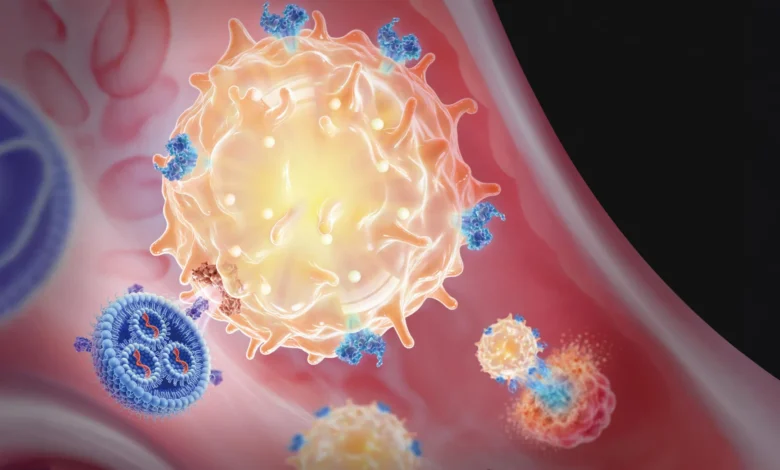
The core technology relies on custom-designed lipid nanoparticles—microscopic vesicles made of fatty molecules—tailored to encapsulate and protect messenger RNA (mRNA). This mRNA carries the precise genetic blueprint for constructing a chimeric antigen receptor. To ensure these nanoparticles home in exclusively on the intended immune cells rather than getting intercepted by the liver, spleen, or other tissues, the researchers functionalized the surface of the LNPs with specific antibody fragments. These surface markers recognize and bind to receptors natively expressed on the surface of NK cells.
Once the nanoparticles are injected into the bloodstream, they selectively latch onto native NK cells and release their mRNA payloads into the cellular cytoplasm. The cell’s internal machinery then translates the mRNA, manufacturing the specialized CAR proteins and embedding them into the cell membrane. Within a remarkably short window, the patient’s own native NK cells are successfully reprogrammed into potent, targeted CAR NK cells capable of recognizing and eliminating diseased cells.
Preclinical Success in Oncology and Autoimmunity
The MIT team rigorously tested the efficacy of this in vivo delivery platform in multiple preclinical murine models, yielding striking results. In initial evaluations, intravenous administration of the engineered lipid nanoparticles successfully modified approximately 80 percent of the targeted NK cell population within the subjects.
Building on this high transfection efficiency, the researchers evaluated the treatment’s capacity to suppress tumor growth. In murine models featuring aggressive melanoma, administration of nanoparticles designed to direct NK cells against the tumor resulted in complete remission in three out of five treated subjects.
To further demonstrate clinical translational potential, the team utilized humanized mouse models—subjects engineered to host components of the human immune system—to test the therapy against human T-cell lymphoma. Following a regimen of five nanoparticle injections, the targeted tumors were entirely eradicated. Notably, the therapeutic outcomes achieved via single-step in vivo nanoparticle delivery were comparable to those achieved using conventionally manufactured CAR NK cells produced via ex vivo laboratory modification.
Beyond oncology, the researchers explored the versatility of the platform in addressing autoimmune diseases, where the immune system erroneously attacks the body’s healthy tissues. They focused on autoimmune hepatitis, a chronic inflammatory liver disease driven by autoreactive T cells that attack functional liver cells, known as hepatocytes.
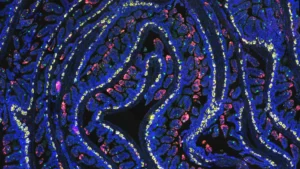
By designing nanoparticles that instructed native NK cells to target and eliminate these specific autoreactive T cells, the research team sought to halt the underlying autoimmune response. Following a single nanoparticle injection, the treatment successfully cleared the harmful T cells from the subjects. Histological examination subsequently revealed that the damaged liver tissues successfully regenerated and healed once the destructive immune response was interrupted.
Broader Implications and Future Horizons
The implications of this breakthrough extend far beyond oncology and hepatitis. By demonstrating that complex genetic modifications can be safely and efficiently orchestrated directly within the human body, the MIT technique points toward a future where cell and gene therapies could be administered as easily as a standard outpatient injection or intravenous infusion.
The research team is already setting its sights on other complex, debilitating autoimmune disorders driven by dysfunctional T cells, including multiple sclerosis and rheumatoid arthritis. If successfully translated into human clinical trials, this technology could fundamentally alter the economics and availability of advanced immunotherapies. By eliminating the necessity for bespoke ex vivo cell harvesting, genetic modification in specialized laboratories, and cold-chain logistical transport, in vivo nanomedicine could democratize access to life-saving treatments on a global scale.
Despite the enthusiasm surrounding the publication in Nature Biotechnology, the researchers emphasize that significant developmental hurdles remain. All current data have been derived from animal and humanized murine models. Comprehensive toxicological profiling, pharmacokinetic optimization, and rigorous phase clinical trials in human subjects will be mandatory to establish the long-term safety, specificity, and efficacy of the platform before clinical deployment can be considered.
Funding for this foundational research was provided by Sanofi, the Marble Center for Cancer Nanomedicine, and a Koch Institute Support Grant from the National Cancer Institute. As clinical development progresses, the scientific community will closely monitor whether this nanoparticle-driven approach can successfully bridge the gap between benchtop innovation and bedside reality.