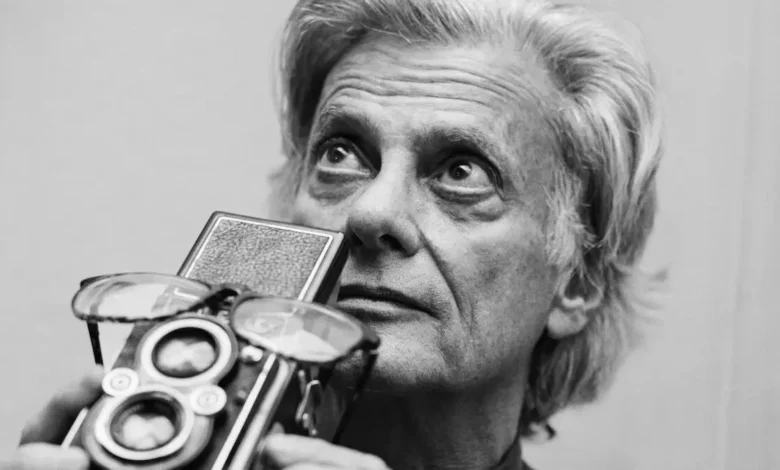
The cinematic landscape of biographical documentaries has welcomed a towering new entry with the release of Avedon, director Ron Howard’s meticulous and visually arresting exploration of the life and career of legendary American photographer Richard Avedon. Hailed by critics as Howard’s finest work to date—surpassing even his critically acclaimed 2016 venture, The Beatles: Eight Days a Week—the film offers a profound look at an artist who fundamentally altered the metaphysics of modern photography. Seamlessly edited by Andrew Morreale, whose artful transitions and rhythmic pacing have drawn comparisons to a masterclass in filmmaking, the documentary weaves together hundreds of iconic photographs. These images do not merely flash across the screen as archival artifacts; they are integrated with a musical finesse that mirrors the revolutionary visual lexicon Avedon established over a career spanning six decades.
At its core, Avedon explores a compelling paradox that defined the artist’s professional life: Richard Avedon was simultaneously the ultimate arbiter of high fashion, glamour, and impossible beauty, and a profoundly democratic humanist. The documentary unpacks this duality through an expansive narrative structure that relies on archival footage, rare behind-the-scenes clips, and insightful commentary from a curated roster of cultural luminaries, models, and critics. Among those interviewed are Tina Brown, Larry Gagosian, John Lahr, Twiggy, Adam Gopnik, Hilton Als, Calvin Klein, and the photographer’s son, John Avedon. Through unprecedented access granted by the Richard Avedon Foundation—facilitated by executive director James Martin—the film delves deep into the sprawling archives that house the output of roughly 16,000 photographic sittings conducted between 1944 and 2004. This staggering volume averages out to one sitting every single workday, Monday through Friday, for sixty uninterrupted years.
The Chronology of a Vision: From Merchant Marine to Master
The narrative trajectory of Richard Avedon’s career is one of continuous reinvention anchored by a singular, unyielding aesthetic philosophy. Born in New York City in 1923, Avedon displayed an early, innate preoccupation with capturing the ephemeral nature of human vision. As a child, he would routinely blink and momentarily keep his eyes closed while walking down city streets, effectively taking mental photographs to preserve what he saw before ever picking up a camera.
His formal entry into professional photography began during World War II. At the age of 19, Avedon enlisted in the United States Merchant Marines and was assigned to the photographic department. There, tasked with a relentless daily quota, he captured approximately 100,000 identification card portraits of enlisted personnel and civilian workers.
Far from being a mundane administrative chore, this period served as Avedon’s crucible. Working against a stark, unadorned white background, he observed thousands of baffled faces peering directly into the lens. In doing so, he realized that a plain, neutral backdrop stripped away socio-economic markers and contextual clutter, allowing the pure individuality of each human subject to emerge. This constraint—born out of military necessity—became the foundational signature of the Avedon style: an existential, head-on classicism that equalized all subjects, whether they were anonymous sailors, world leaders, or Hollywood icons.
The Mechanics of the Unseen: Style and Technique
Despite his monumental impact on the visual arts, Avedon showed little patience for the technical minutiae of his craft. As the documentary illustrates through interviews with cultural figures and former collaborators, discussions regarding f-stops, shutter speeds, and equipment specifications held virtually no interest for him. Instead, Avedon’s formidable technique resided entirely within his psychological approach to the portrait session.
Fashion icon and actress Isabella Rossellini notes in the film that while conventional photographers typically fired off hundreds of frames in rapid succession, Avedon operated with deliberate economy. He might capture a single exposure, pause to engage in conversation or prompt the subject to contemplate a specific thought, and take only a handful of additional shots—often limiting an entire session to a mere ten exposures. Avedon himself explains in archival interview footage that booking a subject for an hour did not obligate him to shoot for the entire duration. He famously maintained that spending the first half-hour sharing coffee and casual conversation was essential, leaving only the final minutes of the hour for the moment of actual creation against the white paper background.
This improvisational yet highly controlled environment frequently birthed images that transcended planned composition to achieve iconic status. In 1953, at the conclusion of a demanding session, a playful Charlie Chaplin spontaneously held his fingers up behind his head to form devil horns, grinning mischievously at the camera. Avedon captured the fleeting moment, producing an image that endures as a masterclass in capturing the authentic, unguarded personality behind a public persona. Similarly, a 1965 portrait of model Lauren Hutton—captured with her head thrown back in a moment of untamed movement—achieved a level of structural perfection that rivaled classical sculpture, despite occurring entirely by chance.
Navigating Fame: Marilyn Monroe and the Hollywood Machine
By the late 1950s, Avedon had achieved mythical status within the cultural zeitgeist. His influence was so pervasive that he served as the direct inspiration for the character of the fashion photographer Dick Avery, played by Fred Astaire, in the 1957 Hollywood musical Funny Face, which also starred Audrey Hepburn.
This period also marked his legendary photographic encounter with Marilyn Monroe, arranged in 1957 to promote the film The Prince and the Showgirl. Monroe arrived at the session meticulously prepared to perform the glittering, flawless persona the world expected of her. Recognizing this shield of perfection, Avedon spent an entire day working with her through a variety of joyous, high-energy setups.
However, the defining image of the session occurred only after the cameras were ostensibly winding down. In a rare ten-second window of exhaustion and vulnerability, Monroe dropped her guard, her posture softening into a quiet melancholy. Through that single frame, Avedon bypassed the manufactured glamour of the Hollywood starlet to capture the raw, complex humanity of Norma Jeane Baker.
Expanding the Lens: Beyond Glamour and into the American Experience
While Avedon’s fashion work for publications like Harper’s Bazaar and Vogue defined the aesthetic standards of mid-century style—utilizing his trademark dynamic photography of models leaping through the air—his artistic ambitions extended far beyond the confines of glossy magazines.
The documentary highlights his exhaustive dedication to documenting the shifting socio-political landscape of the United States. In 1980, he traveled to the American West to photograph everyday laborers, oil workers, and marginalized figures. The resulting series, In the American West, was so raw, unvarnished, and uncompromising in its rejection of traditional portraiture tropes that several prominent New York museums initially declined to exhibit it, proving that Avedon’s vision remained perpetually ahead of contemporary curatorial conventions.
Furthermore, his assignments spanned critical historical moments, including a grueling seven-week vigil in Vietnam to photograph American military generals, as well as distinct series capturing the Chicago Seven, the eccentric denizens of Andy Warhol’s Factory, and deeply personal portraits of his own aging father—a process that allowed him to reconcile long-standing familial estrangements.
Analysis of Implications and Cultural Legacy
To reconcile Avedon’s lucrative commercial output—including surrealist, mini-film television commercials for fragrances like Calvin Klein’s Obsession—with his high-art portraiture is to understand the unified vision that governed his entire career. As Avedon demonstrates, there was no artistic compromise in his commercial work; rather, a breathtaking continuity bound his advertising, fashion, and fine-art photography together for over six decades.
Every photograph Richard Avedon captured was driven by a singular, uncompromising objective: to challenge the viewer’s perception and awaken their consciousness. By translating the austere discipline of military identification photography into a revolutionary visual vocabulary, Avedon permanently transformed how society perceives identity, celebrity, and human vulnerability. Ron Howard’s documentary ensures that this monumental legacy is not merely remembered, but rigorously analyzed and deeply felt by a new generation of audiences and artists alike.