Australia’s political landscape is abuzz following One Nation leader Pauline Hanson’s high-profile European tour, which has drawn sharp criticism from Prime Minister Anthony Albanese for "talking Australia down" on the international stage. This controversy unfolds as the nation grapples with a diverse range of pressing issues, from heated debates over education funding and the implementation of advanced police surveillance technology to the sombre farewell of a media icon and significant advancements in corporate accountability. Meanwhile, Australia asserts its regional defence capabilities with the launch of a major international air combat exercise.
Pauline Hanson’s European Engagements and Prime Ministerial Rebuke
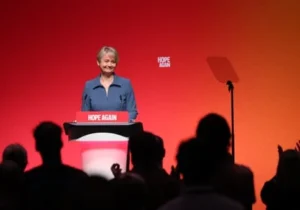
Senator Pauline Hanson, the outspoken leader of the One Nation party, has sparked a political firestorm during her recent European travels, which included appearances at conservative political events and holidays with billionaire mining magnate Gina Rinehart. The tour reached a critical point when Hanson attended the Conservative Political Action Conference (CPAC) in London over the weekend and recorded a podcast with far-right activist Tommy Robinson, known for his anti-immigrant and Islamophobic activism.
Prime Minister Anthony Albanese, speaking from Tiwi Island on Sunday, did not mince words when asked about Hanson’s activities. He emphatically stated that Australian representatives, regardless of their political affiliation, bear a responsibility to promote the nation positively when abroad. "When I have the opportunity to represent Australia overseas, I talk Australia up," Albanese declared. "I don’t talk Australia down. I go as someone who’s proud to represent our nation and proud to talk about what we are as a nation. There’s nowhere you’d rather be than Australia and I think that it is up to our representatives, no matter where they stand in the parliament, when they’re overseas, to talk Australia up, not talk Australia down."

Albanese underscored his belief in Australia’s exceptionalism, asserting that the nation has "created in this country an extraordinary nation and it is something that the world is envious of because of what we’ve created here." He reiterated that it is the "responsibility of people when they travel overseas to talk Australia up and to be proud of who we are and what we have created as a nation."
The Prime Minister’s comments reflect a long-standing political convention in Australia, where leaders typically present a unified and optimistic front when engaging with the international community. Hanson’s association with figures like Tommy Robinson and her participation in events like CPAC London — a conference known for its right-wing and often nationalist rhetoric — are seen by critics as undermining this diplomatic tradition and potentially damaging Australia’s reputation. One Nation’s political platform, historically characterised by strong anti-immigration stances and critiques of multiculturalism, often contrasts sharply with the inclusive image successive Australian governments aim to project globally. The presence of Gina Rinehart, one of Australia’s wealthiest individuals and a prominent figure in conservative circles, alongside Hanson, further amplifies the political and media scrutiny of the tour.
The "Spotlight" Documentary and Unprecedented Polling Data
Further adding to the controversy, Channel Seven’s special "Spotlight" episode, which followed Pauline Hanson during her European tour, aired last night, providing an unvarnished look at her engagements. The documentary revisited many of Hanson’s "greatest hits," including divisive comments about Muslim Australians, renewed attacks on multiculturalism, and her persistent claims of challenging "the establishment."
Despite the considerable resources reportedly invested in following Hanson to Britain, where she met with figures such as former "Neighbours" star Holly Valance, far-right activist Tommy Robinson, and Reform UK MP Robert Jenrick, reporter Liam Bartlett conceded at the program’s conclusion that he had not expected exclusive news. Instead, he had anticipated "a robust conversation."

The program highlighted several awkward moments for the Queensland senator. Crowd sizes for her speech at the CPAC conference in London appeared notably slim, suggesting a potentially limited international appeal for her brand of populism. She and Nationals defector Barnaby Joyce were also pressed to defend their past public criticisms of one another, exposing underlying tensions within the broader conservative movement. A street tour of Robinson’s hometown, Luton, nearly escalated into a physical confrontation with a local resident, underscoring the volatile nature of the political discourse surrounding such figures. Robinson himself denied ever attempting to enter Australia, a claim contradicted by his well-documented history of refused visa applications due to his criminal record.
Perhaps the most astonishing revelation came from a Newspoll conducted on Monday, which indicated an extraordinary surge in support for One Nation. The poll showed One Nation with a primary vote of 30%, equal with the Labor Party and significantly ahead of the Coalition, which registered 19%. If accurate, this polling figure represents an unprecedented and seismic shift in Australian political sentiment, placing One Nation in a position of power previously unimaginable for a minor party. Such a result would necessitate a profound re-evaluation of Australia’s political landscape and could have far-reaching implications for future elections and policy directions, though such a dramatic shift would typically be viewed with considerable caution by political analysts given its historical anomaly.
A particularly controversial moment during the documentary involved Hanson’s enthusiastic endorsement of "mass deportation" policies. When questioned about Reform UK’s policy to remove hundreds of thousands of people from Britain, Hanson expressed her approval, stating, "I love it," and indicated her desire to implement a similar policy for individuals living illegally in Australia if One Nation were to form government. This statement aligns with the more extreme elements of her party’s platform and could further inflame debates on immigration and human rights.
National Security and International Cooperation: Exercise Pitch Black 2026
In stark contrast to the domestic political drama, Prime Minister Albanese also officiated the launch of Exercise Pitch Black 2026 in Darwin, Australia’s premier international air combat exercise. This biennial event is a critical component of Australia’s defence strategy and its commitment to regional security.
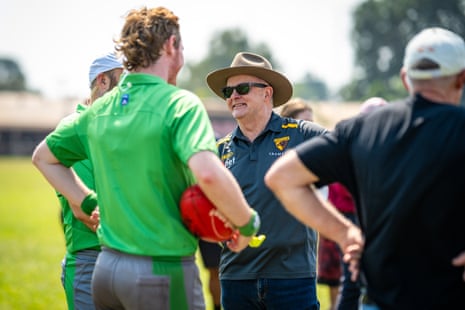
Over the next three weeks, the skies over northern Australia will host approximately 100 aircraft and 2,500 personnel from the Royal Australian Air Force (RAAF) and 20 other nations. The exercise will feature high-end training activities conducted from RAAF Bases Darwin and Tindal in the Northern Territory, and RAAF Base Amberley in Queensland.
Exercise Pitch Black is designed to strengthen international cooperation and enhance interoperability among participating air forces. This year’s participants include aircraft from key strategic partners such as the United States, Japan, and South Korea, as well as nations from Southeast Asia and Europe, including Papua New Guinea, Indonesia, the Philippines, Thailand, India, Singapore, Germany, France, and Spain. Embedded personnel from the United Kingdom, New Zealand, Fiji, Canada, Brunei, Malaysia, Finland, and Sweden further broaden the scope of international collaboration.
Prime Minister Albanese emphasised the strategic importance of the exercise, stating, "Australia is strongest when we work closely with our partners. Exercise Pitch Black strengthens those partnerships and demonstrates Australia’s commitment to working closely across our region to support peace, stability and security." The exercise provides a vital platform for participants to develop and test their skills in a complex and realistic operational environment, fostering mutual understanding and enhancing collective security capabilities in the Indo-Pacific region, a zone of increasing geopolitical significance.
The Debate Over School Funding: Independent Schools’ Campaign for More Government Money
A persistent and often contentious debate in Australia revolves around education funding, particularly the allocation of government money to independent (private) schools. Independent Schools Australia (ISA), the peak body representing these institutions, is launching a new campaign today aimed at increasing government funding, strategically targeting key Labor and teal-held federal seats across the country.

The campaign will utilise a multi-pronged approach, deploying digital advertising, billboards, and bus posters in electorates such as Labor-held Brisbane and Griffith in Queensland, and Melbourne. It will also focus on prominent teal seats like Mackellar and Wentworth in Sydney, and Curtin in Perth, as well as Goldstein, previously held by Liberal Tim Wilson before he was ousted by a teal independent.
The campaign’s slogan, "Parents are choosing, families are contributing, and policy needs to reflect that reality," encapsulates the ISA’s core argument. The launch is timed strategically just before Labor’s national conference this week, seeking to exert pressure on the government. The group contends that as a growing number of parents opt for private schooling and make significant financial sacrifices to do so, the government should increase its financial contributions to support these choices.
However, this push for increased funding is set against a backdrop of data that highlights existing disparities in education funding. According to 2023 data from the Australian Curriculum, Assessment and Reporting Authority (ACARA), 98% of private schools were funded above the Schooling Resource Standard (SRS) recommended by the Gonski review. In stark contrast, more than 98% of public schools received funding below this recommended standard. The SRS is a benchmark established to determine the minimum amount of public funding required for schools to meet the needs of their students, and the persistent gap between public and private school funding has long been a source of contention among education advocates and policymakers.
Graham Catt, the chief executive of ISA, articulated the body’s position, asserting that "Independent school families have been stereotyped for too long. They are parents and taxpayers making careful decisions about their children’s education, often under real financial pressure. They deserve to be seen, they deserve to be heard and they deserve policy settings that recognise the choices they are already making." This statement aims to humanise the argument for private school funding, framing it as a matter of fairness for families making significant investments in their children’s education. Critics, however, argue that increased funding for already well-resourced private schools diverts essential resources from the underfunded public system, exacerbating educational inequality.
Law Enforcement Innovations and Privacy Concerns: WA’s Facial Recognition Trial
In Western Australia, a significant development in law enforcement technology unfolded dramatically with the public debut of a five-month mobile trial of real-time facial recognition technology. The launch was marked by a live arrest, demonstrating the immediate capabilities of the new system.
The arrest occurred in real-time on Thursday, July 2, behind a bank of television microphones at Perth’s bustling Mirrabooka bus station, where Western Australia’s police commissioner, Col Blanch, was addressing reporters. A camera mounted on a nearby marked police van was quietly scanning the interchange, capable of processing hundreds of faces per minute and cross-referencing them against a database of approximately 4,000 individuals. This database includes profiles of people with outstanding arrest warrants, registered child sexual abuse offenders, and reported missing persons.
Midway through the media conference, the algorithm generated a match. Officers swiftly moved into the crowd and apprehended a woman wanted for failing to appear in court. A reporter, observing the unfolding event, promptly questioned Commissioner Blanch: "Commissioner, can we just get your reaction? There’s just been an arrest from the cameras behind you right now." Blanch, seemingly unfazed, responded, "Been happening all week. I’d love to say I planned that but I think that’s exactly what the technology is… People are being arrested because they are wanted."
This striking live demonstration underscored the efficiency and immediacy of the technology, marking an Australian-first for law enforcement. While lauded by police for its potential to enhance public safety and streamline arrests, the trial has inevitably sparked a robust debate over privacy concerns and civil liberties. Privacy advocates have raised serious questions about the scope of surveillance, the potential for algorithmic bias, and the adequacy of existing legal frameworks to protect individual rights in the face of such advanced technology. The trial’s duration will allow for further evaluation of its effectiveness and its broader societal implications.
Farewell to a "Human Headline": Derryn Hinch’s State Funeral

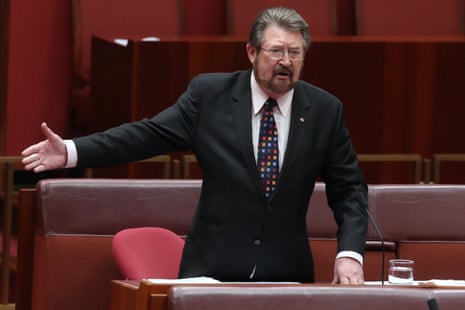
Australia prepares to bid farewell to one of its most colourful and controversial public figures, veteran broadcaster Derryn Hinch, whose state funeral will be held this afternoon in Melbourne. Hinch passed away on July 10 at the age of 82, following a long battle with various health issues.
The Victorian government-hosted service is scheduled to commence at midday at the Timber Yard events space in Port Melbourne. The funeral is expected to draw a significant number of notable figures from the realms of politics, media, and beyond, reflecting the wide-ranging impact of Hinch’s career. For those unable to attend in person, the service will be livestreamed on the Victorian government website.
Among the friends and former colleagues slated to appear and share their tributes is acclaimed journalist Ray Martin, while 3AW’s Darren James will serve as the master of ceremonies.
As detailed in The Guardian’s obituary, Derryn Hinch lived a life that was nothing short of extraordinary. His career spanned decades, marked by a unique blend of journalism, broadcasting, and a foray into federal politics as a senator. Known for his fearless interrogations and often provocative commentary, Hinch earned the moniker "the Human Headline" for his ability to consistently make news and generate public discussion. His life story featured dramatic twists, including periods of imprisonment for contempt of court, a rags-to-riches narrative, multiple marriages, and several serious health challenges, all of which unfolded prominently in the public eye.
Hinch’s passing elicited tributes from across the political spectrum, highlighting his enduring influence. Prime Minister Anthony Albanese and Opposition Leader Angus Taylor were among the many public figures who acknowledged his contributions. A statement released by the Victorian government remembered Hinch as a man whose life was "defined by his principles and an unwavering commitment to stand up for what he believed was right," a sentiment that captures the essence of his often divisive yet undeniably impactful public persona. His legacy will undoubtedly remain a subject of discussion regarding the role of media, activism, and independent voices in Australian society.
Corporate Accountability: ASIC’s Record Penalties Signal Tougher Stance
In a significant move towards enhanced corporate accountability, the Australian Securities and Investments Commission (ASIC), the nation’s corporate regulator, has announced a record haul of $830 million in civil penalties from courts over the past year. This figure surpasses the combined total of penalties secured by ASIC over the previous six years, signalling a notable intensification of enforcement action.
ASIC’s enforcement figures for the 2025-26 financial year reveal that courts demanded companies pay an unprecedented total in civil penalties. A substantial portion of this record sum came from the largest penalty ever awarded in an ASIC case: a $300 million penalty imposed against the collapsed foreign exchange broker Union Standard in June. This single case underscores ASIC’s capacity to pursue and secure massive penalties for significant corporate misconduct.
For context, from 2019-20 to 2024-25, ASIC averaged approximately $137 million in civil penalties annually, demonstrating the dramatic increase in the most recent reporting period. Beyond civil penalties, ASIC also issued $12 million worth of infringement notices, doubling the amount from the previous financial year (2024-25), further indicating a broader crackdown on corporate malfeasance.
ASIC stated that its actions would also result in $643.5 million worth of remediation, refunds, and payments being returned to tens of thousands of affected customers and investors. This emphasis on restitution highlights the regulator’s commitment not only to punishing corporate wrongdoing but also to ensuring that those harmed by misconduct are compensated. Furthermore, the substantial penalties collected will also contribute to the federal budget, indirectly benefiting the public coffers.
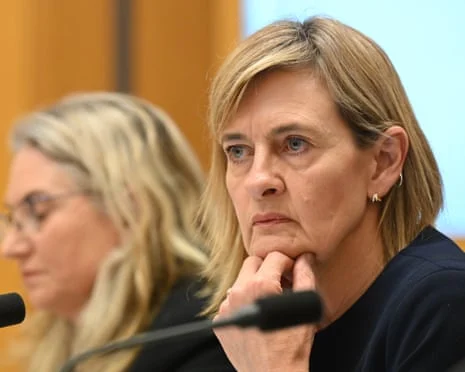
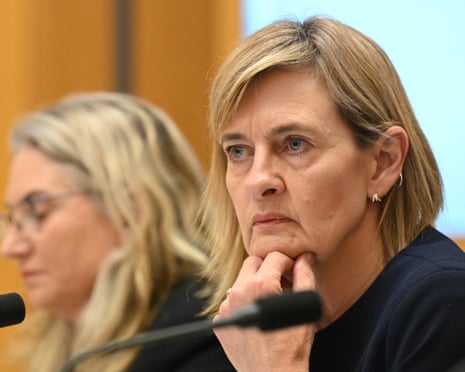
Sarah Court, the chair of ASIC, articulated the regulator’s strategic focus: "Our enforcement work is focused on misconduct that causes real harm and we are delivering results, forcing change, strengthening accountability and returning money to consumers and investors." This statement reinforces ASIC’s mandate to protect consumers and investors, maintain market integrity, and ensure a fair and transparent financial system. The record penalties serve as a powerful deterrent to corporate misconduct and signal a robust regulatory environment in Australia.
Conclusion
The past week in Australia has presented a complex tapestry of national events, from the heated political exchanges surrounding Pauline Hanson’s overseas tour and the unprecedented, albeit potentially anomalous, surge in her party’s polling, to the strategic display of military cooperation in Exercise Pitch Black. Domestically, critical debates on equitable education funding and the ethical boundaries of police surveillance continue to unfold, while the nation paused to honour a titan of media, Derryn Hinch. Concurrently, a robust demonstration of corporate accountability by ASIC reinforces the nation’s commitment to consumer protection and market integrity. These diverse narratives collectively underscore a dynamic and often contentious period in Australian public life, reflecting ongoing challenges and evolving priorities across its political, social, and economic spheres.