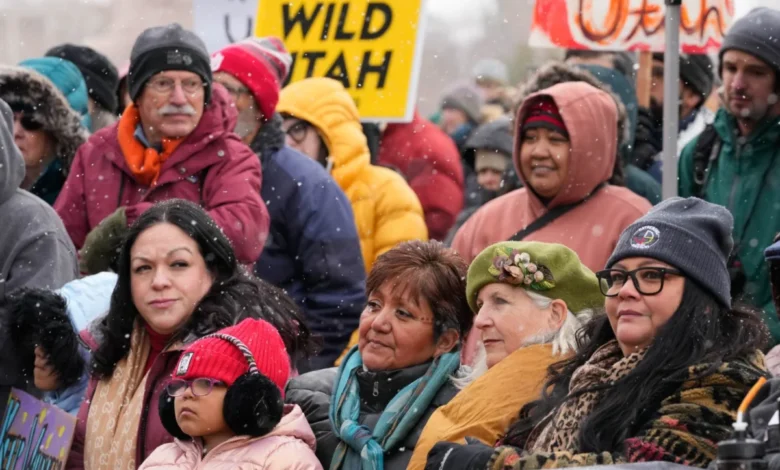
A profound disconnect has emerged between the residents of Utah and their elected Republican leadership following President Donald Trump’s recent executive orders to drastically reduce the size of two of the nation’s most iconic protected landscapes. Despite assertions from state officials that the move aligns with the desires of the local populace, multiple comprehensive polls conducted over the past several years indicate that a clear majority of Utahns—and residents across the broader Mountain West—oppose the reduction of Bears Ears and Grand Staircase-Escalante national monuments.
Last week, in a move that has reignited a fierce national debate over federal land management, President Trump signed two executive orders slashing the acreage of Bears Ears and Grand Staircase-Escalante by approximately 90 percent each. The decision effectively removes federal protections from millions of acres, opening the door to potential industrial development, including the extraction of critical minerals. Flanked by Governor Spencer Cox and members of Utah’s congressional delegation, the President framed the decision as a restoration of "fairness" and a victory for local control. However, data from academic and independent researchers suggests that the "public interest" cited in the proclamation may not reflect the actual consensus of the public it claims to represent.
The Scale of the Reductions and the Mineral Mandate
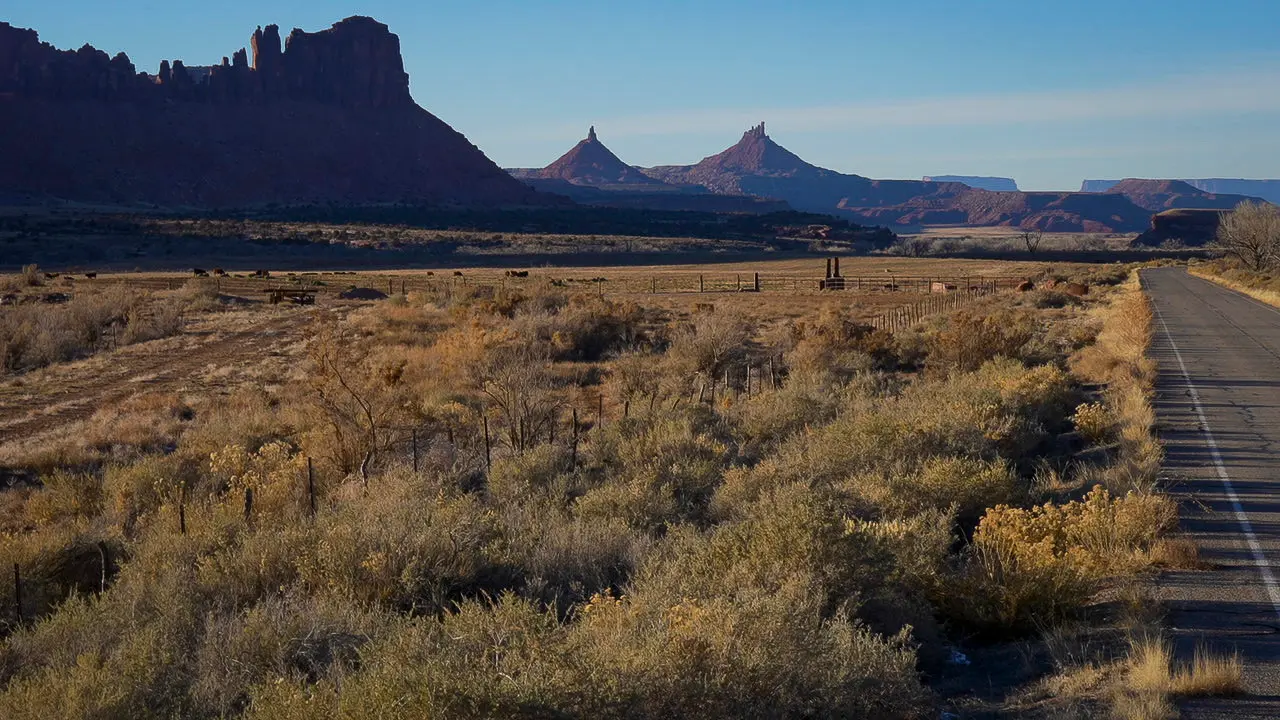
The scale of the executive action is nearly unprecedented in the history of the Antiquities Act of 1906. Bears Ears National Monument, which was established by President Barack Obama in 2016 and originally spanned 1.35 million acres, has been reduced to a mere 121,000 acres. Similarly, Grand Staircase-Escalante, designated by President Bill Clinton in 1996 and encompassing roughly 1.9 million acres, has been pared down to just over 181,500 acres.
In his official proclamation, President Trump argued that the massive size of the original designations was an overreach of executive power that hindered the economic potential of the region. He specifically pointed to the presence of significant deposits of critical minerals, including copper, nickel, and uranium. The administration contends that domestic access to these resources is vital for national security and the transition to various energy technologies. This justification echoes long-standing requests from mining interests; historical records indicate that uranium companies have actively lobbied the administration to shrink monument boundaries to allow for easier access to ore deposits.
A Statistical Divide: Public Opinion vs. Political Rhetoric
The central tension of this development lies in the discrepancy between political statements and empirical polling data. During the signing ceremony in the Oval Office, Representative Celeste Maloy (R-UT) stated that the administration was "listening to the people of Utah" and addressing the concerns of locals who feared losing "multiple uses" on federal lands.
However, research led by Utah State University (USU) paints a different picture. In surveys conducted throughout 2024 and 2025, researchers found that 61 percent of Utah residents supported or strongly supported the preservation of Bears Ears as a national monument. In contrast, only 19 percent expressed opposition. When asked specifically about shrinking the monument, 53 percent of respondents were opposed, while only 26 percent supported the reduction.
"It is very contradictive of our findings," said Michaelann Nelson, a professor of environmental rhetoric at USU’s Price campus and the lead author of the study. Nelson noted that the political narrative seems to selectively choose which voices to amplify, often ignoring the majority of the state’s residents who favor conservation.
The USU study was designed with high rigor, involving 468 respondents and utilizing sociologists based in rural areas to ensure the results were not skewed by the more liberal, urban populations of the Wasatch Front. This methodology addresses a common criticism from monument opponents who claim that support for federal protection only comes from "city dwellers" who do not live near the affected lands.
The Regional Context: The State of the Rockies Poll
The sentiment in Utah is mirrored across the Mountain West. The annual Conservation in the West Poll, conducted by Colorado College, has tracked public opinion on public lands for over a decade. Their January 2026 data revealed that 91 percent of voters across eight states—Arizona, Colorado, Idaho, Montana, Nevada, New Mexico, Utah, and Wyoming—supported keeping existing national monuments in place. This represents a steady increase in support from 80 percent in 2017.
The Colorado College poll also highlighted a surprising cross-partisan consensus. Approximately 87 percent of Republicans, 92 percent of independents, and 96 percent of Democrats voiced support for maintaining monument designations. Even among those identifying as MAGA supporters, support for existing monuments rose to 87 percent this year.
Lori Weigel, a principal with New Bridge Strategies, which assists with the poll, noted that the data consistently shows a public preference for "conservation, recreation, and renewables over fossil fuel development." These findings suggest that the administration’s focus on mineral extraction may be out of step with the values of the modern Western electorate.
Chronology of Contention: A Century of Land Use Conflict
The conflict over these lands is rooted in the Antiquities Act of 1906, a law that grants presidents the authority to protect "objects of historic or scientific interest." The act specifies that such protections should be confined to the "smallest area compatible with the proper care and management of the objects to be protected."
- 1996: President Bill Clinton designates Grand Staircase-Escalante (1.7 million acres initially), sparking decades of resentment among Utah GOP leaders who felt blindsided by the move.
- 2016: President Barack Obama designates Bears Ears (1.35 million acres) after years of advocacy by a coalition of five Native American tribes.
- 2017: During his first term, President Trump issues executive orders to shrink both monuments, a move that was later tied up in legal challenges.
- 2021: President Joe Biden restores the original boundaries of both monuments, citing the need to protect cultural and natural resources.
- 2026: President Trump, following his return to office, issues the latest round of executive orders, reducing the monuments by 90 percent.
This "ping-pong" effect of land management has created a climate of uncertainty for local businesses, tribal nations, and federal agencies. Utah’s political leaders, including Senator Mike Lee and Governor Cox, have consistently argued that these large-scale designations are an abuse of the Antiquities Act, claiming they function more like national parks without the necessary congressional approval.
Tribal Sovereignty and Cultural Heritage
One of the most significant impacts of the reduction of Bears Ears is the disbanding of the intertribal commission. The monument was unique in its management structure, which required federal agencies to consult with a body representing the Hopi Tribe, Navajo Nation, Ute Indian Tribe, Ute Mountain Ute Tribe, and Zuni Tribe.
Tribal leaders have long argued that the land is not merely a "scenic vista" but a living cultural landscape containing tens of thousands of archaeological sites, ancestral graves, and traditional gathering grounds for medicinal plants. The 2024 New Bridge Strategies survey found that 90 percent of Utahns support Native American tribes having a strong role in managing their ancestral lands. Furthermore, 81 percent of respondents believed the Trump administration should honor existing agreements with tribes regarding Bears Ears.
The dissolution of the commission and the reduction of the monument boundaries leave these sensitive sites vulnerable. While the President’s order claims to protect "objects of interest" within the new, smaller boundaries, critics argue that the cultural value of the land is found in the landscape’s entirety, not just isolated artifacts.
Fact-Checking the Recreation Argument
During the signing ceremony, President Trump claimed that the monument designations had effectively "closed off" the land to the public. "You can’t do anything. You can’t go hunting. You can’t go fishing… You can virtually not even walk on it," he stated.
However, land management records and the original proclamations for both Bears Ears and Grand Staircase-Escalante contradict these assertions. Unlike National Parks, which often have stricter regulations, National Monuments managed by the Bureau of Land Management (BLM) typically allow for a wide range of "multiple uses." Hunting and fishing are permitted and regulated by state authorities. Off-road vehicle use is allowed on designated trails, and grazing permits—though often a point of contention—generally remain valid under monument status.
The primary activities prohibited by monument status are new mining claims and large-scale industrial development. By shrinking the monuments, the administration is not "opening" the land to hikers and hunters—who already had access—but rather to extractive industries.
Economic and Environmental Implications
The reduction of the monuments is expected to trigger a wave of legal challenges from environmental groups and tribal nations, who argue that while the Antiquities Act gives a president the power to create a monument, it does not explicitly grant the power to abolish or drastically reduce one.
In the short term, the decision may lead to an uptick in mining exploration. However, conservationists warn that the environmental cost could be high. The region is home to unique biodiversity and some of the darkest night skies in the lower 48 states. Increased industrial activity could lead to habitat fragmentation and the degradation of the very resources that draw hundreds of thousands of tourists to southern Utah each year.
The Utah Senate has argued that the influx of visitors caused by the monument designations has strained local infrastructure and law enforcement, leading to "degradation" of the sites. While this is a documented concern, many residents and business owners in gateway communities like Escalante and Bluff argue that the solution is increased funding for land management, not the removal of protections.
As the legal and political battle moves to the courts, the stark divide between Utah’s political elite and the state’s voting public remains. The coming months will determine whether the "fairness" cited by the President translates into local economic prosperity or whether it represents a significant step backward for one of the most successful conservation tools in American history.