The 64th edition of the New York Film Festival (NYFF) officially commences this Friday night at Lincoln Center’s Alice Tully Hall, marking the beginning of a cinematic showcase that continues through October 12. As one of the most prestigious stops on the global film circuit, the NYFF has solidified its reputation as a critical launchpad for both prestige dramas and provocative documentaries. This year’s programming, curated by artistic director Dennis Lim and his team, features an expansive catalog of 119 films—comprising 75 features and 44 shorts—spread across the Main Slate, Spotlight, Currents, and Revivals sections.
A Program Rooted in Contemporary Reality
The festival’s opening night is headlined by James Gray’s Paper Tiger, a selection that sets the tone for a year characterized by a profound engagement with current events. Artistic director Dennis Lim has noted that the 2026 slate feels unusually connected to the “real world,” with filmmakers across both fiction and documentary genres directly confronting contemporary geopolitical and institutional realities.
“Films are not made in a vacuum; they are made by people,” Lim remarked in a recent interview. “There has not been another year where I felt the films to be so directly in conversation with the real world, really tackling contemporary reality head-on. Whether they are documentaries or fiction, all films emerge from this world that we all live in together, the reality that we share.”
This thematic focus is perhaps best exemplified by NAZA, directed by Yuval Abraham and Rachel Szor. Following a record-breaking 25-minute ovation at the Venice Film Festival, the documentary serves as a harrowing investigation into the conflict in Gaza. Shot under dangerous conditions on rooftops in Tel Aviv, the film features interviews with Israeli military intelligence officers and soldiers, offering a raw, unfiltered look at the cost of war.
The Evolution of the World Premiere
While the NYFF has traditionally served as a curated retrospective of the year’s best cinema, it has increasingly become a hub for high-profile world premieres. Lim is quick to credit the unique energy of the New York City audience for this shift. He observes that the local filmgoing public possesses an intellectual rigor and emotional investment that creates a uniquely meaningful launch for filmmakers.
“The New York audience engages with a film in a way that is meaningful to filmmakers and that creates a memorable launch for a film,” Lim said. “These films came to us and decided to premiere with us for different reasons. It just so happens we have a certain number of them this year, which shows that we have proven in the last few years that we can be a pretty good place to launch a film.”
The schedule is bolstered by a diverse array of premieres from industry titans, including Jonathan Glazer, Paul Thomas Anderson, and Ava DuVernay. DuVernay’s latest documentary, 14th, which serves as a spiritual successor to her landmark 2016 film 13th, is slated to provide the festival’s emotional climax as the closing-night selection.
Behind the Scenes: The High-Stakes Acquisitions
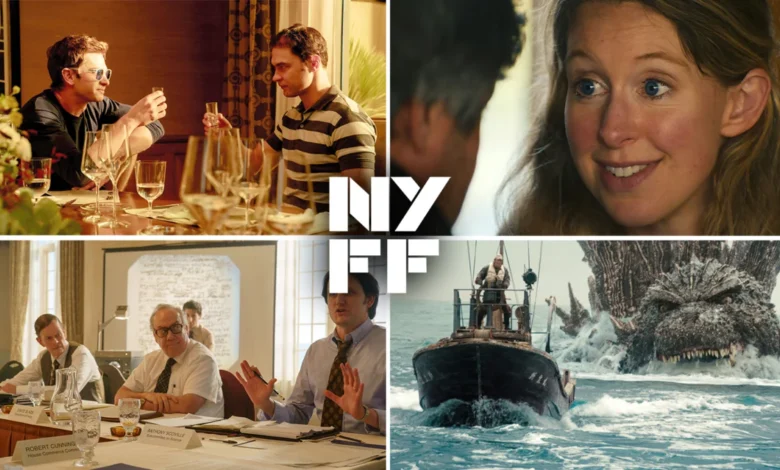
The 2026 lineup also highlights the volatile nature of film distribution in the modern streaming era. A prime example is the inclusion of Luca Guadagnino’s Sam Altman biopic, Artificial. The film, which carries a production budget of approximately $50 million, faced significant uncertainty after Amazon, which had initially backed the project, reversed course following its massive investment in Altman’s OpenAI.
According to Lim, the film was in a state of flux for months. “When the film was at Amazon, we did have conversations about it. It was not going to be a 2026 film. That changed when it landed at Neon,” he explained. The acquisition of global rights by Neon in June rescued the project from limbo and repositioned it as a major player in the upcoming awards season.
Similarly, the inclusion of Takashi Yamazaki’s Godzilla Minus Zero showcases the festival’s ability to secure large-scale commercial projects with high technical ambition. The NYFF team began discussions with the filmmakers as early as spring, viewing unfinished cuts of the film’s complex visual effects sequences. The choice to premiere at the NYFF represents a strategic shift for the franchise, which had previously bypassed the festival circuit for its earlier, highly successful installments.
The Telluride Surprise and the A24 Debut
Perhaps the most buzzed-about entry this year is Nathan Fielder and Lance Oppenheim’s You Can See Everything, an intimate documentary focusing on Elizabeth Holmes. The film, which recently premiered as a secret screening at the Telluride Film Festival, documents the Theranos founder’s final days of freedom before reporting to prison.
The access granted to the filmmakers is described as unprecedented. Holmes allowed cameras into her San Diego home, with the directors capturing the mundane and the surreal in equal measure. Deadline’s Pete Hammond noted in his review that Fielder’s presence becomes a central narrative element, as he gains the trust of a woman who built an empire on deception.
The inclusion of this film highlights a personal milestone for Fielder, marking his debut as a feature film director. It also underscores the festival’s willingness to experiment with the boundary between television and film; Lim recalled that Fielder’s 2023 Showtime series The Curse was one of the few television programs ever to be featured in the NYFF’s Main Slate, signaling the festival’s progressive approach to media formats.
Chronology and Logistics: Navigating the 64th NYFF
The festival, running from late September through October 12, is structured to allow for deep dives into specific cinematic veins. Beyond the screenings, the event includes:
- Main Slate: The core of the festival, featuring high-profile world and North American premieres.
- Spotlight: A curated section highlighting singular visions and auteur-driven projects.
- Currents: A section dedicated to experimental and non-fiction works that push the boundaries of the medium.
- Revivals: A section honoring the history of cinema through restored classics.
The logistical coordination required to manage 119 films is immense. From the secret negotiations regarding the You Can See Everything premiere to the last-minute inclusion of NAZA, the festival management has navigated a complex landscape of studio politics, sensitive subject matter, and the evolving expectations of international directors.
Impact and Future Implications
The implications of the 64th NYFF go beyond the individual films presented. By balancing the demands of major distributors like Neon and A24 with the needs of independent documentarians, the festival is reinforcing its status as a vital cultural institution that survives by adapting to the market.
Furthermore, the emphasis on films that engage with institutional power—whether it is the corporate machinations behind Artificial, the systemic issues explored in 14th, or the political scrutiny of NAZA—suggests that the festival is leaning into its role as a forum for public discourse. As the film industry continues to grapple with the decline of traditional box office models, festivals like the NYFF are increasingly tasked with serving as the primary arbiter of value for prestige cinema.
As the lights dim at Alice Tully Hall this evening, the focus shifts from the logistical hurdles of production and acquisition to the screen itself. With a slate that includes Tony Gilroy’s Behemoth!, Tom McCarthy’s The Statement, and the aforementioned world premieres, the festival is positioned to define the critical conversation for the remainder of 2026. For filmmakers, the NYFF offers more than just a screen; it offers an audience that is, in Lim’s words, a fundamental part of the creative process. Whether this year’s bold, reality-centered selections will resonate with broader audiences remains to be seen, but the festival’s commitment to hosting these conversations is a clear indication of its enduring relevance in a rapidly changing cultural landscape.