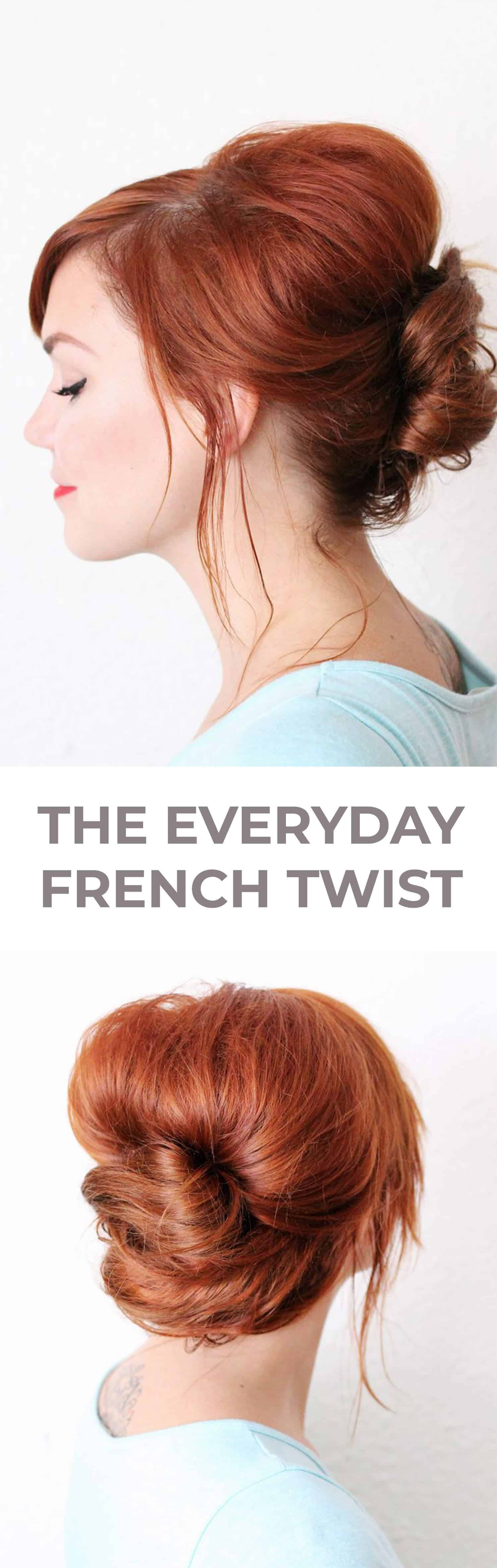

The Everyday French Twist: A Timeless Hairstyle for Effortless Chic
The French twist, a classic updo synonymous with elegance and sophistication, is often perceived as a style reserved for formal occasions. However, its versatility extends far beyond black-tie events. With a few strategic adjustments and a touch of modern flair, the everyday French twist can become your go-to hairstyle for work, errands, and casual outings, offering a polished yet effortlessly chic aesthetic. This comprehensive guide delves into the nuances of achieving and adapting this enduring updo for daily wear, focusing on practical techniques, styling tips, and SEO considerations to ensure your hair always looks its best without demanding excessive time or effort.
Understanding the Core Structure of the French Twist
At its heart, the French twist is an inverted roll, creating a vertical line of hair that cascades down the nape of the neck. The fundamental technique involves gathering hair at the nape, twisting it upwards, and securing it with pins to create a smooth, elongated shape. For an everyday twist, the emphasis shifts from architectural precision to a softer, more relaxed interpretation. This means embracing a slightly messier texture, allowing face-framing tendrils to escape, and utilizing modern hair accessories that enhance practicality and style. The beauty of the everyday French twist lies in its ability to look intentionally undone, a hallmark of French nonchalance. It’s a style that whispers elegance rather than shouts it.
Key Tools for Your Everyday French Twist Arsenal
To master the everyday French twist, a few essential tools will become your allies. A good quality teasing brush or a fine-tooth comb is crucial for creating volume and texture, which prevents the twist from appearing flat or too severe. Bobby pins are the workhorses of any updo, and for the French twist, having a variety of colors to match your hair shade is paramount for a seamless finish. Elastic hair ties, preferably snag-free ones, are useful for initially gathering the hair before twisting. For a more textured or lived-in look, a sea salt spray or texturizing spray can provide grip and enhance the natural waves or curls in your hair. Finally, a light-hold hairspray will ensure your twist stays in place throughout the day without making your hair stiff or crunchy. Investing in these simple tools will significantly elevate your French twist game and make daily styling a breeze.
The Foundational Technique: A Step-by-Step Approach to the Everyday French Twist
Achieving a successful everyday French twist begins with proper preparation. Start with dry or slightly damp hair; freshly washed hair can be too slippery. If your hair lacks natural texture, consider adding some waves or curls with a curling iron or wand to give the twist more body and hold. Begin by brushing your hair thoroughly to remove any knots. Next, gather your hair at the nape of your neck, as if you were about to create a low ponytail. However, instead of a ponytail, twist the gathered hair upwards towards the crown of your head. As you twist, you’ll naturally start to form a roll. The direction of the twist can be customized – some prefer to twist clockwise, others counter-clockwise, depending on their hair texture and desired outcome.
Once the hair is twisted upwards, start folding the twisted section down against your head. This is where the magic happens. Use bobby pins to secure the folded twist. Insert the pins at an angle, catching both the twisted hair and a small section of your underlying hair at the scalp. The key to a secure and visually appealing twist is to strategically place the pins to support the shape. For an everyday look, don’t strive for absolute perfection. Allow some wisps to fall around your face and neck for a softer, more relaxed vibe. The goal is a polished yet approachable aesthetic. This foundational technique, when practiced, becomes intuitive, allowing for quick and efficient styling.
Adapting the French Twist for Different Hair Lengths and Textures
The beauty of the French twist lies in its adaptability. While traditionally associated with longer hair, variations can be achieved for medium and even shorter lengths. For medium-length hair, the twist might be smaller and slightly looser, with more emphasis on texture and volume. You might need to incorporate hair extensions for a fuller effect if your hair is very fine. For those with shorter hair, a modified French twist can be achieved by focusing on twisting and pinning smaller sections towards the center. The overall effect will be a more compact, textured updo.
Texture plays a significant role in how your French twist will look and hold. Straight hair might require more texturizing products and teasing to create the necessary grip. Curly or wavy hair naturally lends itself to a more voluminous and textured twist, often requiring fewer styling aids. If you have very fine hair, consider backcombing or teasing sections of your hair before twisting to add significant volume and ensure the twist has enough substance to hold. For very thick hair, breaking it down into smaller sections before twisting can make the process more manageable and result in a neater appearance. Experimentation is key to discovering what works best for your unique hair type.
Elevating the Everyday French Twist with Modern Styling Techniques
Beyond the basic roll, several modern techniques can elevate your everyday French twist. Consider a "messy" French twist by deliberately pulling out strands of hair once the twist is secured. This creates a romantic, undone look that is perfect for casual wear. Another popular variation is the "textured" French twist, achieved by loosely twisting larger sections of hair and allowing them to form softer folds. This approach creates a more voluminous and organic appearance.
For a touch of bohemian flair, try a braided French twist. This involves braiding sections of hair before incorporating them into the twist, adding an intricate and stylish element. You can also experiment with different parting styles – a side part can create a more sophisticated and asymmetrical look, while a center part offers a classic and balanced aesthetic. Don’t be afraid to use your fingers to artfully arrange and pull apart sections of the twist to achieve your desired level of texture and fullness. These subtle modifications can transform a basic updo into a statement of personal style.
The Role of Hair Accessories in the Everyday French Twist
Hair accessories can be the secret weapon for both securing and enhancing your everyday French twist. While bobby pins are essential, consider incorporating decorative elements. A chic hair clip, a jeweled barrette, or even a silk scarf woven through the pins can add a touch of personality and elevate the overall look. For a subtle yet effective enhancement, consider using U-shaped pins, also known as hairpins, which offer superior grip and are less visible than traditional bobby pins, particularly for finer hair.
If you’re aiming for a more polished look, a decorative comb inserted at the base of the twist can add an elegant touch. For a casual, everyday vibe, consider a simple black or tortoiseshell clip that complements your outfit. Experimenting with different accessories allows you to customize your French twist to suit any occasion or mood. Remember, the aim is to integrate the accessory seamlessly, enhancing the twist rather than overpowering it.
Maintaining Your Everyday French Twist Throughout the Day
A well-executed everyday French twist should have good staying power. However, touch-ups are sometimes necessary, especially if you have particularly fine hair or are engaging in more active pursuits. The key to longevity lies in the initial securing of the twist. Ensure your bobby pins are firmly in place, angled correctly to catch your hair. If you find your twist tends to fall throughout the day, consider using a texturizing spray or a light-hold hairspray before and after styling to provide extra grip.
If your twist starts to loosen, a quick fix involves gently tugging at a few sections of the twist to re-shape and re-secure them with pins. Face-framing tendrils that have fallen out can be easily tucked back in or left to enhance the relaxed aesthetic. Carrying a few spare bobby pins in your bag is always a good idea for on-the-go adjustments. The beauty of the everyday French twist is its forgiving nature; minor adjustments can often restore its polish.
Styling Your Everyday French Twist for Work and Beyond
For the workplace, the everyday French twist offers a sophisticated and professional solution. Opt for a smoother, more controlled version with minimal wisps. Use a fine-tooth comb to ensure clean lines and secure the twist with subtle bobby pins. A slightly lower placement at the nape of the neck often lends a more business-appropriate feel. Pair this polished updo with tailored attire for a confident and put-together look.
When transitioning to a more casual setting, loosen the twist slightly, pull out a few face-framing pieces, and embrace a more relaxed texture. This effortless transformation makes the French twist incredibly versatile. For weekend brunches or casual outings, a slightly messier, more voluminous twist with a few artfully placed tendrils can create a chic and approachable vibe. The key is to adapt the intensity and polish of the twist to match the formality of the occasion.
SEO Optimization for Your Everyday French Twist Content
To ensure your content about the everyday French twist reaches a wider audience, consider SEO best practices. Incorporate relevant keywords naturally throughout the article. These include "everyday French twist," "easy French twist," "quick updo," "French twist tutorial," "simple hairstyle," "chic hairstyle," "French twist for work," "textured French twist," and "how to do a French twist."
Utilize descriptive headings and subheadings (H2, H3) to break up the text and improve readability for both users and search engines. For example, headings like "Key Tools for Your Everyday French Twist Arsenal" or "Adapting the French Twist for Different Hair Lengths" signal the content of each section. Ensure your meta description accurately reflects the article’s content and entices users to click. High-quality images or videos demonstrating the techniques would further enhance engagement and SEO performance. Regularly updating your content with new tips and variations will keep it fresh and relevant.
Conclusion: The Enduring Appeal of the Everyday French Twist
The everyday French twist is more than just a hairstyle; it’s a testament to enduring style and effortless elegance. Its adaptability, ease of execution, and ability to suit a variety of occasions and hair types make it an indispensable tool in any modern woman’s beauty arsenal. By understanding the core techniques, experimenting with modern styling, and utilizing the right tools and accessories, you can effortlessly master this timeless updo for everyday wear. The everyday French twist offers a sophisticated yet approachable solution for looking polished and chic without compromising on comfort or time, solidifying its place as a truly indispensable hairstyle.

