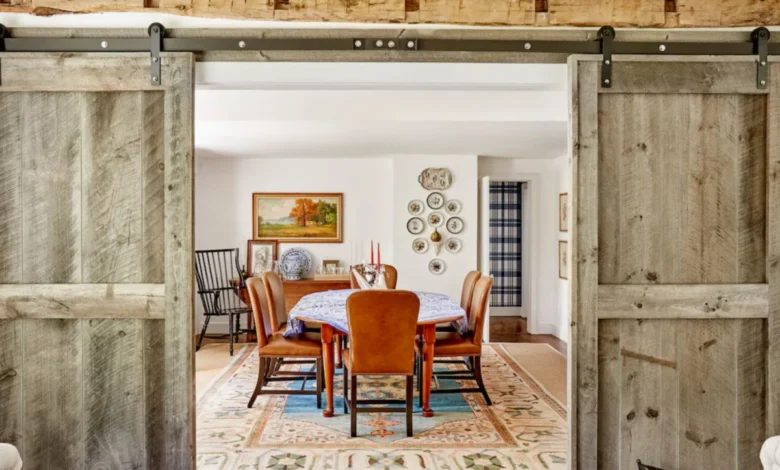
The evolution of Thanksgiving in the United States has undergone significant cultural shifts since its early iterations in the 17th century, expanding from a localized harvest celebration into a nationwide secular holiday focused on gratitude, community, and culinary abundance. In contemporary American society, the rise of the social phenomenon known as Friendsgiving—a portmanteau of "friends" and "Thanksgiving"—has redefined how millions celebrate the fourth Thursday of November. Rather than adhering strictly to traditional nuclear family structures, younger generations and diverse social circles increasingly gather with chosen family to share a formal holiday meal. However, hosting this burgeoning tradition often introduces logistical hurdles, chief among them the spatial and architectural limitations of urban and suburban living. For many urbanites residing in metropolitan centers like New York City, Boston, or Philadelphia, standard apartment kitchens and modest dining spaces are fundamentally unequipped to handle the demands of roasting a twenty-pound turkey and seating a dozen guests comfortably. Consequently, a growing segment of holiday hosts is turning to the short-term rental market to solve these spatial challenges, utilizing platforms such as Airbnb to secure sprawling rural properties, historic farmhouses, and picturesque country estates designed for group gatherings.
The Evolution and Economic Impact of the Modern Friendsgiving Movement
The concept of Friendsgiving gained widespread cultural traction in the late 2000s and early 2010s, propelled by social media platforms and shifting demographic trends that saw more young adults living away from their hometowns. According to consumer spending reports and hospitality industry data from firms such as Airbnb and Vrbo, the period surrounding Thanksgiving has evolved into one of the most lucrative travel windows of the autumn season. While traditional holiday travel historically involved long-distance journeys to visit parents and relatives, the Friendsgiving phenomenon has stimulated a distinct secondary travel market. Groups of friends now routinely pool financial resources to rent large-format properties for three-to-four-day weekend excursions. This trend has provided a crucial economic boost to rural and semi-rural tourism economies along the East Coast, particularly in states like New York, New Hampshire, Vermont, and Massachusetts, which might otherwise experience a post-summer slump prior to the winter ski season.
Hospitality analysts note that properties featuring high-end amenities—such as chef-grade kitchens, double ovens, expansive dining tables, and entertainment spaces like game rooms or saunas—command premium booking rates during the Thanksgiving week. Property owners and property management companies have increasingly tailored their marketing strategies to target this specific demographic, highlighting kitchen specifications, cookware inventories, and dining capacities rather than solely focusing on summer lake access or winter foliage views. This shift underscores a broader commercial adaptation within the vacation rental industry, aligning property inventories with the specific functional demands of contemporary holiday rituals.
Architectural and Culinary Requirements for Group Holiday Rentals
Hosting a successful Thanksgiving dinner for a large group requires specific architectural and infrastructural features that standard residential properties often lack. Industry standards for holiday rentals emphasize several critical components: kitchen workspace, oven capacity, refrigeration space, and dining configuration.
Culinary professionals and experienced hosts frequently point out that standard apartment ovens struggle to accommodate large poultry alongside traditional side dishes such as casseroles, roasted vegetables, and baking pans. Consequently, East Coast Airbnbs marketed for group holiday stays are increasingly vetted for commercial-grade or high-capacity dual-fuel ranges, convection ovens, and expansive kitchen islands that allow multiple people to participate in food preparation simultaneously. Furthermore, the dining area must feature a cohesive seating arrangement—either a single large dining table or an expandable setup—capable of seating all guests comfortably without resorting to mismatched folding chairs or segregated seating spaces.
Beyond the kitchen and dining room, guest comfort during extended holiday weekends heavily relies on ancillary amenities. Properties that incorporate multi-zoned heating systems, working fireplaces, dedicated entertainment rooms, and wellness features such as hot tubs or saunas score significantly higher in guest satisfaction metrics. These amenities serve a functional purpose during late-November weather on the East Coast, where outdoor activities may be limited by cold temperatures, rain, or early winter snowfall. By offering self-contained environments where guests can cook, dine, relax, and socialize under one roof, these rentals eliminate the logistical friction that often accompanies large group gatherings.
Regional Hotspots: From the Hudson Valley to New Hampshire Lakes
Geographic distribution plays a vital role in the selection of Friendsgiving destinations. On the East Coast, accessibility from major metropolitan hubs via driving routes is a primary determining factor for holiday travelers who wish to avoid congested airports during the Thanksgiving travel rush.
The Hudson Valley and Catskill Mountains in New York state represent premier destinations for travelers originating from the New York City tri-state area. Characterized by rolling hills, historic Dutch colonial farmhouses, and a thriving farm-to-table culinary scene, the region offers properties that blend rustic heritage with modern luxury. Restored 19th-century barns and farmhouses frequently feature exposed wooden beams, soaring cathedral ceilings, and massive stone hearths, providing an aesthetic backdrop that aligns with traditional imagery of the holiday. Additionally, the proximity to local orchards, butcher shops, and specialty food markets allows hosts to source regional ingredients for their Thanksgiving menus easily.
Moving northward, New England states such as New Hampshire, Vermont, and Maine offer a different flavor of holiday retreat, centered around lakeside log cabins and secluded woodland estates. These properties often emphasize privacy and immersion in nature, surrounded by dense forests and pristine bodies of water. For groups seeking a quiet, reflective atmosphere away from urban noise, these northern havens provide an ideal setting. The inclusion of modern conveniences—such as high-speed internet, smart home entertainment systems, and radiant floor heating—ensures that guests do not sacrifice modern comforts while enjoying a remote wilderness experience.
Selection Methodology and Quality Assurance for Holiday Bookings
Securing a reliable rental for a major holiday like Thanksgiving involves navigating a crowded digital marketplace where quality can vary significantly. Industry experts and travel platforms rely on a rigorous set of criteria to curate listings suitable for high-stakes events like family and group dinners.
Properties featured in curated holiday collections are typically evaluated against several performance and structural benchmarks:
- Superhost Status: Hosts must demonstrate a proven track record of reliability, rapid communication, and high guest satisfaction scores over extended operational periods.
- Review Sentiment Analysis: Previous guest reviews are analyzed specifically for mentions of kitchen functionality, cleanliness, heating reliability, and accurate property descriptions.
- Infrastructure Verification: Listings must explicitly confirm the presence of full-sized appliances, adequate dishware and cookware inventories for large groups, and stable Wi-Fi and utility systems.
- Architectural Layout: The floor plan must support group gathering, featuring communal living areas that prevent overcrowding and bedrooms that offer adequate privacy.
These stringent vetting processes aim to mitigate the common risks associated with vacation rentals, such as unexpected appliance failures or discrepancies between promotional photographs and the physical condition of the property. For holiday hosts investing both time and financial resources into a communal meal, this baseline of quality assurance is critical.
Economic and Cultural Implications of the Short-Term Rental Holiday Market
The growing popularity of renting homes for Friendsgiving reflects broader structural changes in how Americans consume hospitality and real estate. As housing affordability challenges persist in major urban centers, a smaller percentage of young adults own homes capable of hosting large gatherings. The short-term rental market effectively democratizes access to spacious, well-appointed homes for specific celebratory windows, bridging the gap between urban apartment living and country estate hosting.
However, this trend has not been without municipal and regulatory friction. In various East Coast towns—particularly in high-demand tourist enclaves in the Hudson Valley, Cape Cod, and coastal Maine—local governments have increasingly scrutinized short-term rentals over concerns regarding housing availability, neighborhood noise, and community displacement. As municipalities implement stricter zoning laws, registration requirements, and caps on rental nights, the availability of large-format properties suitable for group holidays may face supply constraints in coming years.
Despite these regulatory headwinds, the demand for experiential holiday travel remains robust. Real estate developers and property investors continue to acquire and renovate historic properties specifically with the group-travel market in mind, outfitting them with commercial kitchens, entertainment infrastructure, and flexible sleeping arrangements. This ongoing adaptation suggests that the intersection of short-term rentals and modern holiday traditions like Friendsgiving will remain a permanent fixture of the American hospitality landscape, offering new avenues for community building and shared celebration well into the future.