President Donald Trump announced a significant shift in federal technology policy on Saturday, unveiling plans to establish an "AI Force" and appoint a dedicated artificial intelligence czar. This strategic initiative, detailed in a series of posts on Truth Social, signals a firm rejection of calls from Silicon Valley executives to implement restrictive federal regulations on artificial intelligence development. Instead, the administration intends to foster a permissive environment designed to maintain American hegemony in the global technology race, specifically against the backdrop of intensifying competition with China.
The President’s directive emphasizes that the United States must prioritize the rapid advancement of the industry rather than imposing guardrails that critics—including some within the current administration—fear could stifle innovation. Trump stated that his administration would utilize existing civil and criminal legal frameworks to mitigate potential risks rather than creating new, burdensome oversight bodies that could impede the industry’s growth.
The Strategic Vision for an AI Force
Drawing a direct parallel to his administration’s creation of the U.S. Space Force during his first term, President Trump’s proposed AI Force represents a fundamental change in how the federal government interacts with emerging technologies. While the precise organizational structure, funding, and legal authority of this entity remain undisclosed, the President characterized it as a necessary evolution to ensure national security and economic prosperity.
The President also announced his intention to appoint an "AI Czar" to oversee this mission. According to the announcement, the position will be reserved for individuals with high-level expertise, though specific criteria for the role and potential candidates have yet to be identified. By elevating AI oversight to a cabinet-level or executive-directed initiative, the White House is signaling that artificial intelligence is now a primary pillar of national policy, equal in importance to traditional military and economic sectors.
Economic Implications and the GDP Forecast
Central to the administration’s aggressive stance on AI is a projection that the technology will serve as the primary engine of the next major industrial revolution. Trump posited that the AI sector could eventually account for as much as 25% of the United States’ Gross Domestic Product (GDP). While this estimate is highly ambitious and significantly higher than many independent projections, it underscores the administration’s belief that AI will fundamentally transform every facet of the American economy.
Proponents of this view argue that if the U.S. successfully integrates AI across energy, logistics, and manufacturing, the productivity gains could indeed trigger a period of sustained economic expansion. Conversely, economists remain divided on whether a single technology can account for such a massive percentage of national output, noting that the "AI Revolution" remains in its early, experimental stages.
The Geopolitical Context: The Race Against China
The urgency behind the administration’s policy is driven by the escalating rivalry with China. During his recent commentary, President Trump explicitly linked the need for accelerated AI development to the necessity of outpacing Beijing. The administration’s prevailing philosophy is that any regulatory pause or limitation imposed on American companies would essentially hand a competitive advantage to Chinese state-backed entities, which may not be constrained by the same ethical or legal concerns.
This geopolitical lens explains the friction between the White House and some major AI corporations. While executives from firms like Anthropic and OpenAI have frequently testified before Congress regarding the need for "safety-first" regulations and temporary pauses on the development of more powerful models, the Trump administration views these warnings as tactical distractions or attempts to secure regulatory capture. GOP lawmakers have echoed this sentiment, suggesting that Big Tech firms might be using "doomsday scenarios" as a smokescreen to lock in their market dominance and prevent smaller, agile competitors from entering the field.
A Chronology of the Debate
The trajectory of the current AI debate can be traced back to the rapid proliferation of generative AI tools in 2023 and 2024. As these tools reached mainstream adoption, concerns regarding data privacy, misinformation, and national security risks reached a fever pitch in Washington.
- Mid-2023: Lawmakers began holding bipartisan hearings on the existential risks posed by Large Language Models (LLMs).
- Late 2024: AI industry leaders intensified their lobbying efforts for a federal regulatory framework, citing concerns about human safety and societal disruption.
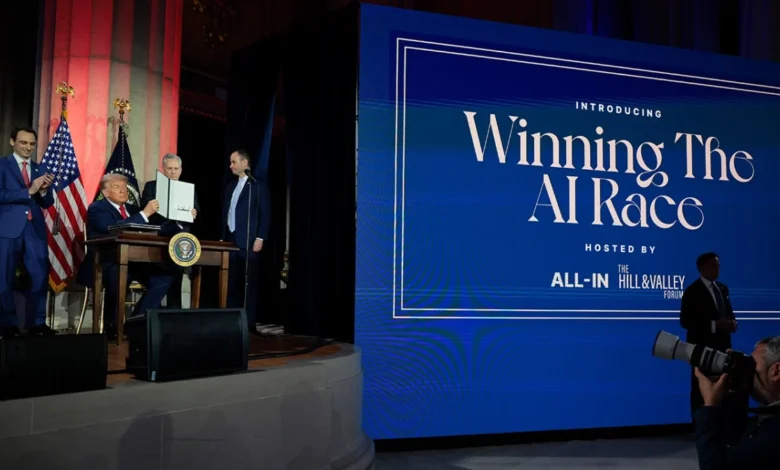
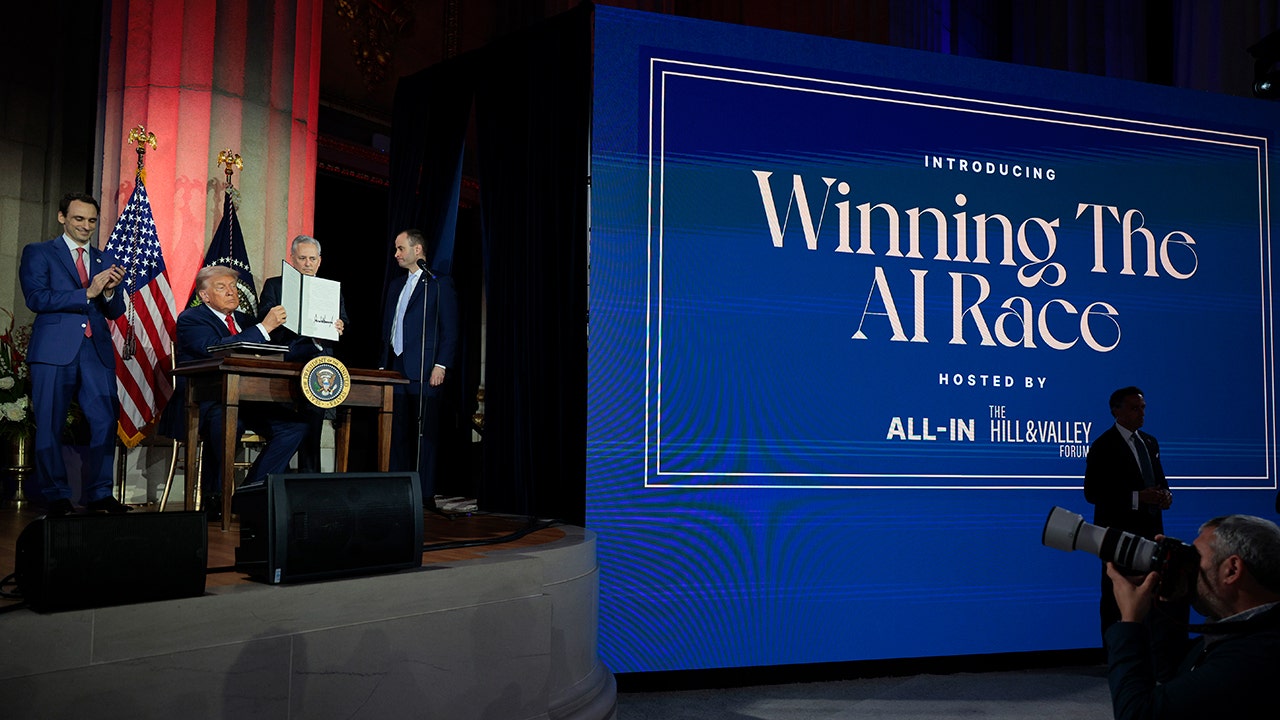
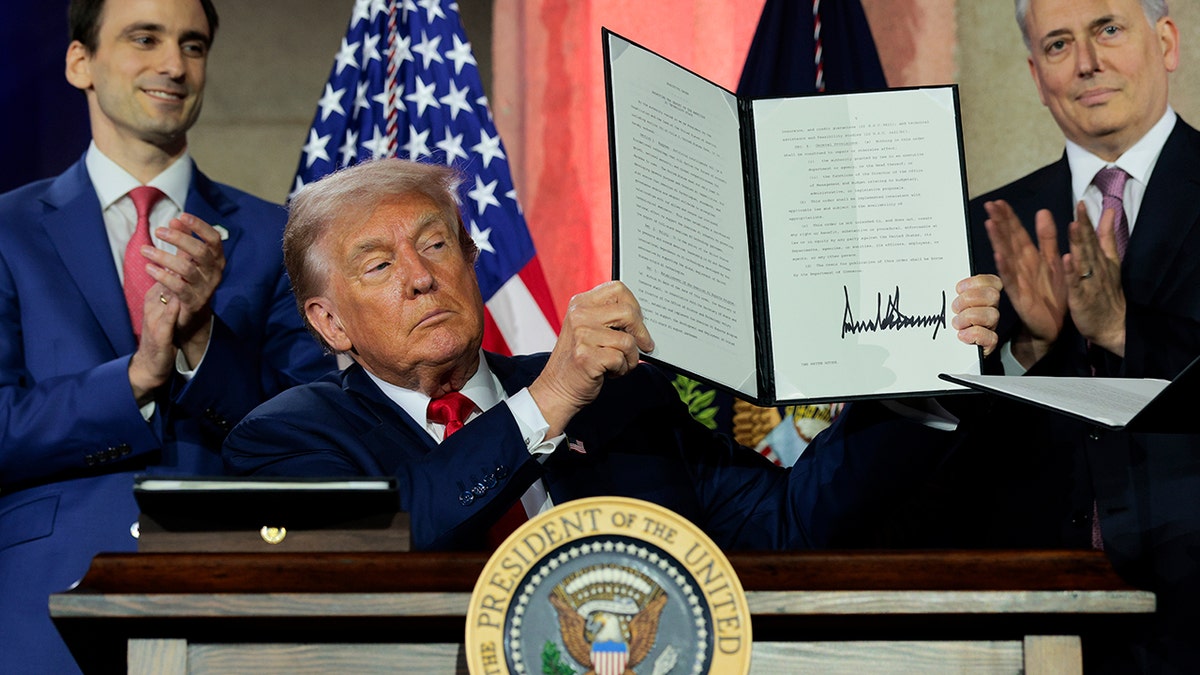
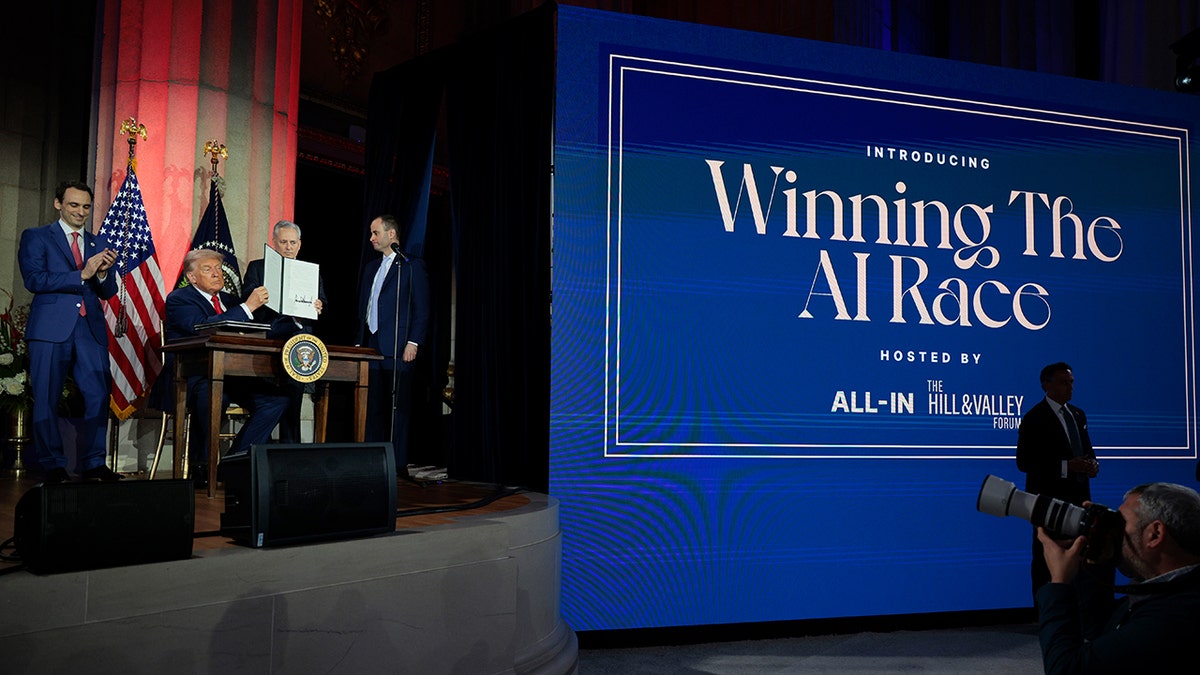
- July 2025: President Trump hosted the "Winning the AI Race" summit, signaling his intent to prioritize national dominance over restrictive safety protocols.
- October 2025: The current debate peaked as the Senate discussed the potential for an "AI kill switch," a move that drew sharp criticism from members of the party who view such mechanisms as a threat to technical progress.
- November 2025: President Trump formalizes the plan for an AI Force, effectively side-stepping legislative attempts at broad industry restriction.
Linguistic Rebranding: The Push for "Superior Intelligence"
In a unique turn, the President also initiated a public poll via Truth Social regarding the terminology used to describe the technology. Trump argued that the term "Artificial Intelligence" is "inaccurate" and "ineloquent." He suggested that the nation should consider rebranding the sector to reflect its potential for dominance, proposing alternatives such as "Superior Intelligence" (SI), "Extreme Intelligence" (EI), or "Supreme Intelligence" (SI).
While some observers dismissed this as a branding exercise, it reflects the administration’s broader narrative: that the technology is a tool of national power and superiority. By reframing the lexicon, the administration hopes to shift the cultural conversation from one of fear and existential risk to one of national pride and technological excellence.
Analysis of Regulatory Risks
The administration’s decision to rely on existing criminal and civil statutes rather than new, comprehensive AI legislation presents a complex legal challenge. Current laws—such as those governing fraud, discrimination, and intellectual property—were not designed with generative AI in mind.
Legal experts point out that relying on the judicial system to address AI-related wrongdoing could lead to years of litigation, as courts attempt to interpret how 20th-century statutes apply to 21st-century autonomous systems. Furthermore, without clear federal guidelines, companies may face a patchwork of state-level regulations, creating an uncertain environment for businesses.
However, the administration’s approach aligns with a broader deregulation trend. By avoiding an "AI Agency" that could mirror the complexity of the SEC or the EPA, the White House aims to provide the private sector with the freedom to experiment. The core of this strategy is the belief that the market, driven by intense international competition, is the most effective mechanism for weeding out bad actors and perfecting safe, reliable systems.
Future Outlook and Policy Implementation
As the administration moves toward appointing an AI czar and standing up the AI Force, the focus will likely shift to the physical infrastructure required to sustain this growth. This includes the expansion of high-capacity data centers and the massive increase in electrical grid capacity required to power them.
President Trump noted that opposition to the construction of data centers has largely been overcome, suggesting that the federal government will use its authority to expedite the necessary infrastructure permits. As the administration prepares for upcoming diplomatic meetings, specifically those involving leadership from Beijing, the role of AI in trade, national security, and global influence will undoubtedly be a primary topic of discussion.
The success of the "AI Force" will be measured by its ability to balance the rapid, unhindered deployment of new models with the basic requirements of public safety. For now, the administration has made its stance clear: the path to American leadership in the coming decades is paved with AI, and the government’s role is to ensure that the road remains open, well-funded, and free from the obstacles of over-regulation.