
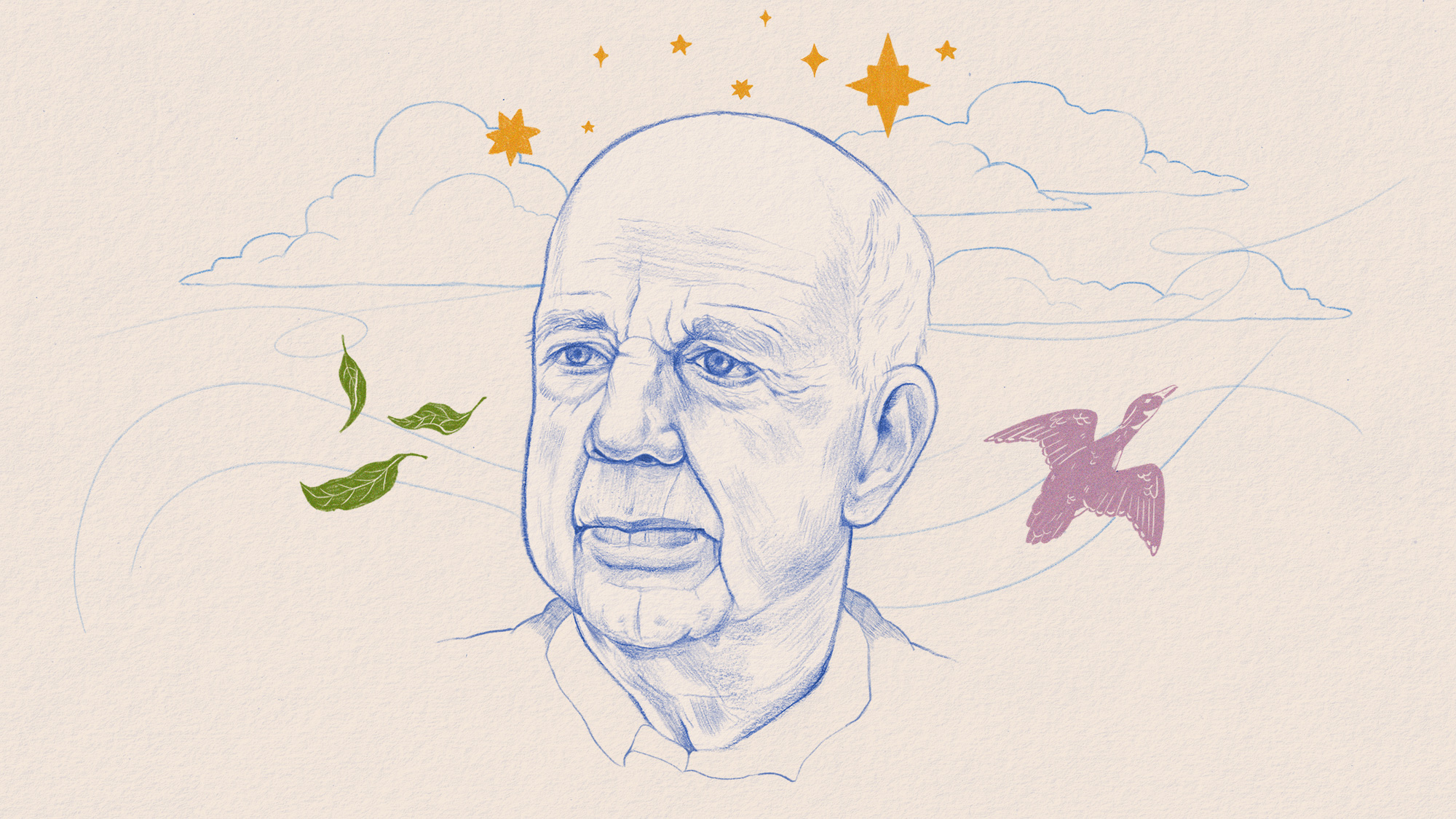
Wendell Berry, the prolific author, agrarian philosopher, and environmental activist who spent decades championing the necessity of a localized, land-based existence, has passed away at the age of 92. From his ancestral farm in Henry County, Kentucky, Berry cultivated a body of work that spanned more than 50 books of poetry, fiction, and essays. His departure marks the end of a singular voice in American letters—one that consistently argued that the survival of the planet depends not on grand political gestures alone, but on the intimate, daily work of individuals tending to their own communities and landscapes.
A Chronology of a Counter-Cultural Life
Born in 1934 in Henry County, Kentucky, Berry’s life was defined by his return to the landscape of his youth. After teaching at various universities and living abroad, he returned to the Ohio River Valley in 1965 to farm. This physical grounding became the epicenter of his intellectual output.
The chronology of his public life was characterized by a transition from quiet agrarian writer to a vocal, and often arrested, protestor.
- 1960s: Berry begins his career as a teacher and writer, quickly establishing himself as a critic of industrial agriculture.
- 1972: Publication of Think Little, a seminal essay that challenged the environmental movement to focus on personal responsibility and local action rather than merely waiting for top-down policy shifts.
- 1979: Berry’s first major act of civil disobedience occurs; he is arrested for protesting a nuclear power plant in Indiana.
- 1987: Publication of Why I am Not Going to Buy a Computer, a critique that cemented his reputation as a Luddite in the eyes of his detractors, though he viewed it as a rejection of the dehumanizing effects of industrial technology.
- 2011: Berry participates in a sit-in at the Kentucky state capitol to protest mountaintop removal coal mining, resulting in his arrest.
- 2015: Berry withdraws his papers from the University of Kentucky after the institution accepted a $7 million donation from Alliance Coal, citing a fundamental conflict between the school’s mission and the environmental destruction wrought by the fossil fuel industry.
The Philosophy of the Small: A Fact-Based Analysis
Berry’s work is often misunderstood as being anti-modern or reactionary. However, a closer analysis reveals a deeply consistent ethical framework rooted in "the local." His refusal to use a computer or adopt modern digital conveniences was not a technological phobia, but a deliberate choice to prioritize the "dignity of work."
Sociologists and environmental scholars often categorize Berry’s work as a critique of "technological alienation." By rejecting labor-saving devices, Berry argued that humans lose their connection to the physical reality of their labor and, by extension, the land. This philosophy has had a profound influence on the modern food movement, sustainable agriculture, and the "slow living" trend. His insistence that "there is no public crisis that is not also private" remains a cornerstone for grassroots activists who argue that global environmental collapse is mirrored by the breakdown of community health and local self-sufficiency.
Economic and Environmental Context
The significance of Berry’s life is best understood through the decline of the American small-scale farm. According to the U.S. Department of Agriculture (USDA), the number of farms in the United States dropped from approximately 6.8 million in 1935 to roughly 1.9 million today. Berry’s writing served as a sociological record of this loss. He argued that the transition from a culture of independent, land-owning farmers to a system of industrial, corporate-owned agriculture resulted in the decay of rural communities and the depletion of topsoil.
His activism against the coal industry was similarly grounded in material reality. Mountaintop removal, a practice that levels Appalachian ridges to access coal seams, has been blamed for the destruction of over 500 mountains and the contamination of over 2,000 miles of streams in the Appalachian region. Berry’s decision to engage in civil disobedience against these practices highlighted the tension between industrial efficiency and ecological preservation.
Reactions and Institutional Impact
The death of Wendell Berry has prompted reflections from across the political spectrum, reflecting his "broad appeal" as noted by observers like Jeffrey Bilbro, an English professor at Grove City College. While Berry often clashed with the political establishment, his work on behalf of environmental stewardship and the preservation of rural dignity bridged ideological divides.
"He was a man who understood that our hands are all dirty in this fallen world," Bilbro noted in recent reflections. "He didn’t demand a purity that was impossible. He demanded honesty. He recognized that we are all compromised by our participation in a modern economy, but he insisted that we must try to live better, locally, anyway."
Academic and environmental institutions have expressed deep condolences. While Berry was a frequent critic of the university system, many scholars cite his work as essential to the curriculum of environmental ethics. His influence is felt in the rise of community-supported agriculture (CSA) programs, local food cooperatives, and the increasing push for land-use reform.
The Paradox of the "Manifesto"
Berry’s most famous poem, Manifesto: Mad Farmer Liberation Front, remains a touchstone for those disillusioned by the trajectory of modern society. His instruction to "invest in the millennium" and "plant sequoias" represents his rejection of linear, crisis-based thinking. To Berry, the environmental movement’s obsession with "apocalypse" was a distraction from the cyclical nature of life.
This perspective—that one must work to heal the land even when the results will not be seen in one’s own lifetime—is perhaps his most enduring legacy. It is a philosophy of long-term stewardship that stands in stark contrast to the quarterly-profit-driven metrics of the current industrial era.
Implications for the Future
As the climate crisis intensifies, the relevance of Berry’s "Think Little" approach is being reconsidered by policymakers and activists alike. While global climate agreements focus on carbon caps and international treaties, the grassroots movement is increasingly mirroring Berry’s call for regional resilience.
His life provides a model for what scholars call "the politics of the parish"—the idea that the most effective way to address systemic issues is to build resilient, self-sufficient communities. By focusing on the health of one’s own watershed, the quality of one’s own soil, and the strength of one’s own local economy, the individual ceases to be a passive consumer and becomes a participant in the restoration of the natural order.
Wendell Berry’s death does not silence these ideas; rather, it formalizes his life as a historical case study for the 21st century. Whether he is remembered as a poet, a farmer, or a gadfly to the state, his core message remains clear: the path to ecological salvation is not found in a digital interface, but in the patient, repetitive, and intentional work of human hands on a specific piece of earth. As he wrote in A Discipline, the modern world is faced with a constant threat of decay, yet the only rational response is to "think of the death of all living, and yet live." In this, Berry leaves behind a blueprint for living with conviction in an age of uncertainty.