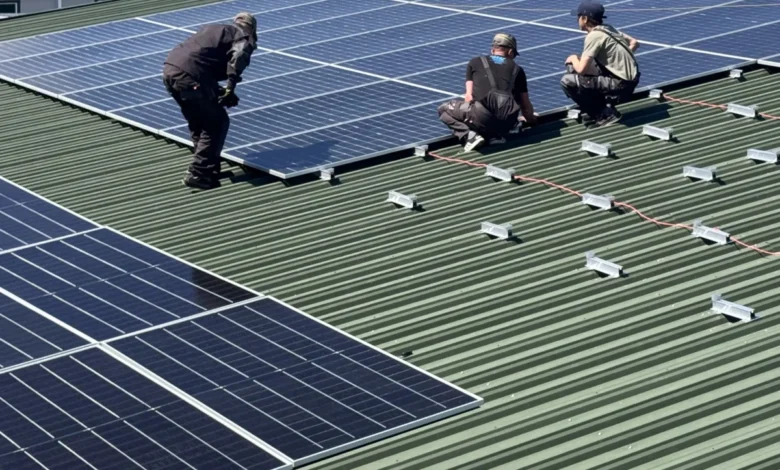
On a crisp spring morning in the central Ukrainian town of Bila Tserkva, a team of technicians stood atop a sprawling door manufacturing facility, carefully calibrating an array of solar panels. For the facility’s owner, a man known only as Yaroslav, this rooftop project represents far more than a simple shift in energy procurement; it is a tactical necessity born of survival. Since the full-scale Russian invasion in 2022, Ukraine’s energy landscape has been transformed from a stable, centralized network into a precarious battleground. Constant missile and drone strikes targeting power plants, substations, and transmission lines have rendered traditional energy consumption models obsolete, forcing businesses and households alike to embrace distributed, renewable generation.
The pivot toward solar energy in Ukraine is not merely an environmental choice, but an urgent response to an existential crisis. During the brutal winter months, when temperatures plummeted and the national grid groaned under the strain of targeted destruction, factories were forced to rely on expensive, carbon-heavy backup generators or, in desperate cases, burn discarded wood just to maintain a baseline level of operational warmth. By investing in solar, Yaroslav is insulating his business from the volatility of a grid that remains a primary target for Russian forces. His sentiment reflects a growing national trend: the move toward decentralization is the most viable path to maintaining economic continuity while the country resists aggression.
A Chronology of Crisis and Adaptation
The destruction of Ukraine’s energy infrastructure has occurred in distinct, escalating phases. Prior to 2022, the nation operated on a Soviet-era legacy model—a highly centralized system that relied heavily on four major nuclear power plants, which accounted for over 50 percent of the nation’s electricity generation. Natural gas and coal provided the remaining baseline, with renewable energy sources playing a marginal, albeit growing, role.
The timeline of the energy war began in earnest with the invasion in February 2022. By the middle of that year, the occupation of the Zaporizhzhia nuclear power plant—the largest of its kind in Europe—deprived the national grid of its most significant single source of power. This was followed by a systematic, multi-year campaign of "energy terror," characterized by precision strikes on substations and high-voltage transmission lines.
By the winter of 2024 and into early 2026, the cumulative impact of these strikes became clear. The National Bank of Ukraine reported that repeated attacks on infrastructure significantly worsened electricity deficits, with projected shortages rising from 3 percent to 6 percent. In January 2026, the situation reached a breaking point, with Kyiv’s leadership declaring a state of emergency as the city possessed only half the electricity required to sustain essential services. These outages were not merely inconveniences; they were systemic failures that threatened the basic operation of hospitals, heating systems, and telecommunications.
The Rise of Distributed Energy
As the vulnerability of large-scale, centralized power stations became undeniable, the Ukrainian government and private sector pivoted toward distributed generation. This strategy involves the deployment of hundreds of smaller, modular energy sources—primarily rooftop solar—that are inherently more resilient. Because these systems are decentralized, they are significantly harder for an adversary to "knock offline" in a single strike.
The Solar Energy Association of Ukraine noted a dramatic acceleration in this shift. In 2025, an estimated 1.5 gigawatts (GW) of new solar capacity was installed across the country, a figure that nearly doubled the previous year’s output. Projections for 2026 suggest that this pace of installation will be maintained, if not exceeded, as the government continues to incentivize the transition.
Central to this effort is the "Affordable Loans 5-7-9" program, a state-backed initiative that provides businesses with preferential interest rates of 5, 7, or 9 percent to finance renewable energy projects. By covering up to 80 percent of installation costs, the program has transformed solar from a luxury investment into an accessible safety net for small and medium-sized enterprises.
Official Responses and Institutional Support
The transition is being managed by a combination of state policy, private sector execution, and international support. Companies like Yasno, a leading private electricity and gas supplier, have become central to this movement. Having paused operations during the initial shock of the invasion, Yasno resumed large-scale installation projects in the summer of 2024. To date, the company has completed 117 sites with a combined capacity of 23 megawatts.
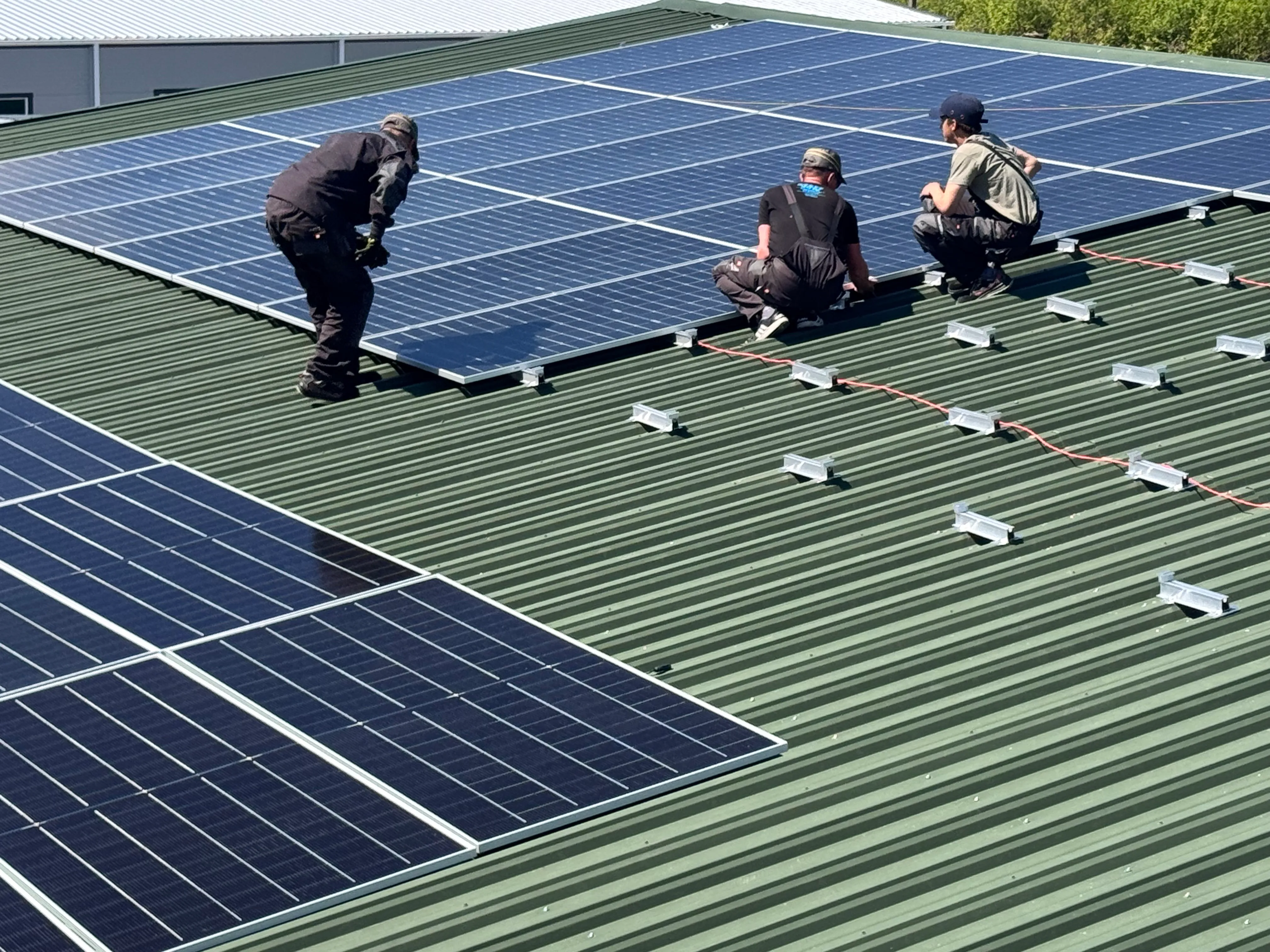
Volodymyr Hershtun, a maintenance manager at Yasno, views the work as a strategic imperative. "The enemy is trying to destroy energy infrastructure, and we are building what is very easy to restore," Hershtun explained. His perspective highlights a crucial shift in engineering philosophy: in wartime, the objective is no longer to build the largest or most efficient power plant, but to build the most survivable one.
Anastasia Vereshchynska, director of the European-Ukrainian Energy Agency, echoes this sentiment. "Renewables have become the very obvious choice for Ukraine," she stated, noting that the agency focuses on energy efficiency and decentralization as the primary pillars of long-term stability. The integration of these systems into the European Union’s energy market remains a long-term goal, with the Ukrainian government maintaining its commitment to the "green tariff" program, which provides guaranteed payments for electricity produced by renewables until 2030.
The Human Impact: From Frontlines to Residential Blocks
The necessity of this transition is perhaps most visible in the communities closest to the frontlines. In areas where power lines have been pulverized by artillery and maintenance crews face near-constant threats, NGOs and volunteers have filled the void. Organizations such as Kosmo Tabir have been instrumental in deploying portable solar and battery systems to villages that have been entirely severed from the national grid.
For the residents of these areas, solar is often the only remaining link to the outside world. Denny Ugorchuk, founder of Kosmo Tabir, argues that access to electricity is now a fundamental human right in the context of the war. "People should have access to communicate with one another—you can call a doctor, the police, and it helps you feel safe," Ugorchuk said. The installation of solar panels at private residences has allowed students to continue their education online and families to maintain the essential functions of daily life, such as charging communication devices and powering medical equipment.
In urban centers like Kyiv, the shift is equally profound. Apartment complexes, once entirely dependent on the municipal grid, are increasingly installing rooftop solar to ensure the operation of basic utilities, such as water pumps for boilers and elevators. For residents like Volodymyr, a Kyiv-based taxi driver, the transition is a relief. "In emergency cases, during power outages, you could turn to the solar panels," he said. "It’s a good thing."
Broader Implications for Energy Security
The rapid transformation of Ukraine’s energy sector carries significant implications for both domestic security and international energy policy. The country’s experience serves as a case study in "wartime energy transition," demonstrating that decentralization can provide a degree of resilience that centralized systems cannot match.
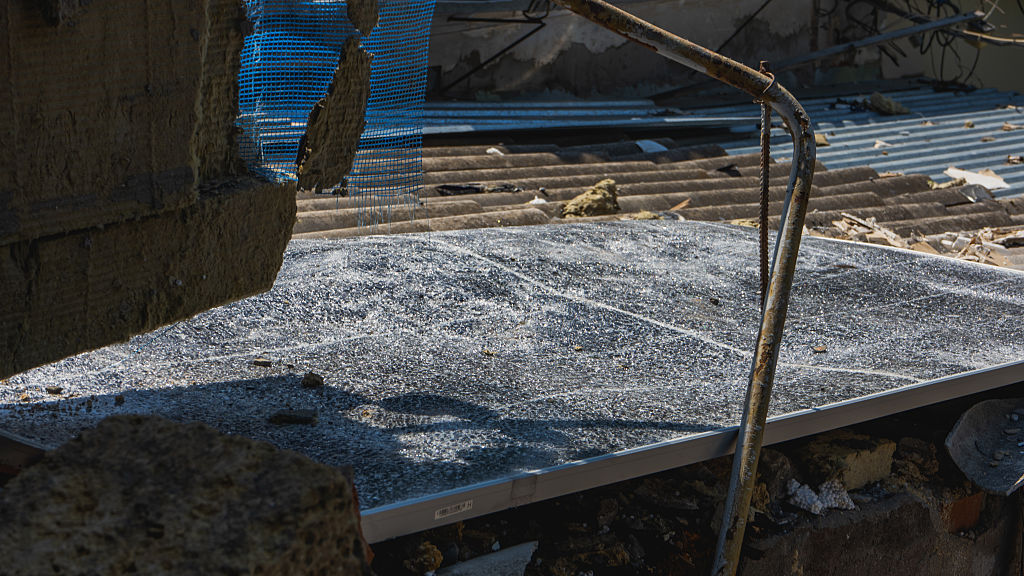
The loss of approximately 30 percent of the nation’s pre-war solar capacity and the majority of its wind farms in the south—either through destruction or occupation—has served as a sobering lesson in the importance of geographic distribution. By spreading power generation across thousands of smaller sites rather than concentrating it in a few massive facilities, Ukraine is effectively reducing the "target density" of its infrastructure.
Furthermore, this shift is permanently altering the country’s energy identity. Before the invasion, the path toward renewables was largely driven by the goal of joining the European Union and meeting climate targets. Today, that goal is inextricably linked to national security. The economic logic of solar—cheaper, more economical, and more ecological—is now reinforced by the cold, hard logic of survival.
As the war continues, the model of "distributed generation" is expected to remain the standard for all new construction and major infrastructure repairs. While the immediate goal is to survive the coming winter, the long-term result is a significantly more modern, resilient, and decentralized power grid. When the conflict eventually ends, Ukraine will likely emerge with a uniquely robust energy system, one that is perfectly suited for a modern, digital-first economy and fully compatible with European energy standards.
Ultimately, the rooftop solar arrays in Bila Tserkva and beyond are symbols of a broader national resistance. They represent a refusal to be plunged into the darkness by an external force. By building a grid that is small, modular, and resilient, Ukraine is not only keeping its lights on—it is proving that its infrastructure, like its people, can adapt to even the most destructive of circumstances. The investment in renewable energy is, in the final analysis, an investment in the permanence of the Ukrainian state.