
Unlock Your Potential: 3 Powerful Strength Training Tips for Superior Results
The pursuit of enhanced physical strength, muscle hypertrophy, and improved athletic performance is a cornerstone of fitness for many. While the principles of progressive overload and consistent effort are widely understood, optimizing training strategies can unlock significant advancements. This article delves into three critical strength training tips, offering actionable advice and the underlying physiological rationale to maximize your gains. These are not merely suggestions; they are fundamental pillars upon which effective and sustainable strength development is built. Implementing these principles will not only lead to more efficient progress but also contribute to long-term injury prevention and a deeper understanding of your body’s capabilities.
Tip 1: Prioritize Compound Movements and Strategic Exercise Selection
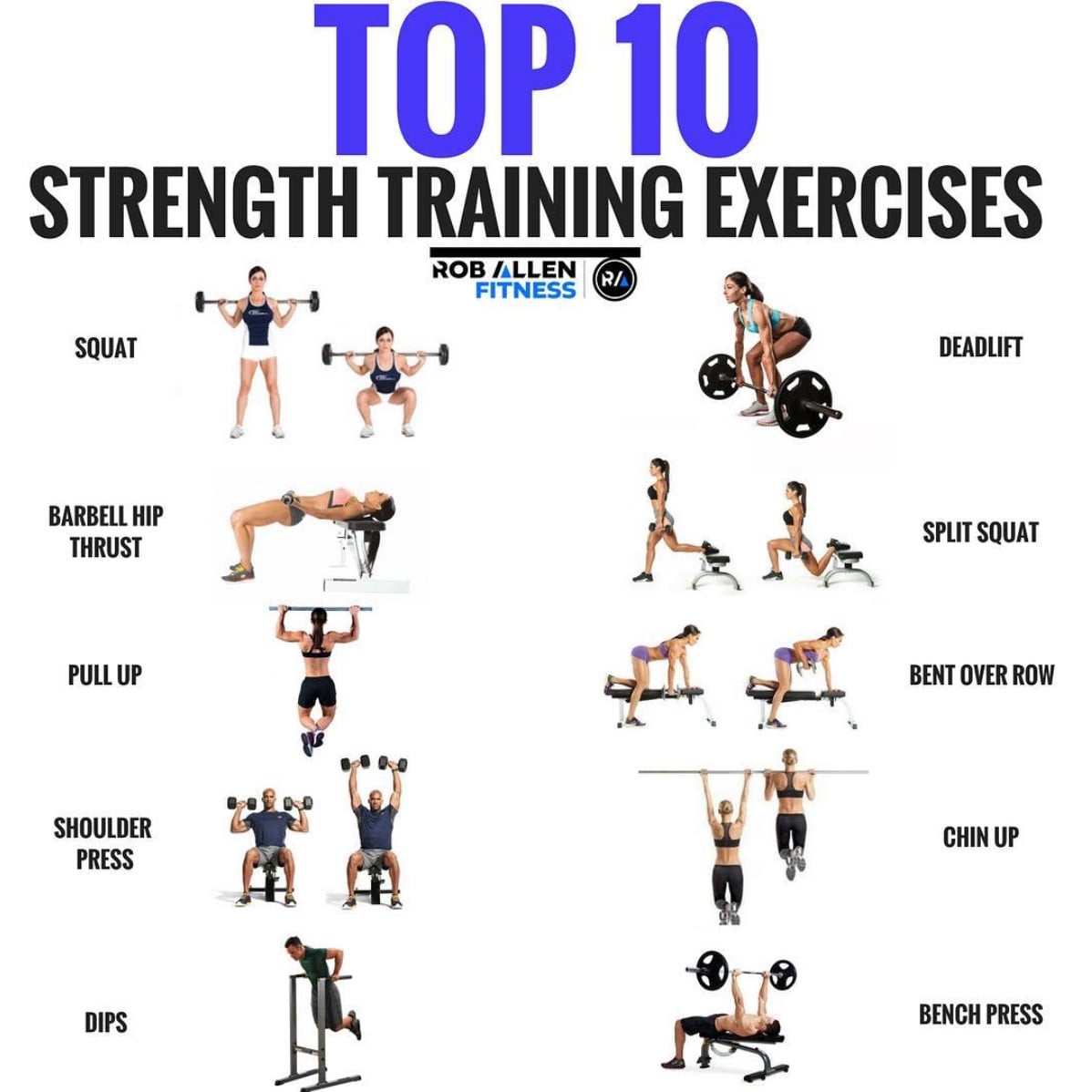
The foundation of any effective strength training program lies in the intelligent selection of exercises, with a strong emphasis on compound movements. These multi-joint exercises engage multiple muscle groups and synergistic muscle actions simultaneously, demanding a higher level of motor unit recruitment and hormonal response compared to isolation exercises. Compound lifts like squats, deadlifts, bench presses, overhead presses, and rows are the bedrock of strength development because they mimic natural, functional human movements. They train the body as an integrated unit, fostering systemic strength and stability, which translates directly to improved performance in daily life and athletic endeavors.
Consider the squat. This single exercise engages the quadriceps, hamstrings, glutes, adductors, erector spinae, core musculature, and even the upper back and shoulders for stabilization. It’s a potent anabolic stimulus, triggering the release of growth hormone and testosterone, which are crucial for muscle repair and growth. Similarly, the deadlift, often called the "king of exercises," works the posterior chain (hamstrings, glutes, erector spinae), traps, lats, forearms, and core. The bench press targets the pectoralis major, anterior deltoids, and triceps, while the overhead press is a superior builder of shoulder and upper back strength. Rows, in their various forms (barbell, dumbbell, cable), are paramount for developing a strong and functional upper back, essential for posture and preventing imbalances.
The principle of specificity is also paramount. If your goal is to increase overall strength, a program heavily reliant on isolation exercises for biceps and triceps will be far less effective than one built around compound lifts. While isolation exercises have their place, particularly for addressing weak points, correcting muscle imbalances, or fine-tuning specific muscle development after the primary strength work is completed, they should not be the primary focus of a strength-oriented program.
Strategic exercise selection also involves understanding exercise variations and their benefits. For instance, within the squatting paradigm, a back squat, front squat, and overhead squat all target the same primary muscle groups but place different stresses on the body and require different degrees of mobility and stability. A front squat, for example, places a greater emphasis on the quadriceps and requires superior thoracic mobility and core bracing. A sumo deadlift, compared to a conventional deadlift, can reduce the range of motion and shift the emphasis slightly to the hips and adductors. Incorporating these variations periodically can prevent plateaus, challenge the muscles in new ways, and help develop a more well-rounded physique.
Furthermore, the order of exercises within a training session is crucial. Compound movements, being the most demanding, should typically be performed at the beginning of your workout when you are freshest and have the most energy. This allows you to lift the heaviest weights and execute these complex movements with the best form, maximizing the stimulus. Isolation exercises, which are less taxing, are better placed towards the end of the workout to serve as accessory work, further fatiguing specific muscles or addressing any lingering weaknesses.
Tip 2: Embrace Progressive Overload Through Strategic Intensity and Volume Manipulation
Progressive overload is the single most critical principle for achieving continuous strength gains. Without it, your body will adapt to the current stimulus and cease to make progress. This doesn’t simply mean lifting heavier weight every single workout, a common misconception that can lead to burnout and injury. Instead, progressive overload is a multifaceted approach that involves systematically increasing the demands placed upon the musculoskeletal system over time. This can be achieved through various methods, often referred to as manipulating training variables like intensity, volume, frequency, and rest periods.
Intensity, often measured as a percentage of your one-repetition maximum (1RM), is a primary driver of strength. Lifting heavier weights within a lower repetition range (typically 1-6 reps) is highly effective for developing maximal strength and recruiting high-threshold motor units. However, constantly pushing to maximum intensity without adequate recovery can be detrimental. A more strategic approach involves periodization, where training cycles are structured to incorporate phases of higher intensity and lower volume, followed by phases of lower intensity and higher volume, or vice versa. This allows for systematic adaptation and prevents overtraining. For example, a strength block might involve working in the 85-95% of 1RM range for 3-5 reps, while a hypertrophy block might focus on 70-80% of 1RM for 8-12 reps.
Volume, defined as the total amount of work performed (sets x reps x weight), is another crucial component of progressive overload. Increasing the total number of repetitions or sets for a given exercise or muscle group over time will also stimulate adaptation. This can be achieved by adding an extra set to an exercise, increasing the number of reps per set, or by increasing the frequency with which you train a particular muscle group. However, excessive volume without adequate recovery can lead to overtraining, muscle fatigue, and a diminished capacity to recover and adapt. The optimal volume for strength development is highly individual but generally falls within a range that allows for sufficient recovery between training sessions.
Manipulating exercise variations is another clever way to implement progressive overload. Even if the weight remains the same, switching to a more challenging variation of an exercise can provide a novel stimulus. For instance, transitioning from a dumbbell bench press to a barbell bench press, or from a standard pull-up to a weighted pull-up, forces the body to adapt to a different biomechanical challenge and recruit different stabilizing muscles.
Frequency, the number of times a muscle group or exercise is trained per week, also plays a role. While some advocate for hitting each muscle group once a week with high intensity and volume, others find that training muscle groups 2-3 times per week with moderate intensity and volume yields better results due to enhanced protein synthesis and practice effects. This is particularly true for compound movements, which stimulate systemic responses and benefit from more frequent practice.
Finally, strategic rest period manipulation can contribute to progressive overload. Shorter rest periods (30-90 seconds) tend to favor hypertrophy and muscular endurance, while longer rest periods (2-5 minutes) are generally preferred for maximal strength development, allowing for sufficient ATP replenishment and neural recovery between heavy sets. By adjusting these rest periods based on your training goals and the demands of specific exercises, you can fine-tune the stimulus and drive further adaptation. Ultimately, the key is to consistently challenge your body in a controlled and systematic manner, ensuring that the training stimulus gradually increases, thereby forcing adaptation and leading to sustained strength development.
Tip 3: Optimize Recovery and Nutrition for Enhanced Muscle Adaptation and Performance
The most potent strength training stimulus is rendered largely ineffective without a corresponding commitment to recovery and nutrition. Muscle growth and repair do not occur during training; they occur in the periods of rest and refueling that follow. Neglecting these crucial aspects is akin to building a house without laying a proper foundation – it will eventually crumble.
Sleep is arguably the most vital component of recovery. During deep sleep, the body releases human growth hormone (HGH), a critical anabolic hormone responsible for tissue repair and muscle growth. Insufficient sleep disrupts this hormonal release, impairs muscle protein synthesis, increases cortisol levels (a catabolic hormone), and negatively impacts cognitive function, motor control, and energy levels. Aim for 7-9 hours of quality sleep per night. Establishing a consistent sleep schedule, creating a dark and quiet sleep environment, and avoiding electronic devices before bed can significantly improve sleep quality.
Active recovery, which involves low-intensity physical activity such as light cardio (walking, cycling), dynamic stretching, or foam rolling, can also enhance recovery by increasing blood flow to the muscles, which helps to deliver nutrients and remove metabolic byproducts. This improved circulation can reduce muscle soreness and stiffness, allowing for quicker recovery between intense training sessions. It’s important to distinguish active recovery from further taxing training; the intensity should be significantly lower than your regular workouts.
Nutrition is the other non-negotiable pillar of optimal recovery and muscle adaptation. Adequate protein intake is essential for muscle protein synthesis, the process by which damaged muscle fibers are repaired and rebuilt stronger. Aim for a daily protein intake of 1.6-2.2 grams per kilogram of body weight. Distributing protein intake throughout the day, including a post-workout protein source, can further optimize muscle repair.
Carbohydrates play a vital role in replenishing glycogen stores, which are the primary source of fuel for high-intensity exercise. Insufficient carbohydrate intake can lead to depleted glycogen stores, resulting in reduced performance and a diminished ability to recover. The type and timing of carbohydrate consumption are also important. Complex carbohydrates (whole grains, fruits, vegetables) provide sustained energy, while simpler carbohydrates can be beneficial post-workout to quickly replenish glycogen.
Healthy fats are crucial for hormone production, including testosterone, which is vital for muscle growth. Including sources of monounsaturated and polyunsaturated fats (avocado, nuts, seeds, fatty fish) in your diet supports overall hormonal balance and recovery. Micronutrients, vitamins and minerals, are also critical for numerous physiological processes involved in muscle repair, energy production, and immune function. Consuming a diet rich in whole, unprocessed foods will ensure adequate intake of these essential micronutrients.
Hydration is often overlooked but is paramount for performance and recovery. Dehydration can impair muscle function, increase fatigue, and hinder nutrient transport. Ensure you are drinking enough water throughout the day, especially before, during, and after training.
Finally, stress management is increasingly recognized as a critical factor in recovery. Chronic stress elevates cortisol levels, which can impede muscle growth and recovery. Incorporating stress-reducing activities such as meditation, deep breathing exercises, yoga, or spending time in nature can significantly benefit your overall recovery and adaptation process. By prioritizing sleep, smart nutrition, hydration, and stress management, you create an environment where your body can effectively repair, rebuild, and ultimately get stronger.

