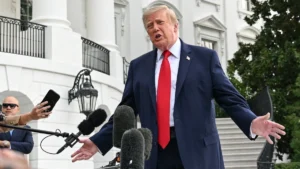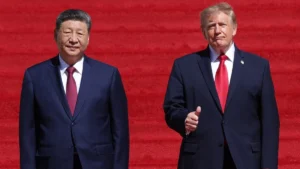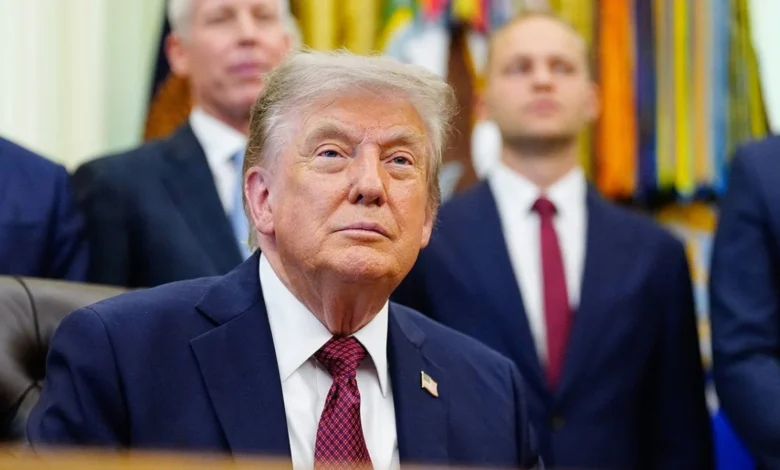
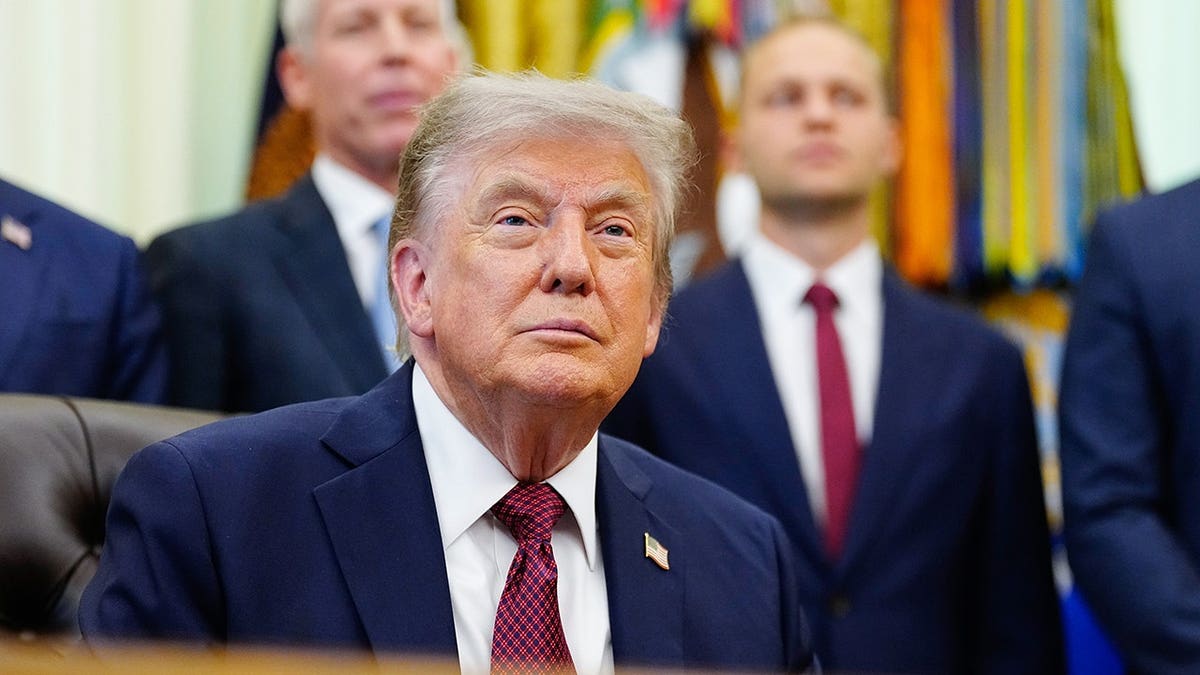
In a significant development reshaping Middle Eastern diplomatic and energy landscapes, former President Donald Trump declared Friday that any progression on a civilian nuclear agreement between the United States and Saudi Arabia is contingent upon Riyadh formally joining the Abraham Accords. Speaking from the Oval Office, Trump asserted that this requirement was not a new stipulation but an "always understood" condition throughout prior negotiations, despite recent announcements suggesting advancement on the nuclear front. This pronouncement introduces a critical linkage between regional normalization efforts and strategic energy partnerships, underscoring the complex interplay of security, diplomacy, and economic interests in the Middle East.
Trump’s Unwavering Stance on the Abraham Accords
The former President’s remarks came after Energy Secretary Chris Wright reportedly announced progress on a potential Saudi nuclear deal, leading to questions about the timing and introduction of additional conditions. Trump, however, firmly rejected any suggestion that his administration officials had acted prematurely or out of sync with his directives. "No, nobody got out ahead. I mean, I just say that in order to do it, they have to be a member of the Abraham Accords, which have been very successful. But it’s time now that they do it," Trump stated unequivocally. He maintained that the prerequisite for Saudi Arabia to join the Abraham Accords was an implicit understanding for all parties involved, including Secretary Wright and Saudi representatives.
When pressed on why an agreement might have been signed by Wright if this fundamental condition remained outstanding, Trump reiterated that any such deal would still require the approval of the U.S. Congress and would not move forward without Saudi Arabia’s accession to the peace accords. "Because they understood that, subject to Congress and everything else, in order for that deal to go through, they had to sign into the Abraham Accords," he explained. This emphasis highlights not only the executive’s role in setting foreign policy parameters but also the necessary legislative oversight for such strategic agreements. Trump underscored his belief in the accords, stating, "We think the Abraham Accords bring peace in the Middle East."
The Abraham Accords: A Diplomatic Breakthrough
To fully appreciate the weight of Trump’s condition, it is crucial to understand the Abraham Accords. Signed in 2020 during the Trump administration, these landmark agreements normalized relations between Israel and several Arab nations: the United Arab Emirates (UAE), Bahrain, Sudan, and Morocco. Prior to these accords, only two Arab states—Egypt (1979) and Jordan (1994)—had formal diplomatic ties with Israel. The Abraham Accords shattered decades of diplomatic stagnation, primarily by decoupling the resolution of the Israeli-Palestinian conflict from broader Arab-Israeli normalization.
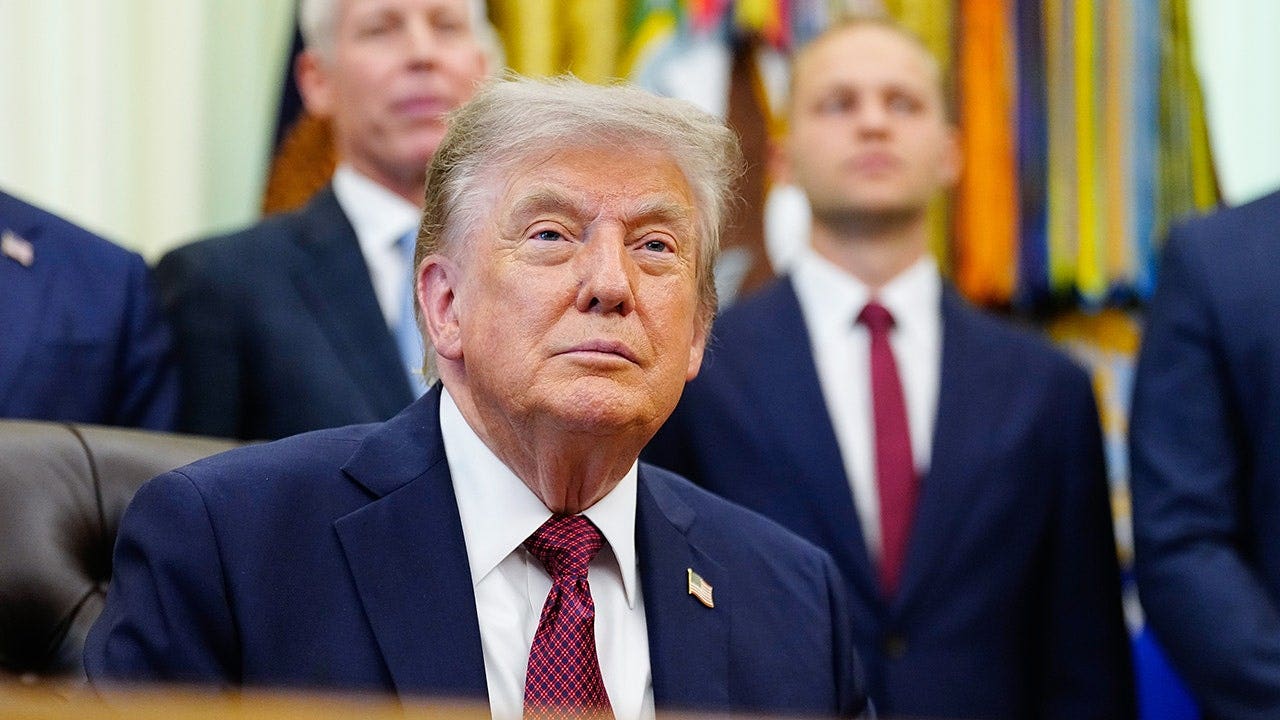
The accords were predicated on a shared recognition of growing regional threats, particularly from Iran, and a desire to foster economic cooperation and security partnerships. For the signatory nations, the benefits included enhanced security cooperation with Israel and the U.S., access to advanced technology, and significant economic opportunities. The U.S., in turn, aimed to create a more stable and integrated Middle East, bolstering its strategic interests and those of its allies. Saudi Arabia, a key regional power and custodian of Islam’s holiest sites, has long been considered a pivotal, albeit complex, potential signatory. Its entry into the Abraham Accords would represent the most significant expansion of the agreements to date, fundamentally altering the regional geopolitical balance.
Saudi Arabia’s Nuclear Ambitions and Non-Proliferation Concerns
Saudi Arabia has long expressed its intent to develop a civilian nuclear energy program to diversify its energy mix and reduce its reliance on oil for domestic power generation. The kingdom aims to build up to 16 nuclear power reactors over the next two decades, with an estimated cost exceeding $80 billion. This ambition stems from a desire to meet rapidly increasing electricity demand, conserve its vast oil reserves for export, and project itself as a technologically advanced nation.
However, Saudi Arabia’s nuclear aspirations have raised significant non-proliferation concerns within the international community and particularly in Washington. The primary sticking point has been Riyadh’s reluctance to commit to the "gold standard" of non-proliferation, often referred to as a "123 Agreement" under Section 123 of the U.S. Atomic Energy Act. This typically requires a commitment from the partner nation not to enrich uranium or reprocess spent fuel on its soil—processes that could potentially be diverted to create weapons-grade material. Without such a commitment, known as an "additional protocol" to its safeguards agreement with the International Atomic Energy Agency (IAEA), there are fears that a civilian program could serve as a cover for a future weapons program.
Trump’s insistence that any deal would be strictly for "civilian nuclear" purposes with "no enrichment" directly addresses these concerns, aligning with the U.S. non-proliferation policy objectives. This condition aims to ensure that Saudi Arabia’s nuclear program remains purely for peaceful energy generation, assuaging fears of a regional nuclear arms race, especially given Saudi Arabia’s historical rivalry with Iran.
The Evolving Regional Security Landscape and the "Iran Factor"
A core tenet of Trump’s foreign policy in the Middle East was confronting Iran, which he frequently cited as the primary destabilizing force in the region. During his Friday remarks, Trump reiterated his belief that Iran’s military capabilities have been "significantly weakened," effectively reducing the "Iran factor" in regional security calculations. "There’s no longer an Iran factor. There’s no longer Iran to worry about because they’ve been reduced in terms of their capability and power by many fold," Trump claimed.
This assessment, while perhaps optimistic, reflects the impact of the "maximum pressure" campaign waged by the Trump administration, which reimposed stringent sanctions on Iran after withdrawing from the Joint Comprehensive Plan of Action (JCPOA), also known as the Iran nuclear deal, in 2018. The sanctions severely crippled Iran’s economy, limiting its ability to fund proxies and develop advanced military hardware. Whether Iran’s capabilities have been "reduced by many fold" is subject to debate among intelligence agencies and analysts, but the perception of a weakened Iran has certainly been a driving force behind increased cooperation between Israel and various Arab states, particularly Saudi Arabia, which views Iran as an existential threat. This shared threat perception formed a crucial backdrop for the Abraham Accords, making Saudi Arabia’s potential entry a logical extension of these security alignments.
Chronology of Key Events and Context
- 1979-Present: Saudi Arabia, a signatory to the Nuclear Non-Proliferation Treaty (NPT), has explored civilian nuclear energy as part of its long-term economic diversification goals.
- 2015: The Joint Comprehensive Plan of Action (JCPOA) is signed, aiming to curb Iran’s nuclear program.
- 2018: The Trump administration withdraws from the JCPOA and initiates a "maximum pressure" campaign against Iran.
- 2020: The Abraham Accords are signed, normalizing relations between Israel and the UAE, Bahrain, Sudan, and Morocco. These agreements highlight a shift in regional priorities, moving towards greater cooperation in the face of perceived Iranian threats.
- Ongoing: Discussions between the U.S. and Saudi Arabia regarding a civilian nuclear agreement continue, with the U.S. seeking strict non-proliferation assurances.
- Recent Past: Reports emerge of progress on a Saudi nuclear deal, potentially including an announcement by Energy Secretary Chris Wright.
- Friday’s Announcement: Former President Trump publicly states that Saudi Arabia’s accession to the Abraham Accords is a mandatory prerequisite for any U.S. civilian nuclear deal to proceed. This statement clarifies the U.S. position and links two major foreign policy objectives.
- Future: Any potential deal would require U.S. Congressional approval and Saudi Arabia’s explicit agreement to join the Abraham Accords and adhere to strict non-enrichment terms.
Implications and Broader Impact
Trump’s declaration has far-reaching implications across diplomatic, economic, and security spheres:
- For US-Saudi Relations: This linkage places a clear, high-stakes condition on a strategic partnership. While Saudi Arabia desires U.S. nuclear technology, the political cost of formally recognizing Israel could be substantial domestically and regionally, despite covert cooperation that already exists. It forces Riyadh to make a definitive choice between a critical energy partnership and its historical stance on the Palestinian issue.
- For Regional Stability: Saudi Arabia’s entry into the Abraham Accords would be a monumental shift, creating a formidable anti-Iran bloc that includes Israel, the UAE, Bahrain, and potentially others. This could lead to a more integrated regional security architecture but also intensify the existing geopolitical fault lines with Iran and its allies. It could also put pressure on other Arab nations to consider normalization with Israel.
- For Nuclear Non-Proliferation: By explicitly stating "no enrichment" as a condition, Trump reinforces the U.S. commitment to preventing nuclear proliferation in the Middle East. However, the allure of nuclear technology remains, and if the U.S. deal falters, Saudi Arabia might turn to other suppliers (e.g., China, Russia) who may impose fewer non-proliferation restrictions, potentially undermining global non-proliferation efforts.
- For the Abraham Accords: This move significantly raises the stakes and potential impact of the accords, transforming them from a series of bilateral agreements into a potential framework for broader regional realignment. It highlights the Trump administration’s long-term vision for Middle East peace and stability, driven by strategic alignment against shared adversaries.
- Domestic US Politics and Congressional Role: Any civilian nuclear deal, especially one with a nation like Saudi Arabia, would face intense scrutiny in Congress. Lawmakers from both parties would demand robust non-proliferation safeguards and a thorough assessment of geopolitical risks. Trump’s emphasis on Congressional approval signals an awareness of this hurdle, ensuring the legislative branch retains its constitutional role in approving international agreements. The prospect of Saudi Arabia joining the Abraham Accords could, however, garner bipartisan support for the nuclear deal by framing it as a major diplomatic achievement.
- Economic and Energy Security: A U.S.-supported civilian nuclear program would provide Saudi Arabia with a reliable, carbon-free energy source, supporting its Vision 2030 economic diversification plan. For the U.S., it means securing a foothold in a burgeoning nuclear market and preventing rival nations from dominating the sector. The Oval Office event celebrating advanced nuclear energy further emphasized the administration’s broader push for a "renaissance of nuclear power in America" and its deployment globally.
Conclusion
Former President Trump’s Friday announcement marks a critical juncture in U.S. foreign policy toward the Middle East, explicitly linking Saudi Arabia’s strategic energy ambitions to its willingness to embrace regional normalization with Israel. By making accession to the Abraham Accords a non-negotiable prerequisite for a U.S. civilian nuclear agreement, Trump has laid down a clear diplomatic gauntlet. This move underscores the Trump administration’s persistent strategy of reconfiguring alliances and confronting perceived threats in the Middle East, particularly Iran. The coming months will reveal how Saudi Arabia responds to this complex proposition and how the U.S. Congress, and indeed the international community, will navigate the profound implications of such a potential grand bargain for peace, energy, and non-proliferation. The stakes are undeniably high, with the potential to redefine the geopolitical landscape of one of the world’s most volatile regions.