The geopolitical landscape of the Middle East remains on a knife-edge as Tehran awaits a formal American response to a sweeping diplomatic initiative presented at the United Nations General Assembly in New York. The proposal, transmitted to Washington via Qatari intermediaries, purports to offer a comprehensive roadmap to de-escalate the seven-month-old regional conflict, reopen the vital Strait of Hormuz to international shipping, and revive stalled negotiations regarding Iran’s nuclear program.
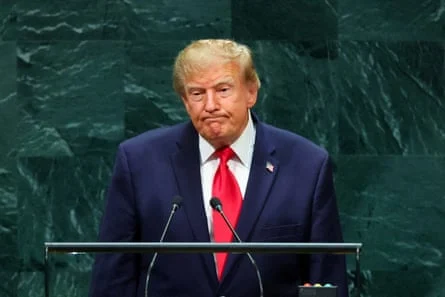
Despite the optimistic framing presented by Iranian officials in New York, the initiative has met with deep skepticism within the highest echelons of the White House. According to reports citing anonymous U.S. officials, President Donald Trump has expressed reservations about the timing and sincerity of the offer, indicating that he favors maintaining military pressure and potentially greenlighting a renewed strategic bombing campaign following the critical U.S. midterm elections in November.
The high-stakes diplomatic maneuver highlights the severe global ramifications of a conflict that has severely strained the world economy, inflamed inflation through volatile energy markets, and drawn a complex web of regional and international actors into a protracted war of attrition. As diplomats work frantically behind the scenes, the international community watches closely to see whether a window for peace can be forced open or if the region is bracing for an even more destructive phase of hostilities.
The Anatomy of the Iranian Proposal
The diplomatic gambit was detailed publicly by Iranian Foreign Minister Abbas Araghchi during a press briefing outside the UN Security Council. According to Araghchi, the framework is designed to move swiftly from confrontation to de-escalation through a tightly compressed, seven-day timeline that hinges entirely on Washington’s willingness to halt its military posture in the region.
Under the terms of the Iranian proposal, the process would initiate immediately upon formal acceptance by the United States. The stipulations demanded by Tehran include:
- The complete lifting of the U.S. naval blockade currently strangling Iranian ports.
- The formal waiver of economic sanctions targeting Iranian petroleum and oil sales on the global market.
- The immediate implementation of a comprehensive regional ceasefire, which explicitly encompasses a cessation of hostilities involving Lebanon and aligned regional actors.
Araghchi outlined a day-by-day progression for the initiative, stating that preliminary logistical and security steps would consume the first four to five days. By the sixth day, the strategically vital Strait of Hormuz—through which a massive percentage of the world’s liquefied natural gas and petroleum passes—would be officially cleared and fully reopened to commercial maritime traffic. On the seventh day, Tehran and Washington would formally resume high-level discussions aimed at reaching a comprehensive, mutually agreed-upon final deal regarding Iran’s nuclear capabilities.
"If there is seriousness on the U.S. side to come to a deal and reopen the Strait of Hormuz, everything is now prepared," Araghchi told reporters, emphasizing that his country’s technical and diplomatic apparatus is fully mobilized to enact the plan.
Concurrently, Iranian President Masoud Pezeshkian reinforced this diplomatic messaging during an interview with the American news program Face the Nation. Pezeshkian maintained that while Tehran remains open to constructive dialogue and has long affirmed that it is not pursuing the development of nuclear weapons, it will firmly reject any diplomatic overtures tainted by coercion or economic bullying.

"Iran is not seeking war, but will defend itself against pressure, threats, and attacks," Pezeshkian asserted, highlighting the internal balancing act faced by the administration as it navigates between moderate diplomatic outreach and the rigid demands of domestic hardliners within the security apparatus.
Chronology of a Protracted Conflict
To understand the weight of the current diplomatic overture, it is essential to examine the trajectory of the war that commenced on February 28, when coordinated U.S. and Israeli military strikes targeted Iranian strategic infrastructure. What was initially conceived as a targeted campaign to degrade Iran’s conventional military capabilities and curb its regional influence quickly metastasized into a grueling, multi-front war of attrition.
- Late February: The conflict erupts with sweeping airstrikes by the United States and Israel against Iranian military sites, command and control nodes, and logistical hubs, fundamentally altering the strategic balance of the Middle East.
- Spring: As military operations intensify, Iran retaliates by disrupting commercial shipping in the Persian Gulf and imposing an effective de facto closure of the Strait of Hormuz. Global energy prices spike dramatically, triggering inflationary pressures across industrialized economies.
- Summer: The conflict widens geographically. Iranian-backed proxies and allied militias engage in sustained cross-border skirmishes. In Lebanon, Hezbollah exchanges heavy artillery and missile fire with Israeli forces, while in Iraq and Yemen, aligned militias launch drone and missile attacks targeting critical energy infrastructure in neighboring states.
- September: Against the backdrop of the UN General Assembly in New York, backchannel negotiations facilitated by Qatar yield the seven-day de-escalation framework. Simultaneously, military incidents continue unabated, underscored by the interception of Houthi-launched drones over Riyadh and previous pipeline sabotage events in the Gulf region.
Regional Ripple Effects and Security Incidents
The urgency behind the diplomatic maneuvers is underscored by the relentless expansion of the conflict beyond Iran’s borders. The Strait of Hormuz remains the world’s most critical energy chokepoint, and its prolonged closure has inflicted severe wounds on global supply chains. However, the instability has manifested across multiple theaters of operation.
In the early hours of a recent Saturday, the Saudi-led coalition operating in Yemen reported the successful interception of two explosive-laden drones. The unmanned aerial vehicles had been launched by the Houthi movement—an Iran-backed faction—with a trajectory pointing squarely at the Saudi capital, Riyadh. This incident followed a series of destabilizing events in Iraq, where pro-Iranian militias were widely blamed for a sophisticated drone attack on a major Saudi oil pipeline, temporarily forcing significant volumes of crude off the international market.
Meanwhile, along the northern border of Israel, the low-intensity friction involving Hezbollah has remained a persistent source of escalation risk, threatening to draw in additional regional players should the broader war fail to find a diplomatic off-ramp. These intersecting flashpoints demonstrate that any durable resolution in the Strait of Hormuz cannot be viewed in isolation from the broader mosaic of regional conflicts.
Geopolitical Implications and Washington’s Calculus
The debate within the White House regarding the Iranian proposal reveals a profound divergence between immediate economic relief and long-term strategic objectives. On one hand, persistent high oil prices continue to fuel domestic inflation in the United States, creating political vulnerabilities for the administration as the November midterm elections approach. A successful reopening of the Strait of Hormuz and a drop in crude prices would provide a significant economic and political tailwind.
On the other hand, President Trump and his national security advisors remain deeply skeptical of Tehran’s long-term intentions. Senior administration officials fear that accepting the Iranian terms—particularly the lifting of naval blockades and the waiver of oil sanctions—would prematurely relieve maximum pressure without securing verifiable, irreversible concessions on Iran’s nuclear enrichment activities and its regional proxy network. Consequently, reports from Washington indicate a growing consensus among hawkish advisors that maintaining the military posture and potentially resuming an intensive bombing campaign after the midterms may offer a more permanent solution to the Iranian challenge, regardless of the short-term economic friction.
Furthermore, domestic political dynamics within Iran present an additional layer of unpredictability. The modally driven diplomatic outreach spearheaded by Pezeshkian and Araghchi must continually contend with the powerful Islamic Revolutionary Guard Corps (IRGC) and domestic hardliners who view Western diplomatic engagement with profound suspicion. Whether the moderate faction possesses sufficient political capital to enforce compliance with a final international agreement remains an open question for regional analysts.
As the waiting period for an official U.S. reply stretches on, the global community remains caught between the promise of an engineered seven-day peace and the looming prospect of an escalated military campaign. The decisions made in Washington and Tehran in the coming days will likely dictate the economic and security trajectory of the Middle East for years to come.