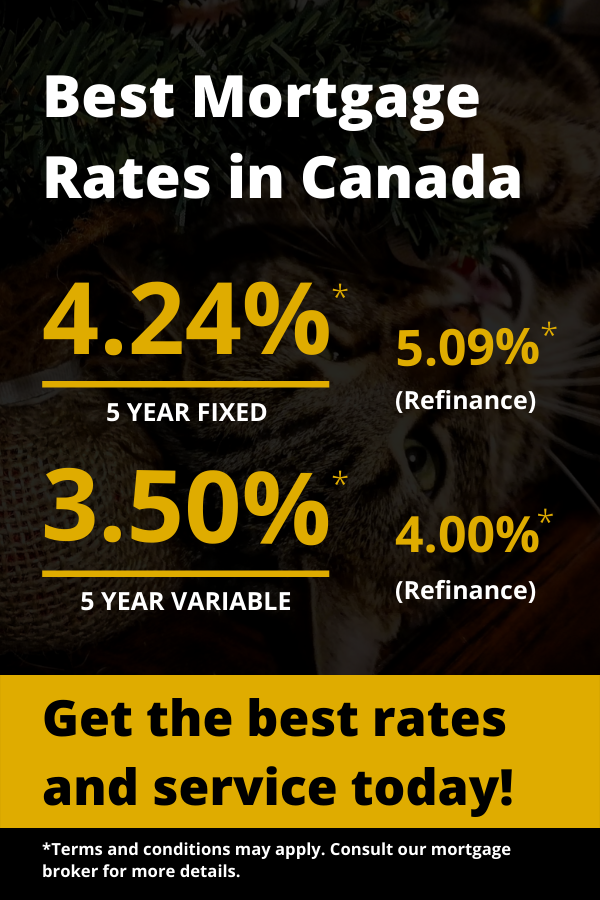
Unlocking the Best Mortgage Rates in Canada: A Comprehensive Guide for Savvy Borrowers
Securing the best mortgage rates in Canada is paramount for maximizing affordability and minimizing long-term borrowing costs. This comprehensive guide delves into the factors influencing mortgage rates, explores different mortgage types, and outlines actionable strategies for obtaining the most favorable terms available. Understanding the intricacies of the Canadian mortgage market empowers borrowers to make informed decisions, ultimately saving thousands of dollars over the life of their loan. The Canadian mortgage landscape is dynamic, with rates constantly fluctuating based on economic indicators, Bank of Canada policies, and lender competition. For consumers, this means a proactive approach is essential to landing the lowest possible interest rate.
Several key economic factors significantly impact the mortgage rates offered by Canadian lenders. The Bank of Canada’s overnight lending rate serves as a benchmark for prime rates, which in turn influence variable mortgage rates. When the Bank of Canada raises its key interest rate, variable mortgage rates typically increase, and vice versa. Fixed mortgage rates, while not directly tied to the overnight rate, are heavily influenced by the bond market, particularly the yield on Government of Canada bonds. When bond yields rise, fixed mortgage rates tend to follow suit, as lenders price their fixed-rate products based on the cost of borrowing funds over longer periods. Inflation is another critical driver. High inflation can prompt the Bank of Canada to increase interest rates to cool the economy, leading to higher mortgage rates for consumers. Conversely, low inflation may allow for lower interest rates. Global economic conditions also play a role; geopolitical events, international trade agreements, and the economic health of major global economies can indirectly influence Canadian interest rates and mortgage availability. Lenders assess their risk exposure based on these broader economic trends, adjusting their pricing accordingly.
The Canadian mortgage market offers a diverse range of mortgage products, each with distinct characteristics that appeal to different borrower needs and risk appetites. Fixed-rate mortgages provide certainty and predictability, shielding borrowers from interest rate fluctuations. The interest rate remains constant for the entire term of the mortgage, ensuring consistent monthly payments. This predictability is highly attractive to individuals who prioritize budget stability and wish to avoid the anxiety of potential rate increases. Common fixed-rate terms range from one to five years, with longer terms generally offering slightly higher rates due to the increased commitment and risk for the lender. Variable-rate mortgages, on the other hand, fluctuate with changes in a benchmark interest rate, typically the prime rate. These mortgages often begin with a lower initial interest rate than comparable fixed-rate mortgages. However, if the benchmark rate increases, monthly payments will rise, and if it decreases, payments will fall. This offers the potential for savings if interest rates decline but carries the risk of higher payments if rates rise. Variable-rate mortgages are often structured with a "trigger rate," beyond which the amortization period may need to be extended to keep payments from rising further.
Open mortgages offer maximum flexibility, allowing borrowers to make extra payments or pay off the entire mortgage at any time without penalty. This is ideal for individuals who anticipate receiving a lump sum of money, such as an inheritance or bonus, and wish to accelerate their mortgage repayment. However, open mortgages typically come with significantly higher interest rates compared to closed mortgages, reflecting the lender’s lack of commitment to a fixed borrowing period. Closed mortgages are the most common type, offering lower interest rates than open mortgages in exchange for restrictions on prepayments. These restrictions vary by lender and mortgage agreement, but generally, there are limits on how much extra principal can be paid annually. Exceeding these limits usually incurs a penalty. Closed mortgages are further categorized by their term length, with shorter terms (e.g., one to three years) typically having lower rates than longer terms (e.g., five years or more). Hybrid mortgages combine features of both fixed and variable rates, often offering a fixed rate for an initial period, followed by a variable rate for the remainder of the term, or vice-versa. This can be an attractive option for borrowers seeking some initial rate stability with the potential for future savings if rates fall.
To secure the best mortgage rates in Canada, borrowers must actively engage in the shopping process and understand the factors that lenders consider. A strong credit score is arguably the most critical determinant of mortgage eligibility and interest rate. Lenders use credit scores to assess a borrower’s creditworthiness and the likelihood of them repaying their debt. A higher credit score (generally 700 and above) signals to lenders that you are a low-risk borrower, making you eligible for the most competitive rates. Conversely, a lower credit score can result in higher interest rates or even outright loan rejection. Regularly checking your credit report for errors and taking steps to improve your score, such as paying bills on time, reducing outstanding debt, and avoiding unnecessary credit applications, are essential proactive measures.
A substantial down payment significantly reduces the loan-to-value (LTV) ratio, which is the amount of the mortgage relative to the property’s appraised value. Lenders view a lower LTV ratio as less risky, as it means the borrower has more equity in the property. Borrowers who can afford a down payment of 20% or more generally qualify for the best mortgage rates and avoid the need for mortgage default insurance (such as CMHC insurance), which adds to the overall cost of the mortgage. For down payments less than 20%, mortgage default insurance is mandatory, and the premium is typically added to the mortgage amount. The amount of down payment directly impacts the lender’s risk assessment. For example, a borrower with a 25% down payment is considered a much lower risk than one with a 5% down payment, and will therefore be offered a more attractive interest rate.
Demonstrating stable and sufficient income is crucial for mortgage approval and rate negotiation. Lenders need to be confident that you can comfortably afford your monthly mortgage payments, property taxes, and other housing-related expenses. Providing proof of employment, recent pay stubs, and tax returns helps lenders assess your income stability and capacity to repay the loan. Self-employed individuals may need to provide more comprehensive documentation, such as several years of financial statements and tax assessments, to establish a consistent income history. Lenders often calculate a debt service ratio, which measures the percentage of your gross income that goes towards servicing debt. A lower debt service ratio generally indicates a stronger ability to manage additional debt, such as a mortgage.
Shopping around and comparing offers from multiple lenders is one of the most effective strategies for obtaining the best mortgage rates. Do not accept the first offer you receive. Contact major banks, credit unions, and mortgage brokers to solicit quotes. Mortgage brokers can be particularly valuable as they have access to a wide network of lenders and can often negotiate better rates on your behalf due to their volume of business. Be sure to ask for the "best possible rate" and leverage any competing offers you receive. Understanding the difference between the advertised "posted rate" and the "discounted rate" is also important. Lenders often advertise higher posted rates, but can offer significant discounts for qualified borrowers. Always inquire about the actual rate you can qualify for.
The mortgage term you choose also influences the interest rate. Shorter mortgage terms (one to three years) typically have lower interest rates than longer terms (five years or more). However, a shorter term means you will have to renegotiate your mortgage at the end of the term, exposing you to potentially higher rates if market conditions have changed. Conversely, a longer term offers more rate stability but usually comes with a slightly higher initial rate. Consider your personal financial outlook and risk tolerance when selecting a term. If you anticipate interest rates falling, a shorter term might allow you to benefit from those lower rates sooner. If you prefer stability and are concerned about rising rates, a longer term might be more suitable.
Understanding mortgage pre-approval is a crucial step in the home-buying process that also impacts your ability to secure favorable rates. A mortgage pre-approval is a conditional commitment from a lender to lend you a specific amount of money at a predetermined interest rate for a set period. This process involves a thorough review of your financial situation, including your income, credit history, and assets. Obtaining pre-approval not only gives you a clear understanding of your borrowing capacity and budget but also "locks in" a rate for a specific period (usually 60 to 120 days). This can be advantageous if interest rates are rising, as you will be protected from increases during the pre-approval period. It also demonstrates to sellers that you are a serious and qualified buyer, strengthening your negotiating position. When comparing pre-approval offers, pay close attention to the interest rate, the term length, and any associated fees.
When negotiating your mortgage rate, don’t be afraid to leverage your financial standing and any competing offers you have received. If you have a strong credit score, a significant down payment, and a stable income, you are in a prime position to negotiate. Lenders are keen to attract well-qualified borrowers, and small rate reductions can translate into substantial savings over the life of a mortgage. Be prepared to walk away if you are not offered a competitive rate; there are many lenders eager for your business. Even a quarter-percentage-point reduction in your interest rate can save you thousands of dollars in interest payments over a 25-year mortgage.
Mortgage brokers are an invaluable resource for navigating the complexities of the Canadian mortgage market and finding the best rates. Unlike individual banks, brokers work with a wide array of lenders, including major banks, credit unions, and private lenders. This broad network allows them to compare numerous mortgage products and rates simultaneously, often securing exclusive deals not available to the general public. Their expertise extends beyond simply finding the lowest rate; they can advise on different mortgage types, term lengths, and features that align with your specific financial goals and risk tolerance. Furthermore, brokers handle much of the administrative burden, streamlining the application process and saving you valuable time and effort. They are compensated by the lenders, so their services are typically free to the borrower. When choosing a mortgage broker, ensure they are licensed, reputable, and have a proven track record of helping clients secure competitive mortgage rates.
Fixed vs. Variable Rate Considerations: The eternal debate for Canadian mortgage borrowers. Fixed-rate mortgages offer the comfort of predictable monthly payments, shielding you from the volatility of interest rate fluctuations. This peace of mind is particularly appealing in an environment where interest rates are on an upward trend or if you have a tight budget where unexpected payment increases could be problematic. However, fixed rates typically come with a slightly higher initial interest rate compared to their variable counterparts. Variable-rate mortgages, on the other hand, offer the potential for lower initial payments and savings if interest rates decline. Their rates are tied to a benchmark, usually the prime rate, and will move in conjunction with it. This means your monthly payments could decrease if the Bank of Canada lowers its key interest rate. However, the risk is that if interest rates rise, your payments will also increase, potentially leading to higher borrowing costs over time. Some variable-rate mortgages have a "blended payment" feature, where the payment remains constant for a set period, and any changes in interest rates are absorbed by adjusting the amortization period. This provides some payment stability while still allowing for rate adjustments.
The term length of your mortgage is another critical factor influencing your interest rate. Shorter mortgage terms, typically one to three years, generally come with lower interest rates. This is because lenders are taking on less risk over a shorter commitment period. However, with a shorter term, you will have to renegotiate your mortgage more frequently, exposing you to market rate fluctuations more often. Longer mortgage terms, such as five years or more, typically have slightly higher interest rates. This reflects the increased commitment from the lender and the greater risk of market interest rate changes over a longer period. The trade-off is greater rate stability. Borrowers must weigh their comfort level with rate risk against the desire for the lowest possible initial rate. If you anticipate interest rates falling, a shorter term might be beneficial, allowing you to capitalize on lower rates sooner. If you prefer predictability and are concerned about rising rates, a longer term might be the more prudent choice.
Beyond the interest rate itself, it’s crucial to scrutinize all associated fees and closing costs. These can include appraisal fees, legal fees, land transfer taxes, and potentially mortgage insurance premiums. While the interest rate is the primary cost, these additional expenses can add up. When comparing mortgage offers, ensure you are comparing the "all-in" cost of the mortgage, not just the headline interest rate. For example, a slightly higher interest rate from a lender with minimal or no closing costs might be more financially advantageous than a lower interest rate from a lender with substantial fees. Always ask for a detailed breakdown of all applicable fees and understand what each one entails. This meticulous approach ensures you are making a truly informed decision and not overlooking hidden costs that can impact your overall borrowing expense.
The Canadian mortgage market is highly competitive, and lenders are constantly seeking ways to attract and retain borrowers. This competition often translates into opportunities for consumers to secure more favorable rates. By understanding the factors that influence rates, exploring different mortgage products, and employing strategic negotiation tactics, borrowers can significantly improve their chances of obtaining the best mortgage rates available in Canada. Proactive research, diligent comparison shopping, and a clear understanding of your financial position are the cornerstones of unlocking optimal mortgage financing. The effort invested in finding the best rate will yield tangible financial benefits throughout the entire duration of your mortgage commitment.

