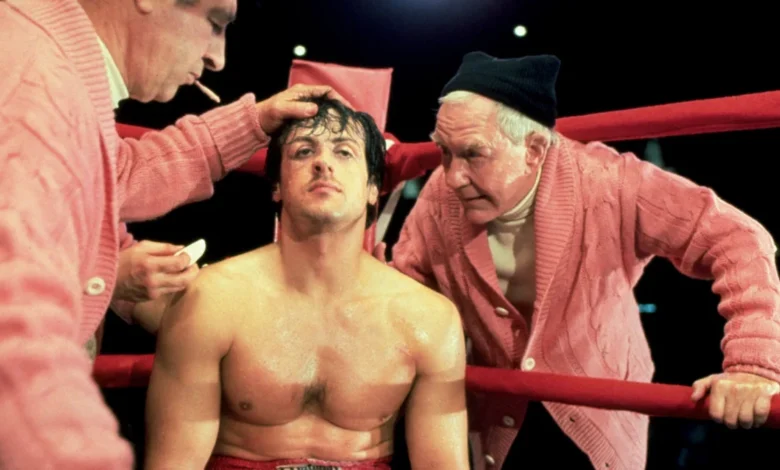
The creation of the 1976 cinematic phenomenon Rocky remains one of the most celebrated underdog stories in Hollywood history, yet behind the scenes of the gritty Philadelphia-based production, the lead actor and writer was grappling with a deeply personal and often volatile familial struggle. As Sylvester Stallone prepares for the October 23 release of his candid memoir, The Steps, he has shed new light on the complex, often fractured relationship he maintained with his father, Frank Stallone Sr. This dynamic reached a fever pitch during the production of the film that would ultimately launch the younger Stallone into global superstardom.
A Quest for Paternal Validation
For decades, the public narrative surrounding the production of Rocky focused on Sylvester Stallone’s tenacious pursuit of the role, his refusal to sell the script unless he was cast as the lead, and the extreme budget constraints that necessitated creative ingenuity. However, Stallone’s forthcoming memoir reveals a more vulnerable layer: the desperate, unspoken desire for approval from a man who had historically viewed his son’s artistic ambitions with skepticism.
In a recent interview with The New York Times, Stallone recounted his decision to invite his father to participate in the film, casting him in a cameo role as the bell ringer during the movie’s iconic, climactic final match. The intent was clear to the actor: he sought to bridge the emotional chasm between them by bringing his father into the world he was working so tirelessly to build. "I just want you to love me for a little bit," Stallone told the publication, reflecting on the mindset he held at the time. "Like, look what I did! Share it with me. I know you thought I was a fool my whole life, but here we are."
The Chronology of a Failed Gesture
The attempt to foster a moment of connection quickly devolved into a manifestation of their historically strained relationship. On the day of filming, the choreographed precision required for the climactic boxing match—a sequence that defined the film’s visual language—was disrupted by Frank Stallone Sr.’s inability or refusal to adhere to the production’s timing.
According to the actor, the bell ringer’s cues were strictly mapped out to align with the combatants’ movements. When Frank Sr. failed to signal the end of the round at the pre-determined moment, the scene fell into disarray. The actors, including the late Carl Weathers, who portrayed the heavyweight champion Apollo Creed, were left in a state of confusion as the fight continued beyond its scripted conclusion.
This breach of protocol led to an immediate confrontation. The resulting argument, which Stallone described as a "really nasty" Italian drama, underscored the fundamental disconnect between the two men. While the younger Stallone sought a moment of shared professional accomplishment, the encounter instead devolved into the same pattern of conflict that had defined their domestic life.
Domestic Realities and Emotional Legacy
Stallone’s reflections in his memoir go beyond the set of Rocky, providing a broader context for the environment in which he was raised. He describes his father as a man of extreme temperament, characterized by periods of icy silence punctuated by sudden, explosive outbursts.
"It would be these constant bombastic explosions and then total silence," Stallone noted, providing a stark look at his formative years. He described a home environment where minor disagreements could escalate into physical altercations. The actor recalled how his father, possessing a physically imposing stature and "very big hands," created an atmosphere of vigilance. "You learn to duck," Stallone said. While the actor has chosen to limit the inclusion of these painful anecdotes in his book to avoid a "pity party," the revelation offers significant insight into the drive that fueled his early career—a career built on the necessity of resilience and the constant need to prove his worth in the face of persistent disapproval.

Historical Context of the 1976 Production
To understand the stakes involved in the filming of Rocky, one must consider the historical context of the film’s production. In 1975 and 1976, the project was considered a significant financial risk. Produced on a budget of roughly $1 million, the film was helmed by director John G. Avildsen under the scrutiny of United Artists. The pressure on Stallone was immense; he was not merely an actor, but the screenwriter who had bet his own future on the project’s success.
The filming schedule was grueling, often involving long days in cold, austere locations across Philadelphia. The involvement of family members in such high-pressure environments can often exacerbate existing tensions. For Stallone, the presence of his father on set was likely a calculated attempt to reconcile the personal and the professional, a gamble that, in this instance, resulted in further emotional friction rather than the anticipated catharsis.
Broader Implications and Public Perception
The revelation of these tensions adds a poignant, if somber, dimension to the legacy of the Rocky franchise. It serves as a reminder that the "Italian Stallion" persona, while grounded in fictional struggle, drew heavily from the lived reality of its creator. The transition from the volatile, often violent relationship of his youth to the eventual reconciliation that occurred before his father’s passing in 2011 is a central theme in Stallone’s journey of maturity.
The forthcoming film I Play Rocky, scheduled for a theatrical release on November 6, seeks to dramatize this specific period of the actor’s life. With actor Anthony Ippolito stepping into the role of a young Sylvester Stallone, audiences will be presented with a stylized depiction of the writing process and the subsequent fight to maintain creative control over the film. While biopics often focus on the professional triumphs, the real-life accounts provided by Stallone suggest that the film will also need to address the deep-seated psychological pressures that informed his performance.
Critical Analysis: The Price of Ambition
From a critical standpoint, Stallone’s transparency about his father serves as a study in the psychological costs of Hollywood success. The desire for parental validation is a common human trait, yet for those working in the public eye, that desire is often played out against the backdrop of their professional work. The "nasty" altercation on the set of Rocky is a microcosm of the internal conflict many artists face when their personal identity is inextricably linked to their creative output.
Furthermore, the incident highlights the professional volatility of film production in the 1970s. Without the digital safeguards and strict union oversight that define modern sets, production environments were often less structured, allowing for the kind of personal interventions that Stallone describes. The fact that the production managed to complete the film successfully, despite these interpersonal fractures, is a testament to the dedication of the cast and crew involved.
Conclusion
As the release of The Steps approaches, the narrative of Sylvester Stallone’s life continues to evolve. By moving beyond the myth of the overnight success story, Stallone is providing a more grounded, albeit painful, look at the foundations of his career. The story of the bell ringer is more than just a behind-the-scenes anecdote; it is a profound reflection on the nature of reconciliation, the enduring impact of a difficult upbringing, and the often-unseen sacrifices required to achieve the level of global icon status that Stallone eventually attained.
The legacy of Rocky remains secure as a cinematic landmark, but the man behind the gloves continues to invite the public to see the scars, the struggles, and the quiet, often unfulfilled, yearnings that shaped the man who taught the world to stand up and fight. Whether or not his father ever fully appreciated the magnitude of the work he contributed to, the act itself remains a pivotal moment in the complex, lifelong process of a son seeking to be seen by the one person whose opinion mattered most.