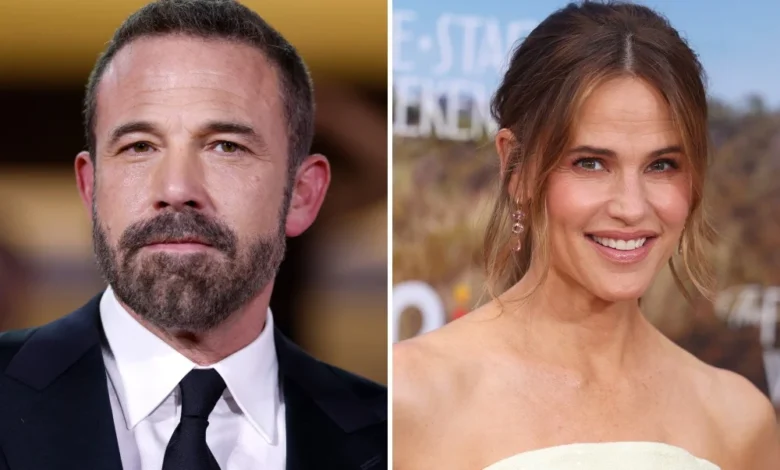
The intricate behind-the-scenes evolution of Ben Affleck’s directorial thriller Animals offers a fascinating look at the logistical hurdles, casting shuffles, and personal considerations that shape modern Hollywood productions. Originally envisioned as a unique professional reunion between Affleck and his ex-wife, Jennifer Garner, the Netflix feature ultimately took a sharply different creative turn. Due to a complex web of scheduling conflicts, creative adjustments, and a conscious desire to protect the film from external distractions, the project evolved into an entirely different enterprise before landing its final cast.
From its initial conception to its impending October 9 premiere on Netflix, Animals underwent significant structural transformations. Affleck, who directs the project and co-wrote the screenplay alongside Connor O. McIntyre and Billy Ray, recently opened up about the wild, winding road the film traveled just to make it in front of cameras. The candid revelations shed light on the inner workings of Hollywood scheduling, the realities of co-parenting in the public eye, and the delicate art of casting high-profile actors without inadvertently alienating the viewing audience.
The Original Vision: Casting Jennifer Garner
When Affleck first began developing Animals—a tense crime thriller centering on a Los Angeles mayoral candidate whose son is kidnapped, leaving him and his wife a narrow window to secure a ransom—his thoughts immediately turned to Jennifer Garner for the female lead. Beyond his professional admiration for her extensive acting capabilities, Affleck saw a practical family benefit to the casting choice.
At the time, the former couple shared a structured co-parenting routine involving a week-on, week-off schedule for their children. By casting Garner, Affleck believed they could seamlessly coordinate their professional obligations around their established domestic rhythm, allowing both parents to spend more time with their kids during production. Furthermore, Affleck harbored a distinct creative vision for Garner’s performance. In interviews discussing the project, the director noted that he felt Garner possessed untapped dramatic potential that had not yet been fully realized in a single cinematic vehicle. He envisioned a role that would allow her to stretch her dramatic muscles in a way audiences had not seen before, leveraging his intimate knowledge of her range as both a colleague and a former partner.
The Scheduling Crisis and Matt Damon’s Departure
Despite the initial enthusiasm surrounding the casting concept, the production pipeline hit a major roadblock. Originally, long-time collaborator and close friend Matt Damon was securely attached to star as Mark Kimball, the male lead of the film. However, the production encountered severe scheduling bottlenecks. Competing timelines collided with another genre film slated for a nearly identical theatrical release window, forcing Affleck to make the difficult decision to table the entire production just two weeks before principal photography was scheduled to begin.
When the production machinery was finally reassembled and given the green light to move forward, a new scheduling conflict emerged. Damon was already committed to starring in another major cinematic undertaking, described humorously by Affleck as a “smaller film” titled The Odyssey. In classic fashion, Affleck playfully ribbed his lifelong friend and frequent collaborator during promotional interviews, joking that Damon had opted for a lesser project, a minor director, and a diminished career role, predicting that the actor would ultimately live to regret passing up on Animals.
With Damon unavailable and the production timeline pressing forward, Affleck stepped into the male lead role himself. This sudden shift in front of the camera fundamentally altered the dynamic of the project. Because Affleck was now cast as the male protagonist, playing opposite Garner would have meant the real-life former couple portraying a married couple facing an unimaginable crisis on screen.
Navigating On-Screen Baggage and Public Perception
As the reality of starring opposite one another set in, Affleck and Garner engaged in candid discussions about the implications of their on-screen pairing. Ultimately, they mutually concluded that the cinematic pairing carried too much external baggage that could potentially overshadow the narrative itself.
Affleck recalled that Garner was the first to articulate the concern, noting that audiences bring their own preconceived notions, tabloid histories, and personal narratives to films featuring high-profile real-life couples. Garner reportedly expressed hesitation, pointing out that viewers might struggle to separate the actors’ real-life history from the fictional characters, thereby introducing unnecessary distractions to the storytelling experience.
Despite walking away from the on-screen collaboration for this specific project, Affleck was quick to emphasize his deep professional respect and personal appreciation for Garner. He characterized her as fabulous, praised their enduring friendship, and expressed profound gratitude for the positive dynamic they have maintained. Affleck did not rule out the possibility of working with Garner in future creative endeavors under different circumstances, but reiterated that safeguarding the audience’s immersive experience from extraneous real-world baggage remains a paramount concern for filmmakers striving to maintain narrative integrity.
The Final Cast and Plot Dynamics
With Affleck occupying the male lead, the search for his on-screen wife was resolved with the casting of acclaimed actress Kerry Washington as Abigail. Washington brings her signature gravity and intensity to the role of the mother thrust into a terrifying race against time to save her abducted child.
The plot of Animals plunges viewers into the high-stakes, pressurized environment of Los Angeles municipal politics. Affleck portrays a mayoral candidate whose life is instantly upended when his son is kidnapped. The narrative unfolds in real-time fashion, trapping the parents in a harrowing moral and physical countdown where they have only a few hours to gather and deliver the ransom money. The script, crafted by Affleck, McIntyre, and Ray, is designed to keep audiences on the edge of their seats, blending political ambition with raw, visceral parental terror.
The film represents another significant directorial outing for Affleck, whose behind-the-camera credits include critically acclaimed and commercially successful features such as Gone Baby Gone, The Town, Argo, Live by Night, and Air. His distinct directorial style, characterized by gritty realism, taut pacing, and deep character development, is expected to heavily influence the atmospheric tension of Animals.
Industry Implications and Streaming Distribution Strategy
The release of Animals on Netflix on October 9 underscores the shifting landscape of contemporary Hollywood distribution. As traditional studios increasingly pivot toward massive franchise tentpoles, mid-budget adult thrillers with high-profile casts and established auteur directors have found a welcoming home on major streaming platforms. Netflix’s global reach ensures that a tense, character-driven thriller like Animals will instantly debut to an international audience numbering in the tens of millions, bypassing the increasingly volatile theatrical box office for adult-skewing dramas.
Furthermore, the behind-the-scenes narrative of Animals highlights the intricate choreography required to mount a major motion picture in the modern era. Between shifting talent schedules, unexpected production delays, and the delicate navigation of personal and professional boundaries among Hollywood elites, bringing a film to the screen remains an exercise in resilience and adaptability.
As the premiere date approaches, anticipation continues to build for how audiences will respond to Affleck’s latest directorial effort, the powerhouse pairing of Affleck and Washington on screen, and the taut narrative constructed by the film’s writing team. While the cinematic world ultimately missed out on a unique on-screen reunion between Affleck and Garner, the project’s evolution serves as a compelling reminder of the pragmatic choices filmmakers must make to ensure their artistic vision reaches the screen intact and untburdened by outside distractions.