The Pacific coastline of California, long celebrated for its rugged beauty and ecological complexity, stands at a pivotal regulatory crossroads. As the California Fish and Game Commission prepares for a final series of votes scheduled for October 14th through 16th, the state is poised to potentially rewrite the blueprint for marine conservation. At the heart of this process is the first comprehensive review of the state’s Marine Protected Area (MPA) network in 15 years, a decadal assessment that could result in the formal designation of new, tribally-led conservation zones at Point Sal and Mishopshno.
For marine scientists and indigenous leaders alike, these designations represent more than mere lines on a map; they are viewed as a necessary intervention to halt the degradation of underwater ecosystems. The initiative comes at a time of heightened climate anxiety, as ocean temperatures rise and biodiversity loss threatens the stability of the kelp forests and rocky reefs that define the California bight.
The Evolution of California’s Underwater Parks
The current proposal builds upon a foundation laid in 2003, when the state began implementing the Marine Life Protection Act. This legislation sought to move away from piecemeal, site-specific management toward a robust, interconnected network of protected zones. By restricting extractive activities—such as commercial fishing, bottom trawling, and industrial development—within these designated zones, the state aimed to provide "nurseries" for juvenile fish and undisturbed habitat for apex predators.
The historical context of these waters is sobering. Violet Sage Walker, chair of the Northern Chumash Tribal Council, has frequently contrasted the vibrant, teeming ecosystems seen today with archival footage from the mid-20th century. During the era of intensive, unregulated commercial extraction, many of the kelp forests around the Channel Islands were decimated, leaving behind what she describes as a "dead planet" aesthetic. The subsequent implementation of the MPA network served as a catalyst for recovery, allowing species such as the California sheephead, giant sea bass, and leopard shark to rebound in protected corridors.
Chronology of the 2026 Review Process
The current review process is the result of years of data collection and stakeholder engagement. The chronology of this effort reflects a shift toward more collaborative, science-driven governance:
- 2012–2025: Ongoing monitoring of the existing MPA network by state agencies, academic institutions, and independent researchers to measure biomass density and species diversity.
- Late 2025: The initiation of the formal decadal review process, with the California Fish and Game Commission inviting public and tribal input on potential network expansion.
- Early 2026: The formal submission of proposals for the Point Sal and Mishopshno State Marine Conservation Areas, marking the first time in California history that tribal nations have led the nomination process for new MPAs.
- Mid-2026: Scientific peer review and environmental impact assessments of the proposed sites, concluding that both areas meet the stringent ecological criteria for protection.
- October 2026: The final deliberation and vote by the Fish and Game Commission, representing the climax of a decade-long cycle of evaluation.
Scientific Data and Economic Realities
A common point of contention in marine conservation is the potential impact on commercial fishing economies. However, empirical data from existing MPAs suggest that the "spillover effect" often compensates for the loss of fishing grounds within protected zones. A landmark 2021 study focusing on Southern California MPAs revealed that lobster catch in areas immediately adjacent to protected zones increased by approximately 225% over a six-year period. This suggests that healthy, unfished areas serve as a reproductive engine, pushing larvae and adult fish into surrounding waters where fishing is permitted.
Sandy Aylesworth, director of the Pacific Initiative at the Natural Resources Defense Council (NRDC), notes that the biological imperative is clear. "When you remove disturbances like seafloor dragging and high-intensity extraction, you see a measurable increase in fish size and abundance," she says. "The habitat doesn’t just recover; it becomes more resilient to climate change, providing a buffer against ocean acidification and warming events."
Despite this, some fishing interests remain skeptical, citing concerns over restricted access to traditional grounds. Yet, recent polling indicates that approximately 70% of California voters favor the expansion of the MPA network, viewing the protection of coastal waters as a matter of public heritage and environmental security.
Tribal Stewardship: A New Paradigm
Perhaps the most significant development in the current review is the formal integration of indigenous traditional ecological knowledge (TEK) into the management framework. The proposals for Point Sal and Mishopshno are not merely environmental initiatives; they are exercises in sovereignty and historical recognition.
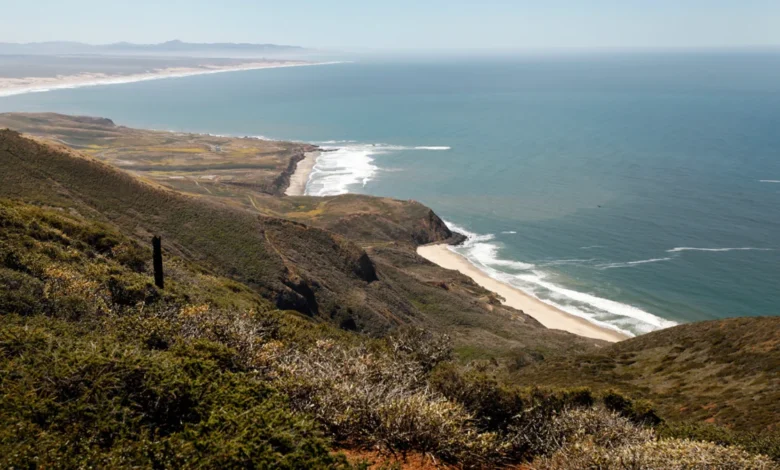
The Northern Chumash Tribal Council, in its proposal for the Point Sal State Marine Conservation Area, emphasizes that the region has been a site of human habitation and sustainable resource management for over 10,000 years. The proposed nine-square-mile zone is characterized by a headland that provides critical shelter for fish larvae, as well as a high-density congregation area for pinnipeds. Documentation has shown as many as 880 sea lions occupying the site in a single day, underscoring its role as a biological refuge.
Similarly, the Mishopshno proposal, co-sponsored by the Santa Ynez Band of Chumash Indians, targets a unique geological convergence near Carpinteria. The site features a 1.6-mile rocky reef that supports one of the most enduring kelp forests on the Central Coast. According to researcher Carlos Gauna, who has spent years documenting the area, the site is a critical corridor for juvenile white sharks. Gauna’s footage has frequently highlighted the risks posed to this ecosystem, including illegal fishing and deliberate harassment of marine life by vessel operators. For proponents, the MPA designation would provide the legal framework to enforce stricter protections, signaling to the public that these waters are a protected sanctuary.
Implications for Future Marine Policy
The October 2026 decision carries significant weight beyond the borders of the two proposed sites. If approved, these MPAs would set a precedent for "co-management," where tribal nations share in the responsibility of monitoring and protecting the coast. This model is being watched closely by other states and federal agencies as a potential template for future conservation efforts.
Doug McCauley, a professor of marine science at UC Santa Barbara, describes the situation as a "historic opportunity." With the federal government currently navigating a complex period of shifting environmental regulations, the state’s ability to solidify its own marine policy is critical. Because these reviews occur only once every ten years, the failure to adopt these proposals could effectively shelve the protection of these specific habitats until the mid-2030s.
The Path Forward
The argument for expansion rests on a fundamental principle of conservation biology: the necessity of space. Ecosystems, when given the breathing room to function without constant anthropogenic stress, demonstrate a remarkable capacity for regeneration. As Chairwoman Walker aptly summarizes, the ocean possesses an inherent drive to thrive, provided it is granted the time and the geography to do so.
The upcoming commission meeting is not expected to be purely ceremonial. While the scientific consensus leans heavily in favor of expansion, the final vote will require balancing the diverse interests of the state’s coastal stakeholders. The Fish and Game Commission must weigh the long-term benefits of ecosystem stability against short-term economic friction.
As the deadline approaches, the focus remains on the specific mechanics of the proposal: will these zones include strict "no-take" regulations, or will they function as conservation areas with limited, sustainable use? Regardless of the specific nuances of the final policy, the movement toward tribally-led, science-backed marine stewardship marks a profound evolution in how California views its relationship with the Pacific. The outcome of this month’s deliberations will likely define the health and resilience of the state’s coastal waters for generations to come, serving as a litmus test for California’s commitment to its "underwater state parks."