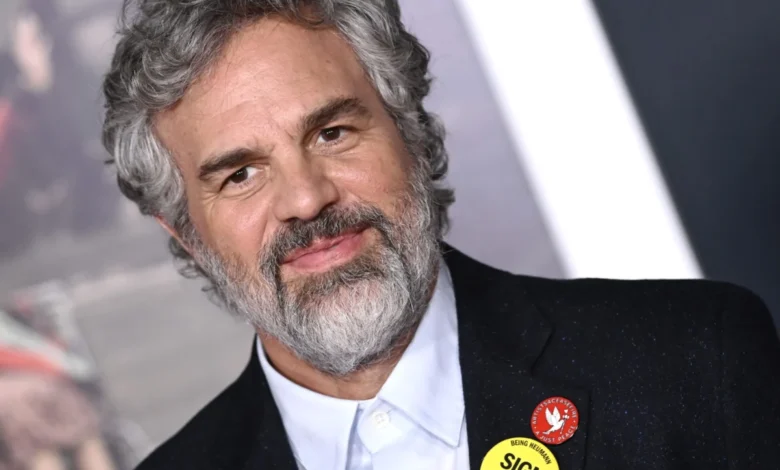
Mark Ruffalo’s career trajectory, marked by five major project releases in 2026 alone, has necessitated a lifestyle as dynamic and fast-paced as the blockbuster characters he portrays. For the Academy Award-nominated actor, the concept of "home" has evolved significantly over the past three decades, shifting from the traditional Hollywood industry standard to a more grounded, community-focused existence in New York. While his professional life demands global travel to various production sets, his personal real estate footprint reveals a deliberate effort to balance the demands of superstardom with a desire for privacy, sustainability, and architectural character.
The Catskills Foundation: A Return to Roots
The cornerstone of the Ruffalo family’s personal geography is a rural estate in the Catskills, a region of New York that has served as an emotional and physical anchor for the actor since the mid-1990s. Ruffalo’s journey into property ownership began in Callicoon, a small town that offered a stark contrast to the frenetic energy of Los Angeles. In 1996, at age 28, the then-rising actor purchased a 27-acre plot featuring a humble, one-room cabin for $63,000.
This initial acquisition was not merely a real estate investment; it was a lifestyle pivot. By 2001, following his marriage to Sunrise Coigney, the couple expanded their holdings by acquiring a former dairy farm on the property. The centerpiece of this estate was a 19th-century post-and-beam barn, a structure that provided the foundation for their growing family. For Ruffalo, the transition from the city to the countryside was driven by a desire for simplicity—a philosophy that eventually led the couple to divest from their Hollywood Hills real estate portfolio in 2009 to prioritize a full-time residence in the Catskills.
The environmental impact of this lifestyle change was significant. On the farm, Ruffalo invested in self-sufficiency, developing a woodworking shop, an extensive vegetable garden, and a small orchard. These efforts, which included cultivating crops as diverse as asparagus, corn, and honeycrisp apples, underscore a commitment to organic living that has remained a consistent theme in the actor’s public persona. In various interviews, Ruffalo has noted that the quietude of the country environment was essential for his children’s development, allowing them to grow with a sense of autonomy rarely found in urban environments.
The Hollywood Hills Chapter (2004–2009)
Before fully committing to the East Coast, the Ruffalo-Coigney family maintained a presence in Southern California during the early 2000s, a period coinciding with the actor’s professional breakthrough. In December 2004, the family purchased a 3,000-square-foot gated estate in the Hollywood Hills for $1.7 million.
The property, originally constructed in 1933, was designed in the aesthetic of a classic Connecticut farmhouse, a style that prioritized comfort and privacy. With three bedrooms, four bathrooms, and a detached guesthouse, the residence served as a base for a family that was growing rapidly, welcoming their first child in 2001 and their second in 2005. The home was notably situated within the same high-demand market that attracts a significant portion of Hollywood’s elite, offering proximity to studios while maintaining a secluded atmosphere.
However, the geographical split between coasts eventually proved unsustainable. Following the birth of their third child in 2007, the family reevaluated their needs. By 2009, the couple moved to sell the property for $1.65 million. The home was later purchased by Zooey Deschanel and Ben Gibbard, marking a transition in ownership that highlights the cyclical nature of celebrity real estate in Los Angeles. The decision to exit the California market was indicative of a broader trend among high-profile actors seeking to escape the "industry bubble" in favor of more authentic, community-centric environments.
Transition to Urban Life: Brooklyn and Manhattan
The mid-2010s marked a strategic shift for the family as their children reached school age, necessitating a return to the metropolitan environment of New York City. In 2015, the actor purchased a $3.5 million townhouse in the historic Carroll Gardens neighborhood of Brooklyn. The 1899-built home was a masterclass in period-appropriate restoration, featuring cathedral ceilings, marble fireplaces, and wide-plank wood flooring across its 3,000 square feet.

Despite the property’s architectural appeal, the family’s tenure in Brooklyn was relatively brief. By 2017, Ruffalo sold the townhouse for $3.2 million. While this represented a slight financial loss on the initial investment, the move was part of a larger plan to transition into Manhattan.
The family’s move to the Upper West Side, though not formally announced with the fanfare of a celebrity press release, has been confirmed through public records and the actor’s civic engagement. In early 2017, the actor was spotted touring luxury townhouses in the area. Today, reports suggest the family occupies an early 20th-century four-story townhouse in the neighborhood. This residence has served as a base for the actor’s increasingly vocal community advocacy.
Civic Engagement and Community Integration
A defining feature of the actor’s residency on the Upper West Side has been his active participation in local preservation efforts. Since 2023, Ruffalo has emerged as a prominent voice in the fight to preserve the Landmark West Park Presbyterian Church. His advocacy reached a crescendo in December 2025, when he publicly confirmed his status as a local resident, noting that he lived "a block away" from the historic site.
This engagement offers a window into how the actor navigates his private life within the public sphere. By leveraging his platform to support the preservation of neighborhood landmarks, Ruffalo has integrated himself into the fabric of the Upper West Side, moving beyond the role of a transient celebrity to that of a concerned neighbor. This behavior is consistent with his earlier sentiments regarding the Catskills, where he described the community as "the best most interlocked" he had ever experienced.
Comparative Analysis: The Cost of Privacy
The evolution of Mark Ruffalo’s property portfolio offers a compelling case study in the real estate choices of A-list celebrities. The movement from a rural sanctuary (Catskills) to a high-density urban environment (Upper West Side) reflects the changing priorities of a family balancing career longevity with personal stability.
Financial data suggests that for high-net-worth individuals like Ruffalo, the primary utility of residential real estate is rarely capital appreciation. Rather, the focus is on the utility of the space—whether it provides the isolation required for creative work or the proximity to educational and civic resources for family members. The decision to accept a $300,000 loss on the Carroll Gardens property in 2017 underscores that, for the actor, the specific needs of his household often take precedence over short-term market gains.
Conclusion
As of 2026, Mark Ruffalo remains a "nomadic" professional by necessity, traveling to film sets globally to maintain his position as one of Hollywood’s most sought-after actors. Yet, the existence of his longstanding retreat in the Catskills and his established residence on the Upper West Side provides a necessary counterbalance to the volatility of the entertainment industry.
His real estate trajectory—from a $63,000 cabin in the woods to a multi-million dollar Manhattan townhouse—mirrors his professional rise. However, the consistent thread across all these properties remains a preference for architectural character and community connection. By prioritizing homes that reflect his personal values rather than mere status, Ruffalo has managed to carve out a private existence in an industry that often leaves little room for the quiet life. As he continues to dominate the screen, his homes remain a testament to his commitment to grounding himself, both figuratively and literally, in the environments he calls home.