
OpenAI’s Procgen Benchmark: Navigating the Labyrinth of Overfitting in Procedural Content Generation
The pursuit of artificial intelligence capable of generalized problem-solving, particularly in the realm of game development and interactive environments, hinges on its ability to learn and adapt beyond specific training examples. OpenAI’s Procgen Benchmark, a suite of procedurally generated environments designed to test the generalization capabilities of reinforcement learning agents, has emerged as a critical tool in this endeavor. However, a significant challenge that has surfaced during its application is the phenomenon of overfitting. This article delves into the complexities of overfitting within the Procgen Benchmark, exploring its manifestations, underlying causes, detrimental effects, and potential mitigation strategies, all while adhering to SEO best practices to ensure discoverability and relevance for researchers and practitioners in the field.
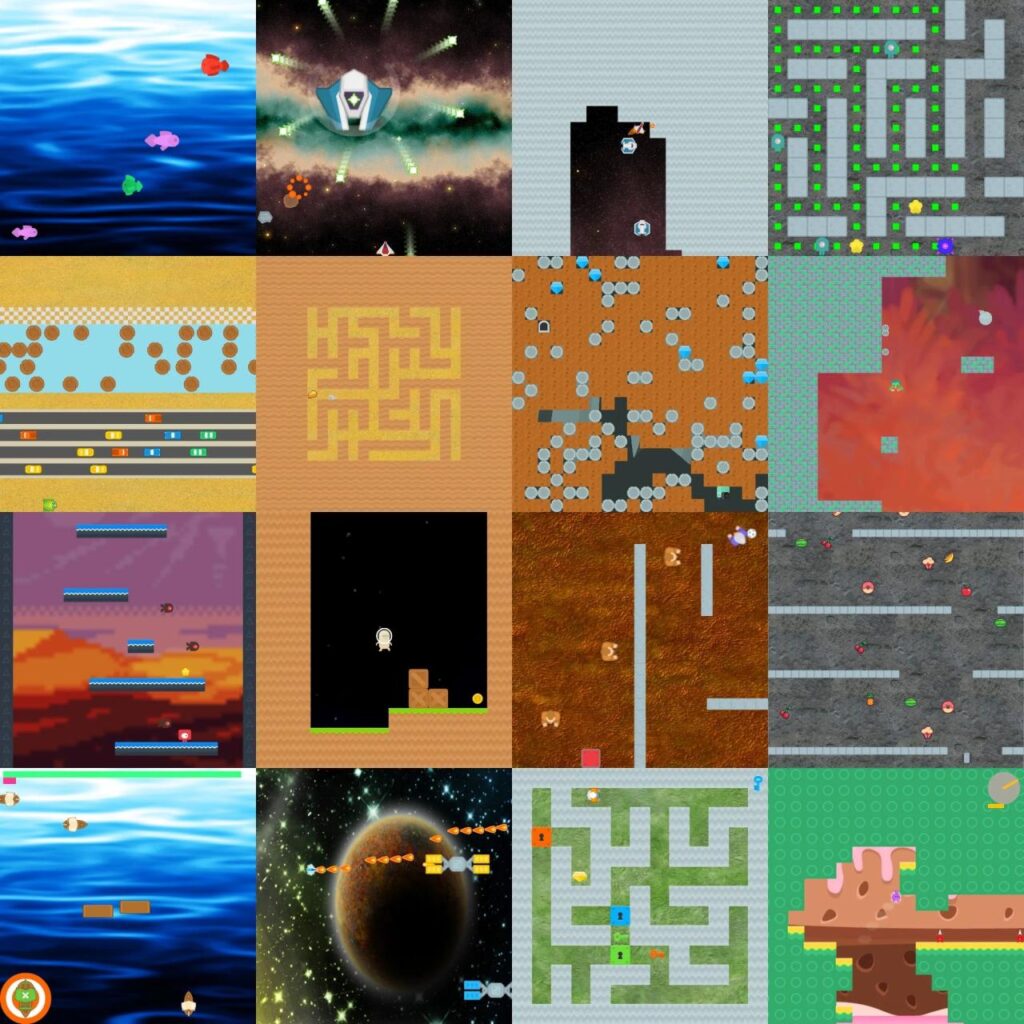
Overfitting in the context of the Procgen Benchmark occurs when an agent, trained on a specific distribution of procedurally generated levels, demonstrates high performance on those particular levels but fails to generalize effectively to unseen or novel variations. The Procgen Benchmark is intentionally designed to expose this weakness. It employs procedural content generation (PCG) algorithms to create a vast and diverse set of environments, with the expectation that a truly generalized agent should perform well across this spectrum. However, agents often learn to exploit subtle, unintended correlations or patterns present in the training levels, becoming brittle and susceptible to performance degradation when confronted with deviations from this learned distribution. This is not merely an academic concern; it directly impedes the development of AI that can genuinely create and adapt within dynamic, procedurally generated worlds. The benchmark’s success lies in its ability to surface these limitations, prompting deeper investigation into agent architectures and training methodologies.
The manifestations of overfitting in the Procgen Benchmark are varied and often subtle. An agent might excel at navigating a particular dungeon layout that consistently features a certain enemy placement or a specific reward distribution. Upon encountering a subtly different dungeon, perhaps with enemies positioned slightly off, or a different pattern of collectible items, the agent’s performance plummets. This can manifest as an inability to find optimal paths, a failure to engage with crucial environmental elements, or a tendency to repeat ineffective behaviors. In some cases, the agent might appear to "cheat" by exploiting unintended game mechanics or glitches that are prevalent in the training set but absent in evaluation sets. This is a direct consequence of the agent optimizing for the specific statistical properties of the training data rather than learning underlying causal relationships or robust strategies. The very nature of PCG, with its potential for combinatorial explosion and unpredictable emergent properties, makes identifying and diagnosing overfitting a significant hurdle.
Several factors contribute to overfitting within the Procgen Benchmark. A primary culprit is the inherent variance in the PCG algorithms themselves. While designed for diversity, the specific seeds and parameters used to generate training levels can inadvertently create clusters of similar environments that an agent can exploit. If the training set is not sufficiently diverse or if certain levels are overrepresented, the agent will develop an affinity for those specific configurations. Furthermore, the training process itself, particularly the use of fixed-depth rollouts or limited exploration strategies, can lead to agents focusing on local optima within the generated environments. Advanced techniques like Proximal Policy Optimization (PPO), while powerful, can still fall prey to overfitting if not carefully tuned. The interplay between the agent’s architecture (e.g., convolutional neural networks, recurrent neural networks) and the features extracted from the procedurally generated inputs is also crucial. If the network learns to rely on superficial, non-generalizable visual or state-based cues, it will struggle when these cues are altered.
The detrimental effects of overfitting on Procgen Benchmark agents are far-reaching. Fundamentally, it undermines the benchmark’s core objective: to measure generalization. An agent that overfits is not truly learning to solve the underlying task of navigation, combat, or resource management in a procedurally generated world; it is learning to solve a specific set of instances. This makes the agent unreliable and limits its applicability in real-world scenarios where environments are inherently dynamic and unpredictable. For game developers seeking AI companions or procedural content generators that can create engaging experiences, an overfitted agent is useless. It cannot reliably adapt to new levels, unexpected challenges, or player interactions. This necessitates extensive retraining or architectural modifications, slowing down the development cycle and increasing research costs. The promise of PCG as a means of generating endless content is diminished if the agents tasked with interacting with it are fundamentally incapable of generalization.
Addressing overfitting in the Procgen Benchmark requires a multi-pronged approach, drawing upon established machine learning techniques and novel strategies tailored to the specifics of PCG. One of the most effective methods is curriculum learning. Instead of exposing the agent to the full spectrum of environmental complexity from the outset, the training can begin with simpler, more constrained procedural generation settings. As the agent demonstrates proficiency, the complexity of the generated environments is gradually increased. This allows the agent to build a foundational understanding of core mechanics before encountering more challenging variations. Similarly, using a diverse range of PCG algorithms and parameters for generating training data is paramount. Instead of relying on a single algorithm, researchers can leverage multiple PCG approaches to ensure a broader coverage of potential environmental configurations. This forces the agent to learn more robust, transferable strategies.
Data augmentation techniques, commonly used in supervised learning, can also be adapted for the Procgen Benchmark. While direct pixel manipulation might not always be appropriate for discrete game environments, transformations like random cropping, translation, or even subtle noise injection into the agent’s observations can encourage the learning of invariant features. More advanced forms of data augmentation involve generating synthetic variations of existing levels, altering enemy patrols, item placements, or even environmental textures, to present the agent with a richer and more challenging training distribution. Techniques that promote exploration and encourage the discovery of novel states are also crucial. Intrinsic motivation methods, such as curiosity-driven exploration or empowerment, can incentivize agents to venture into less familiar parts of the state space, thereby exposing them to a wider variety of procedural configurations and mitigating the tendency to get stuck in local optima.
Regularization techniques, a cornerstone of preventing overfitting in traditional machine learning, also play a vital role. Dropout, applied to the neural network layers of the agent, can prevent co-adaptation of neurons and encourage the learning of more distributed representations. Weight decay penalizes large weights, discouraging overly complex models that are prone to memorizing training data. L1 and L2 regularization can be applied to the agent’s parameters to improve generalization. Ensemble methods, where multiple agents are trained independently on different subsets of the training data or with different hyperparameters, and their predictions are combined, can also lead to more robust performance. The challenge here lies in the significant computational resources required to train multiple complex RL agents.
From a theoretical standpoint, research into agent architectures that are inherently more amenable to generalization is ongoing. Architectures that incorporate symbolic reasoning or meta-learning capabilities, allowing agents to learn how to learn new tasks or adapt to new environments quickly, are promising avenues. For example, agents that can decompose complex environments into smaller, more manageable sub-problems or that can infer underlying rules governing the PCG process are less likely to overfit to superficial patterns. Investigating the causal relationships within the generated environments, rather than just statistical correlations, is key. This might involve developing methods for the agent to explicitly model the consequences of its actions and the dynamics of the environment.
Furthermore, the evaluation methodology of the Procgen Benchmark itself is under constant refinement to better identify and penalize overfitting. Metrics that go beyond simple average reward are being explored, such as measures of performance variance across different seeds, the ability to achieve near-optimal performance on a small set of challenging, unseen levels, or the rate of catastrophic forgetting when exposed to new environmental distributions. The development of "adversarial" PCG, where the generation process actively tries to create levels that are difficult for a given agent, could also serve as a powerful tool for stress-testing generalization and identifying weaknesses. The ongoing dialogue between benchmark designers and AI researchers is critical in ensuring that the Procgen Benchmark remains a relevant and challenging testbed for generalized AI in procedural content generation. The ultimate goal is to move beyond agents that simply "solve" the current instance of a procedurally generated game and towards agents that can truly understand and thrive within an infinitely variable digital landscape.

