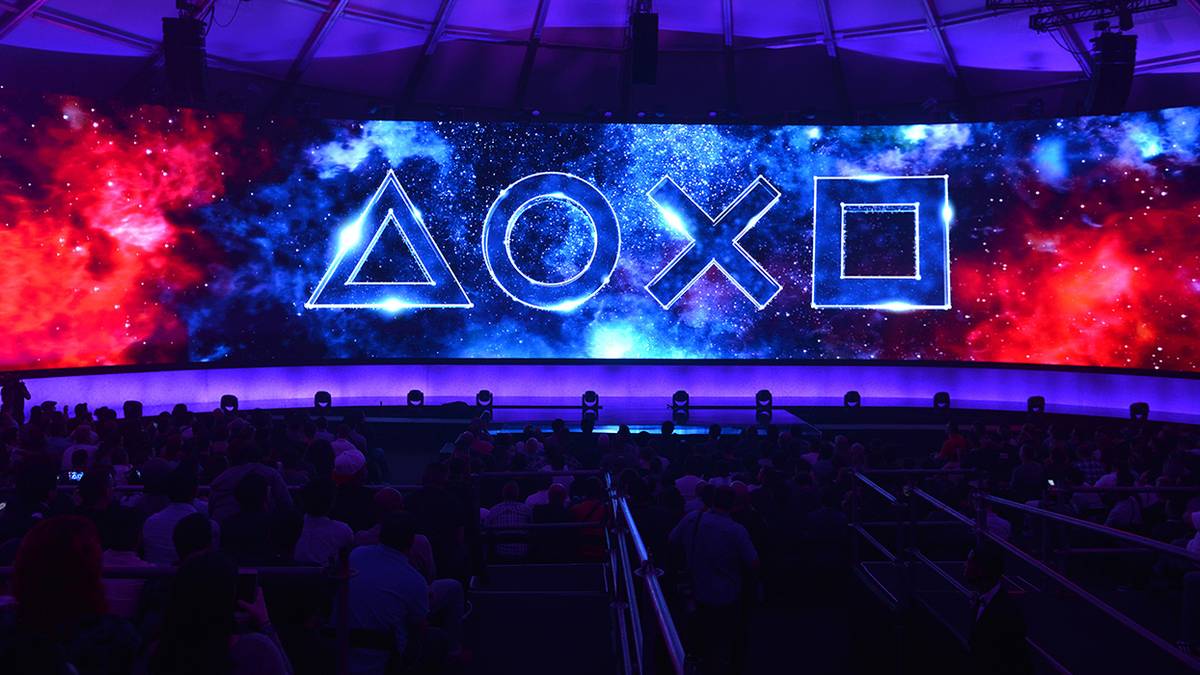

PlayStation 5’s E3 Reveal: Unveiling the Future of Gaming
The E3 2020 PlayStation 5 reveal event, though ultimately impacted by global circumstances and taking a different digital form, marked a pivotal moment in console gaming history. While not a traditional stage presentation, the information disseminated through various channels painted a clear picture of Sony’s next-generation offering. This event, or series of announcements leading up to what would have been a physical presence, served to solidify the PlayStation 5’s identity, showcase its technological prowess, and ignite fervent anticipation among gamers worldwide. The core of the reveal focused on three critical pillars: hardware specifications, groundbreaking DualSense controller features, and a tantalizing glimpse of exclusive launch titles. This comprehensive overview will delve into each of these aspects, exploring their implications for the future of interactive entertainment and their SEO significance for driving interest and understanding.
The technical specifications unveiled for the PlayStation 5 were designed to impress and differentiate it significantly from its predecessor. At the heart of the console lies a custom AMD Zen 2-based CPU with 8 cores running at a variable frequency up to 3.5GHz. This represents a substantial leap in processing power, enabling more complex game worlds, richer AI, and sophisticated physics simulations. Complementing the CPU is a custom AMD RDNA 2-based GPU with 36 compute units running at a variable frequency up to 2.23GHz, delivering 10.28 TFLOPS of processing power. This GPU architecture is key to unlocking advanced graphical features, most notably hardware-accelerated ray tracing. Ray tracing, a rendering technique that simulates the physical behavior of light, allows for incredibly realistic reflections, refractions, and global illumination, fundamentally transforming the visual fidelity of games. For SEO purposes, keywords like "PS5 CPU," "PS5 GPU," "AMD Zen 2," "AMD RDNA 2," and "ray tracing PS5" become highly relevant as users search for detailed technical information.
Memory and storage were also significantly upgraded. The PS5 boasts 16GB of GDDR6 RAM, providing ample bandwidth for rapid data transfer between the CPU, GPU, and storage. However, the most revolutionary component of the PS5’s hardware is its custom 825GB NVMe SSD. This ultra-high-speed solid-state drive is not merely an incremental improvement; it’s a paradigm shift in how games are designed and experienced. Traditional hard drives and even previous generation SSDs created bottlenecks in loading times and asset streaming. The PS5’s SSD dramatically reduces these wait times, enabling near-instantaneous loading and seamless transitions between game environments. This allows developers to stream assets into memory on the fly, eliminating the need for loading screens and opening up possibilities for larger, more detailed, and more dynamic game worlds. The impact of this SSD on game design cannot be overstated, and for SEO, terms like "PS5 SSD speed," "NVMe PS5," "fast loading PS5," and "PS5 storage" are crucial for attracting users researching the console’s performance.
The PlayStation 5’s DualSense controller was arguably the most talked-about innovation stemming from the reveal. Moving beyond the conventional rumble feedback, the DualSense introduces two key technologies: haptic feedback and adaptive triggers. Haptic feedback replaces traditional vibration motors with advanced actuators that can deliver a far wider range of nuanced sensations. Imagine feeling the texture of different surfaces under your character’s feet, the impact of raindrops, or the subtle recoil of a weapon. This granular sensory input enhances immersion to an unprecedented degree. Adaptive triggers, located on the L2 and R2 buttons, can dynamically adjust their resistance based on in-game actions. This means that drawing a bowstring will feel like pulling against tension, firing a gun might involve a distinct click, and driving a vehicle could offer varying pedal resistance. The synergy between haptic feedback and adaptive triggers creates a deeply physical connection to the game world, allowing players to perceive actions and environments in a way never before possible. For SEO, "PS5 DualSense controller," "haptic feedback PS5," "adaptive triggers PS5," and "PS5 controller innovation" are essential terms to capture user interest in this groundbreaking peripheral.
The software lineup accompanying the PS5 reveal offered a compelling preview of the experiences to be had on the new hardware. While specific launch titles were detailed, the overarching theme was the utilization of the PS5’s advanced capabilities to deliver visually stunning and experientially rich games. Titles like Marvel’s Spider-Man: Miles Morales showcased the power of the SSD for seamless traversal and detailed environments, while Ratchet & Clank: Rift Apart directly leveraged the SSD’s speed for instantaneous dimension-hopping, a feat impossible on previous hardware. The ray tracing capabilities were subtly demonstrated in various in-game sequences, hinting at the photorealistic potential of the console. Furthermore, Sony emphasized the backward compatibility of the PS5 with the vast majority of PlayStation 4 titles. This was a significant announcement, assuring existing PlayStation owners that their existing library would largely be playable on the new console, often with enhanced performance and visual fidelity. For SEO, "PS5 launch titles," "PS5 exclusive games," "Spider-Man Miles Morales PS5," "Ratchet & Clank PS5," and "PS5 backward compatibility" are vital for attracting users looking for information on available and upcoming games.
The implications of the PS5 reveal extended beyond the immediate hardware and software announcements. It signaled a commitment from Sony to push the boundaries of what is technically feasible in gaming. The focus on an SSD as a core component, rather than an optional upgrade, underscored its importance in the future of game development. Developers would now be designing games with this technology in mind, leading to entirely new gameplay mechanics and storytelling possibilities that were previously unachievable. The DualSense controller’s innovative features also opened new avenues for player interaction and immersion, moving gaming beyond purely visual and auditory experiences into the realm of tactile sensations. This holistic approach to next-generation gaming, encompassing raw power, intelligent design, and innovative input methods, positioned the PS5 as a true technological leap forward. SEO strategies would need to adapt to encompass these broader implications, with terms like "next-gen gaming," "future of gaming," and "innovative game technology" becoming increasingly relevant.
The PS5 reveal event also served as a critical juncture in the ongoing console wars. By strategically unveiling its hardware, controller, and some key software titles, Sony aimed to capture the attention of consumers and solidify its position in the market. The emphasis on unique features like the SSD and DualSense controller aimed to create a distinct value proposition that differentiated the PS5 from its competitors. This competitive landscape is a constant factor in search engine algorithms and user behavior. When users search for "next-gen consoles," they are often comparing options. Therefore, highlighting the PS5’s unique selling points in SEO content becomes paramount to attracting and retaining user attention. Keywords related to comparisons, such as "PS5 vs Xbox Series X," would also be important for a comprehensive SEO strategy.
The strategy behind the PS5 reveal, even in its modified digital format, was clearly geared towards generating sustained excitement and driving pre-orders. The staggered release of information, with specific deep dives into hardware, controller, and games, allowed for multiple waves of media coverage and social media engagement. This drip-feed approach is a well-established marketing tactic that keeps a product in the public consciousness for extended periods. For SEO, this translates to a continuous need for updated content that addresses specific aspects of the PS5 as they are revealed. Each new piece of information represents an opportunity to create targeted content that answers user queries and improves search rankings. For example, after the reveal of the PS5’s price, SEO efforts would shift to include terms like "PS5 price" and "buy PS5."
In conclusion, the E3 reveal of the PlayStation 5, regardless of its final presentation format, was a meticulously crafted unveiling of a console poised to redefine the gaming landscape. The combination of raw processing power, a revolutionary SSD, the immersive DualSense controller, and a promising software lineup laid the groundwork for a new era of interactive entertainment. For search engines and users alike, the keywords and concepts surrounding these revelations – from the technical minutiae of the CPU and GPU to the tactile sensations of haptic feedback and the potential of an SSD-driven gaming world – represent the core of what made the PS5 reveal a landmark event. Understanding and strategically leveraging these elements is crucial for anyone seeking to comprehend or engage with the future of console gaming, and for businesses and content creators aiming to reach that audience. The PS5’s reveal was not just about a new machine; it was about the future possibilities it unlocked, a future that search engines are now diligently indexing and users are actively exploring.

