
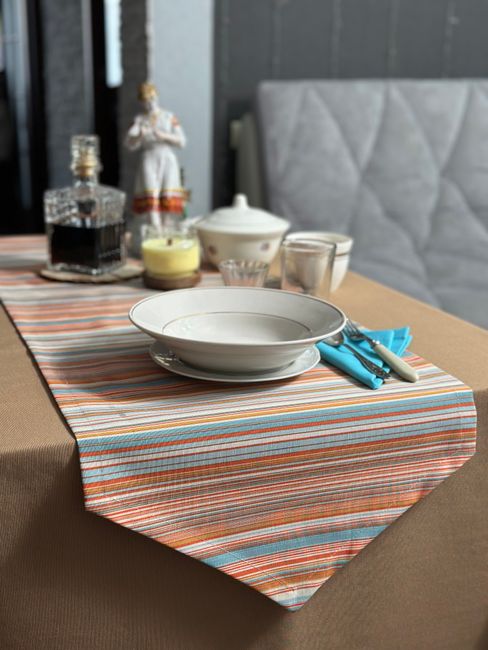
DIY Modern Table Runner: Elevate Your Dining Space with Stylish, Budget-Friendly Designs
Creating a modern table runner is an accessible and rewarding DIY project that can instantly elevate the aesthetic of your dining room or kitchen. Beyond mere decoration, a well-crafted table runner adds a layer of sophistication, protects your tabletop surfaces from spills and scratches, and provides a foundation for your centerpiece. This comprehensive guide will delve into various DIY modern table runner techniques, material choices, design considerations, and essential tips for achieving a professional-looking finish, all while keeping SEO principles in mind to ensure discoverability for those seeking stylish and affordable home décor solutions. We’ll explore options ranging from no-sew marvels to simple sewing projects, focusing on materials and styles that embody contemporary design principles: clean lines, minimalist patterns, and a curated color palette.
Understanding Modern Design Principles for Table Runners
Before diving into the "how-to," it’s crucial to grasp what defines a "modern" aesthetic in the context of table runners. Modern design typically emphasizes simplicity, functionality, and a connection to natural materials. For table runners, this translates to:
- Clean Lines and Geometric Patterns: Avoid overly ornate or fussy designs. Think stripes, subtle geometric motifs, color blocking, or solid, rich colors.
- Neutral Color Palettes with Pops of Color: Grays, whites, blacks, beiges, and muted earth tones are foundational. Accent colors can be introduced through subtle details or bolder fabric choices.
- Quality Materials: Natural fibers like linen, cotton, and even subtle textures like jute or canvas often lend themselves well to a modern look.
- Minimalist Embellishments: If embellishments are used, they should be understated – perhaps a simple fringe, a contrasting stitched edge, or a raw edge finish.
- Versatile Functionality: A modern table runner should complement various tableware and serve as a stylish backdrop without overpowering the meal or other décor.
Choosing the Right Fabric for Your DIY Modern Table Runner
The fabric selection is paramount to achieving a modern look and ensuring durability. Consider these popular options:
- Linen: A quintessential modern fabric. Linen drapes beautifully, has a subtle natural texture, and ages gracefully. It’s breathable, durable, and comes in a wide array of beautiful colors, from crisp whites and sophisticated grays to earthy olives and deep indigos. For a truly modern feel, opt for unbleached or natural linen.
- Cotton: Versatile, affordable, and easy to work with. High-quality cotton, such as quilting cotton or canvas, can offer a clean, crisp look. Look for medium-weight cottons for good drape. Cotton blends can also be a good option, offering wrinkle resistance and durability.
- Canvas/Duck Cloth: These sturdy fabrics provide excellent structure and durability, making them ideal for a more robust table runner. They offer a slightly more casual yet still modern feel, especially in natural or neutral tones.
- Jute/Burlap (with caution): While jute and burlap can offer a rustic-modern appeal, they can also be prone to fraying and may not always align with a sleek modern aesthetic. If using, consider finishing the edges meticulously or layering them with a more refined fabric.
- Performance Fabrics: For high-traffic areas or families with young children, consider performance fabrics that are stain-resistant and easy to clean. Many come in modern prints and solid colors.
No-Sew DIY Modern Table Runner Ideas
For those short on time or lacking sewing experience, no-sew options offer fantastic ways to create stylish modern table runners.
1. The Fray-Edge Wonder (Canvas or Linen):
This is perhaps the simplest and most impactful no-sew modern table runner.
-
Materials:
- Canvas, linen, or a sturdy cotton fabric in your desired color and size.
- Fabric scissors.
- Measuring tape.
- Optional: Fabric glue or fusible webbing for added edge stability.
-
Instructions:
- Measure and Cut: Determine the desired length and width of your table runner. A common width is 12-18 inches, and the length should extend slightly beyond the table edges for a balanced look. Cut your fabric to these dimensions.
- Create the Fray: This is the core of the design. Along all four edges of the fabric, gently pull individual threads to create a frayed fringe. Start by making a small snip near the edge and then carefully pull threads outwards. The wider and more consistent your fringe, the more refined the look. For a more controlled fray, you can leave about 1-2 inches of fringe.
- Stabilize (Optional): If you’re concerned about excessive fraying or want a slightly cleaner look, you can apply a thin bead of fabric glue or use fusible webbing along the edge just above the intended fringe. This will prevent the fabric from unraveling too far.
- Finish: Once the glue is dry (if used), gently comb or shake out the excess loose threads.
-
SEO Keywords: no-sew table runner, DIY frayed edge runner, easy canvas table runner, modern linen runner, budget-friendly table runner.
2. The Color-Blocked Statement:
This technique uses contrasting fabric panels to create a bold, modern visual.
-
Materials:
- 2-3 different colored or patterned fabrics in coordinating modern tones (e.g., a neutral base, a contrasting accent stripe).
- Fabric scissors.
- Measuring tape.
- Fabric glue or strong double-sided fabric tape (like Stitch Witchery or Wonder Tape).
-
Instructions:
- Plan Your Blocks: Decide on the layout of your color blocks. You could have a central panel with two smaller panels on the sides, or a simple two-panel design.
- Measure and Cut Panels: Cut each fabric panel to the desired width of your table runner. The lengths will vary based on your desired layout. For example, if you want a 15-inch wide runner with a central 7-inch panel and two 4-inch side panels, all panels will be cut to the same length but different widths.
- Prepare Edges for Joining: Along the edges where the fabric panels will meet, apply a thin layer of fabric glue or double-sided fabric tape. Fold the raw edge of one fabric panel over onto the tape/glue, and then press the edge of the second fabric panel firmly onto it. Ensure a clean, straight seam.
- Repeat for All Panels: Continue joining panels until your desired runner width is achieved.
- Hem Ends (Optional): If you want to finish the ends, you can create a simple folded hem by applying fabric glue or tape along the raw ends, folding it over twice, and pressing firmly.
-
SEO Keywords: color block table runner DIY, modern two-tone runner, geometric fabric runner, no-sew fabric runner, contemporary table décor.
3. The Stenciled Geometric Design:
Add a custom modern pattern to a plain fabric runner.
-
Materials:
- Pre-made plain fabric table runner (linen or cotton works well) or fabric to create one.
- Stencils with modern geometric patterns (e.g., triangles, hexagons, stripes, polka dots).
- Fabric paint in modern colors.
- Foam brushes or stencil brushes.
- Cardboard or plastic sheeting to protect your work surface.
- Painter’s tape.
-
Instructions:
- Prepare Your Runner: Lay your plain table runner flat on a protected surface. Ensure it is clean and wrinkle-free.
- Position Stencil: Place your chosen stencil onto the fabric. Secure it firmly with painter’s tape, ensuring all edges are sealed to prevent paint bleed.
- Apply Paint: Dip your foam brush or stencil brush lightly into the fabric paint. Blot off any excess paint on a paper towel to avoid drips. Gently dab or brush the paint over the stencil openings. Work from the outside of the stencil inwards.
- Remove Stencil: Carefully lift the stencil while the paint is still wet. This helps prevent paint from peeling off with the stencil.
- Repeat Pattern: Continue stenciling the pattern across the runner, repositioning the stencil as desired. You can create repeating patterns, random placements, or a structured design.
- Dry and Heat Set: Allow the fabric paint to dry completely according to the manufacturer’s instructions. Once dry, heat set the paint by ironing over the painted areas (with a pressing cloth in between) or tumble drying on a hot setting if recommended by the paint manufacturer.
-
SEO Keywords: stenciled table runner DIY, DIY modern pattern runner, geometric stencils for fabric, fabric paint table runner, custom table runner ideas.
Simple Sewing Projects for a Refined Modern Look
For those comfortable with a sewing machine, these projects offer slightly more polished finishes.
1. The Classic Hemmed Table Runner:
This is a foundational sewing project that yields a timeless and elegant result.
-
Materials:
- Fabric of your choice (linen, cotton, canvas) – enough for the desired runner size plus extra for hems.
- Sewing machine.
- Thread to match or contrast your fabric.
- Fabric scissors.
- Measuring tape.
- Iron and ironing board.
- Straight pins.
-
Instructions:
- Measure and Cut Fabric: Determine your desired finished dimensions (length x width). Add 1 inch to the width for the side hems (0.5 inch for each side) and 2 inches to the length for the end hems (1 inch for each end). Cut your fabric accordingly.
- Hem the Ends: On each of the shorter ends, fold the fabric over by 0.5 inch towards the wrong side and press. Then, fold it over again by another 0.5 inch (creating a 1-inch double-folded hem) and press firmly. Pin the hem in place.
- Sew the End Hems: Using your sewing machine, stitch along the folded edge of each hem, close to the inner fold. Backstitch at the beginning and end to secure the stitches.
- Hem the Sides: On each of the longer sides, fold the fabric over by 0.5 inch towards the wrong side and press. Pin the hem in place.
- Sew the Side Hems: Stitch along the folded edge of each side hem, close to the inner fold. Backstitch at the beginning and end.
- Press Again: Give the entire table runner a final press to ensure crisp, clean lines.
-
SEO Keywords: sewn table runner DIY, hemmed fabric runner, modern linen table runner sewing, easy cotton table runner pattern, DIY dining table accessory.
2. The Contrasting Edge Runner:
A subtle yet striking way to add visual interest.
-
Materials:
- Main fabric for the runner (e.g., a neutral linen or cotton).
- Contrasting fabric for the edge (e.g., a geometric print, a metallic fabric, or a bold solid).
- Sewing machine.
- Thread.
- Fabric scissors.
- Measuring tape.
- Iron and ironing board.
- Straight pins.
-
Instructions:
- Cut Main Fabric: Cut your main fabric to the desired finished length and width, adding 1 inch to the width for side hems and 2 inches to the length for end hems.
- Cut Contrasting Edge Fabric: Cut strips of your contrasting fabric. For a 1-inch finished edge, cut strips that are 2.5 inches wide. The length of these strips should equal the length of your main fabric piece plus 1 inch for seam allowance.
- Attach Contrasting Strips to Sides: Pin the right sides of a contrasting fabric strip to the right side of one long edge of the main fabric. Align the raw edges. Sew with a 0.5-inch seam allowance. Repeat for the other long edge.
- Fold and Press: Press the contrasting strips upwards, away from the main fabric. Then, fold the raw edge of the contrasting strip under by 0.5 inch and press again, creating a clean double-folded edge.
- Attach Contrasting Strips to Ends: This is where it gets slightly trickier for a neat corner.
- Option A (Mitered Corner): Fold the main fabric and contrasting strip as if you were hemming. At the corner, fold the contrasting strip diagonally to create a mitered effect, then fold the main fabric over it. Pin carefully.
- Option B (Simple Overlap): Fold the main fabric and contrasting strip as if hemming. At the corner, allow the contrasting strip to overlap the main fabric’s hem, creating a clean finish.
- Sew Contrasting Edges: Stitch along the folded edge of the contrasting fabric strips to secure them to the main fabric, both on the sides and the ends. Ensure you catch the folded edge neatly.
- Final Press: Press the entire runner, paying attention to the clean lines of the contrasting edges.
-
SEO Keywords: contrasting edge table runner, modern DIY sewing project, geometric accent runner, layered fabric table runner, contemporary home décor sewing.
3. The Appliquéd Accent Runner:
Add a pop of modern design with simple appliqué shapes.
-
Materials:
- Main fabric for the runner (e.g., linen, cotton).
- Accent fabric for appliqué shapes (e.g., a bold geometric print, a metallic leatherette).
- Fusible webbing (like Heat ‘n Bond).
- Sewing machine.
- Thread.
- Fabric scissors.
- Measuring tape.
- Iron and ironing board.
- Straight pins.
- Rotary cutter and mat (optional, for precise shapes).
-
Instructions:
- Create and Cut Appliqué Shapes: Design simple modern shapes – circles, squares, triangles, chevrons. Trace these onto the paper side of your fusible webbing. Cut out the shapes from the webbing.
- Fuse Shapes to Accent Fabric: Iron the fusible webbing (paper side up) onto the wrong side of your accent fabric. Once cooled, peel off the paper backing.
- Cut Appliqué Pieces: Cut out your appliqué shapes from the accent fabric, now backed with fusible webbing.
- Prepare Main Runner: Cut and hem your main fabric table runner as per the "Classic Hemmed Table Runner" instructions.
- Position and Fuse Appliqués: Arrange your appliqué shapes on the front of the main runner in a modern, pleasing layout. Iron them into place according to the fusible webbing manufacturer’s instructions.
- Sew Around Appliqués: Using a zigzag stitch or a tight straight stitch on your sewing machine, carefully stitch around the edges of each appliqué shape. This secures them permanently and adds a finished look.
- Final Press: Press the entire runner.
-
SEO Keywords: appliquéd table runner DIY, modern fabric appliqué, DIY geometric accent, custom table runner design, sewing home décor projects.
Tips for a Professional Finish
Regardless of your chosen method, these tips will help you achieve a professional-looking modern table runner:
- Pre-wash Your Fabric: This is crucial, especially for natural fibers like cotton and linen. Pre-washing removes sizing and any potential shrinkage, preventing your finished runner from becoming misshapen after its first wash.
- Use a Sharp Rotary Cutter and Mat: For precise cuts, especially with geometric designs, a rotary cutter and mat are invaluable.
- Invest in Quality Thread: Good quality thread will ensure your seams are strong and your stitches look clean. Matching thread provides a subtle finish, while a contrasting thread can be a deliberate design element.
- Iron, Iron, Iron: Pressing at each step of the process is non-negotiable for a professional finish. Crisp folds and sharp seams elevate the entire look.
- Measure Twice, Cut Once: This age-old adage holds true for any DIY project, especially when dealing with fabric.
- Consider Fabric Weight and Drape: The weight and drape of your fabric will significantly impact how your runner looks on the table. Heavier fabrics will lie flat and provide more structure, while lighter fabrics will drape more fluidly.
- Experiment with Scale: For patterned fabrics, consider the scale of the pattern relative to the size of your table and runner. A large-scale pattern might overwhelm a small table, while a tiny pattern can get lost.
- Embrace Imperfection (within reason): Sometimes, a slightly imperfect fray or a hand-stitched element can add character to a DIY piece. However, strive for neatness and accuracy in your construction.
Incorporating Modern Design Elements Beyond Fabric
The modern aesthetic extends beyond just the fabric choice. Consider these elements:
- Length and Placement: A longer table runner that drapes slightly over the ends of the table creates a more dramatic and modern effect. Alternatively, a shorter runner that stops just shy of the edges can offer a minimalist, grounded look.
- Layering: For a truly contemporary feel, consider layering two table runners of different textures or subtle patterns.
- Color Palette Consistency: Ensure your table runner complements your existing tableware, placemats, and overall dining room décor. Sticking to a cohesive color scheme is key to modern design.
- Centerpiece Synergy: A modern table runner serves as a foundation for your centerpiece. Choose a runner that will enhance, not compete with, your chosen décor.
Conclusion
Creating a DIY modern table runner is a versatile and rewarding project that allows for significant personalization. By understanding modern design principles, carefully selecting your materials, and employing straightforward techniques, you can craft a stylish and functional piece that enhances your dining space. Whether you opt for a no-sew frayed edge, a precise sewn hem, or a custom stenciled design, the process of making your own table runner offers a creative outlet and a beautiful addition to your home décor. The accessibility of these DIY projects means that achieving a high-end, modern look is well within reach, empowering you to elevate your table settings without breaking the bank.

