The landscape of energy procurement in the Southeastern United States is undergoing a fundamental shift as Georgia Power, the state’s largest investor-owned utility, prepares to launch its innovative Customer-Identified Resource (CIR) program. This initiative, which received bipartisan approval from the Georgia Public Service Commission (PSC) on April 7, represents a significant departure from traditional utility models by allowing large-scale commercial and industrial customers to take a direct hand in the development and funding of renewable energy projects. By permitting corporations to propose and finance their own clean energy resources to be integrated into the utility’s grid, the program aims to bridge the gap between aggressive corporate sustainability targets and the current carbon intensity of the regional power mix.
For years, major corporations operating in Georgia have faced a persistent challenge: while they have made public commitments to achieve net-zero emissions or 100% renewable energy usage, they remain tethered to a grid controlled by utilities and regulators who must balance decarbonization with reliability and cost. Georgia Power’s generation fleet, while diversifying, still relies heavily on fossil fuels, including coal and natural gas. This has forced many companies to look outside the state to meet their green energy requirements, often through the purchase of Renewable Energy Credits (RECs) from projects in distant markets like Texas or the Midwest. The CIR program is designed to bring that investment back to Georgia, fostering a local ecosystem of clean energy production that directly serves the companies funding it.
The Mechanics of the Customer-Identified Resource Program
The CIR program functions as a collaborative framework between the utility and its largest consumers. Under the guidelines approved by the PSC, eligible customers—primarily large industrial players and commercial enterprises—can identify specific renewable energy projects, such as solar arrays or battery storage facilities, and bring them to Georgia Power for integration into the state’s electrical infrastructure.
A key feature of the program is its flexibility. Companies can choose to fund projects that were previously proposed but not selected during Georgia Power’s standard competitive bidding process, or they can develop entirely new "bespoke" projects from the ground up. This mechanism is particularly beneficial for small to medium-sized commercial entities that may not have the capital to fund a massive utility-scale project independently. The program allows multiple customers to aggregate their demand and co-fund a single project, democratizing access to clean energy investment.
Priya Barua, Senior Director of Utility Partnerships and Innovation at the Corporate Energy Buyers Association (CEBA), emphasized the significance of this shift. According to Barua, who worked closely with Georgia Power and other stakeholders to develop the initiative, the program provides an unprecedented opportunity for customers to take the lead in identifying and bringing projects to the utility, rather than waiting for the utility to dictate the pace of renewable adoption.
Historical Context and the Corporate Energy Struggle
The push for the CIR program is rooted in a history of friction between corporate climate ambitions and the regulatory constraints of the Georgia energy market. In recent years, some of the world’s largest tech and manufacturing firms have established major footprints in Georgia, attracted by tax incentives, a skilled workforce, and a strategic location. However, the inability to source 100% clean energy directly from Georgia Power has led to complex workarounds.
For instance, Meta (formerly Facebook) has invested heavily in solar fields in Georgia to support its massive data center complex in Social Circle. However, because of the state’s regulatory structure, that complex receives its supplemental energy through an electric membership cooperative (EMC) rather than Georgia Power’s main grid. Similarly, the South Korean automaker Hyundai, which is building a multi-billion dollar "Metaplant" near Savannah, recently made headlines by purchasing renewable energy credits from solar fields in Texas to offset its Georgia-based operations.
These examples highlight a missed economic opportunity for the state. By allowing companies to build and fund projects within Georgia’s borders, the CIR program ensures that the capital investment, job creation, and tax revenue associated with renewable energy development remain local. It also provides companies with "additionality"—the assurance that their investment is resulting in new clean energy being added to the grid, rather than just shifting the ownership of existing green power.
The Catalyst: Data Centers and the AI Revolution
The timing of the CIR program is not coincidental. Georgia is currently experiencing a surge in demand for electricity, driven largely by the proliferation of data centers required to power artificial intelligence and cloud computing. In late 2023, Georgia Power informed regulators that it needed to drastically increase its generation capacity to meet a projected demand growth that was sixteen times higher than its previous estimates.
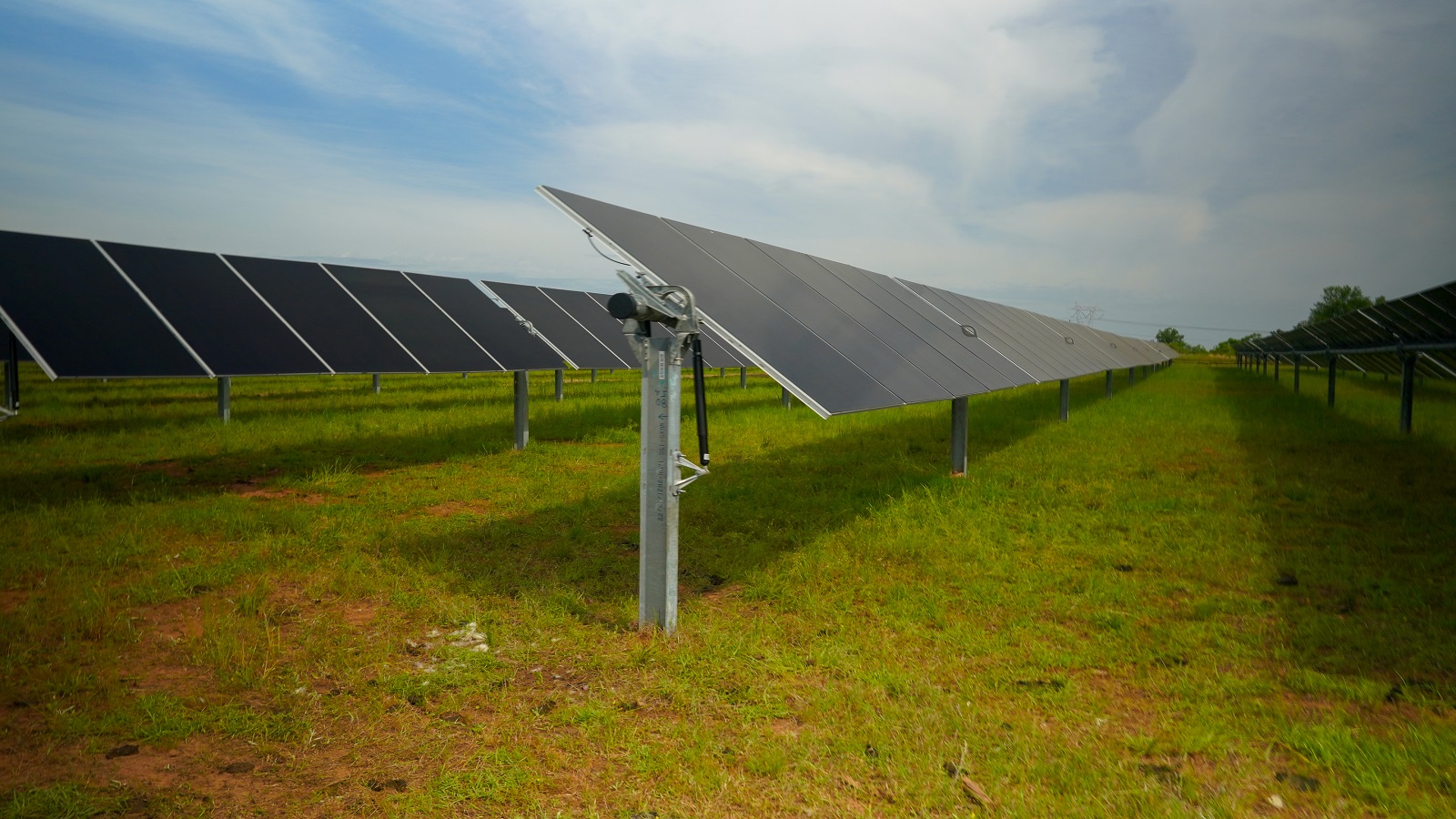
In response to this demand, the Georgia PSC recently approved a plan for the utility to expand its natural gas generation, including the construction of new gas turbines. This move drew sharp criticism from environmental advocates and consumer watchdogs, who argued that the utility should instead prioritize solar, wind, and energy efficiency to meet the rising load. The CIR program serves as a critical counterweight to this gas expansion. By accelerating the deployment of customer-funded clean energy, the program could potentially reduce the long-term necessity for new fossil fuel plants.
According to data from the Solar Energy Industries Association (SEIA), Georgia currently ranks eighth in the nation for total solar capacity, with over 6,500 megawatts installed. However, the vast majority of this capacity has been utility-led. Proponents of the CIR program argue that by unlocking private corporate capital, the state can climb the rankings even faster, leveraging the private sector’s urgency to meet 2030 and 2050 climate goals.
Timeline and Regulatory Path to Implementation
The journey toward the CIR program began in earnest during Georgia Power’s 2022 Integrated Resource Plan (IRP) proceedings. During these sessions, which occur every three years, the utility outlines its long-term strategy for meeting energy demand. A coalition of corporate buyers, led by CEBA and including companies like Google, Walmart, and Target, advocated for a more streamlined way to procure renewable energy.
The following chronology details the program’s development:
- Summer 2022: During the IRP process, the Georgia PSC directs Georgia Power to work with stakeholders to develop a "Customer-Identified Resource" pilot.
- Throughout 2023: Negotiations take place between Georgia Power, the PSC staff, and the Corporate Energy Buyers Association to define the program’s parameters, including cost-recovery mechanisms and grid interconnection standards.
- April 7, 2024: The Georgia PSC votes unanimously to approve the final structure of the CIR program.
- Summer 2024: The program is officially expected to open for applications, allowing the first wave of corporate projects to enter the pipeline.
Economic and Environmental Implications
The implications of the CIR program extend far beyond the corporate boardroom. From an economic perspective, the initiative is expected to stimulate hundreds of millions of dollars in private investment in Georgia’s rural communities, where large-scale solar projects are typically located. These projects provide a steady stream of lease payments to landowners and increase the local property tax base, funding schools and infrastructure without increasing the burden on residential taxpayers.
Environmentally, the program offers a pathway to more rapid decarbonization. While Georgia Power has made strides—most notably with the recent completion of the Plant Vogtle nuclear expansion—the grid remains reliant on the combustion of fossil fuels. Every megawatt of solar or storage added through the CIR program represents a reduction in the "marginal" power that would otherwise be generated by gas or coal plants.
Furthermore, the program addresses the issue of "grid equity." One of the primary concerns for regulators is ensuring that large corporations do not shift the costs of their green energy transitions onto residential customers. The CIR program is structured such that the participating companies bear the costs of the projects they propose, protecting the general ratepayer from potential price hikes associated with the new infrastructure.
A Potential National Model
Energy experts and policy analysts are watching Georgia’s experiment closely. If successful, the CIR program could serve as a blueprint for other states with traditional, vertically integrated utility markets. In states like North Carolina, South Carolina, and Virginia, large corporate energy buyers have expressed similar frustrations with the slow pace of grid greening.
The success of the program will likely be measured by the "uptake rate"—the number of companies that actually sign on and break ground on projects. Challenges remain, including the complexity of grid interconnection and the rising costs of solar components due to global supply chain issues and tariffs. However, the bipartisan support from the Georgia PSC suggests a growing recognition that clean energy is no longer just an environmental preference, but a core requirement for economic competitiveness.
As Georgia Power prepares to open the application window this summer, the eyes of the energy industry are on the Peach State. The CIR program represents a new era of "utility-customer partnership," where the responsibility for a cleaner grid is shared between the provider and the consumer. For the corporations that have long sought a way to power their Georgia operations with Georgia sun, the path forward is finally clearing.