The Federal Emergency Management Agency (FEMA) stands at a critical crossroads following a year of unprecedented administrative upheaval that critics and internal officials suggest has brought the agency to the brink of operational collapse. During the first year of the current Trump administration, the agency was subjected to a series of aggressive structural changes, including a sweeping purge of the federal civil service led by Elon Musk and a comprehensive spending freeze instituted by former Secretary of Homeland Security Kristi Noem. These actions effectively paralyzed the agency’s core mission of disaster response and long-term recovery, leaving billions of dollars in essential funding in limbo and stalling resilience projects designed to mitigate the impacts of future catastrophes.
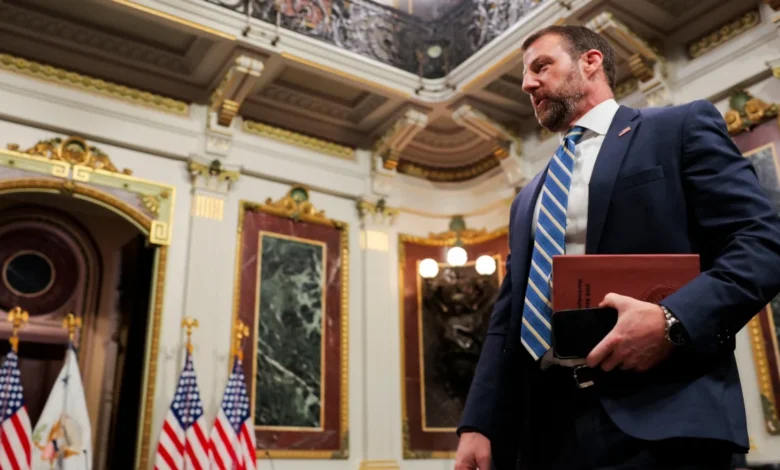
The departure of Kristi Noem last month, following a tenure marked by controversies regarding immigration enforcement and personal spending, has introduced a period of guarded optimism within the Department of Homeland Security (DHS). Her successor, former Oklahoma Senator Markwayne Mullin, has inherited an agency characterized by low morale, diminished staffing levels, and a backlog of aid requests. While Mullin has signaled a departure from Noem’s "micromanaging" approach, emergency management experts remain skeptical about whether the federal government is prepared for the immediate challenges posed by the fast-approaching hurricane and wildfire seasons.
A Chronology of Policy Shifts and Operational Paralysis
The transformation of FEMA began early in the administration with a series of directives aimed at reducing federal expenditures and shifting the burden of disaster management to the state level. In July, as historic flooding devastated Central Texas, the administration’s retreat from disaster preparedness became evident. Billions of dollars earmarked for community recovery were withheld under a broad spending freeze, a move that local officials argued turned a manageable crisis into a long-term economic burden.
By late autumn, leaked internal memos from the Department of Homeland Security revealed a strategic plan to reduce FEMA’s on-the-ground response personnel by approximately 50 percent. This proposed reduction coincided with a period of "slow-walking" aid requests, particularly those originating from Democrat-controlled states. Data indicates that during this period, the approval rate for disaster declarations fell significantly compared to previous administrations, prompting allegations of political bias in the distribution of federal resources.
The timeline of the agency’s decline was further accelerated by the suspension of the Building Resilient Infrastructure and Communities (BRIC) program. This initiative, designed to provide states with funding for proactive climate adaptation, was effectively shuttered for nearly a year. It was only after a federal court order last month that the administration abandoned its plan to eliminate the program entirely, though officials confirm that no new long-term infrastructure aid has been distributed in the last twelve months.
Leadership Transition: From Noem to Mullin
The dismissal of Kristi Noem in early spring marked a pivotal shift in the administration’s management of DHS. Noem’s leadership was frequently criticized by career civil servants for being ideological rather than operational. Her refusal to appoint a permanent administrator for FEMA left the agency under the control of interim officials who lacked the authority or the political capital to challenge restrictive budget directives.
Markwayne Mullin’s arrival has brought immediate changes to the upper echelons of FEMA. Since taking office, Mullin has reportedly dismissed several of Noem’s top deputies and has publicly vowed to end the freeze on disaster recovery spending. Unlike his predecessor, Mullin has committed to selecting a permanent administrator to provide stable leadership. However, current employees, speaking on the condition of anonymity, report that the transition remains chaotic. Much of the agency’s daily operations are still overseen by Karen Evans, an interim administrator appointed by Noem, who continues to require high-level approval for even routine reconstruction payments.
The shift in leadership has not yet translated into a full restoration of services. "It’s like we are collectively waiting for the other shoe to drop," remarked one regional FEMA official. While some payments to cities and states have been unfrozen, the bureaucratic hurdles established during the first year of the administration remain a significant barrier to efficient disaster response.
The Erosion of the National Flood Insurance Program
One of the most tangible impacts of the recent administrative shifts is the destabilization of the National Flood Insurance Program (NFIP), which provides subsidized coverage to approximately 5 million American households. Central to the NFIP is a rating system that incentivizes local governments to implement proactive flood protection measures in exchange for insurance discounts.
Sources within the agency confirm that the contract with the private firm responsible for managing this rating system was allowed to lapse several weeks ago. Consequently, the discount program has been suspended. This lapse means that the federal government currently lacks a mechanism to monitor whether U.S. cities and counties are adhering to building codes in floodplains or mitigating potential damage. Without this oversight, the financial risk to the federal government increases, while homeowners in high-risk areas face rising premiums and decreased protection.
Shifting Responsibility: The State-First Philosophy
A core tenet of the Trump administration’s emergency management policy is the belief that states should assume primary responsibility for disaster preparedness and response. During a recent visit to North Carolina, Secretary Mullin articulated this vision, stating that the federal government should not be viewed as a "first responder" but rather as a supporting entity for existing state resources.
"The state is much more equipped," Mullin noted during his visit. "But we can be there to get them past the first heavy lift."
This "balkanized" approach to emergency response has drawn mixed reactions from experts. Proponents argue that states like Florida and Texas, which maintain well-funded and robust emergency management departments, are better positioned to handle localized disasters without federal interference. However, critics, including Andrew Rumbach, a senior fellow at the Urban Institute, warn that a diminished federal role could be catastrophic for states with smaller budgets.
"If it’s a smaller federal role, with smaller federal resources, that has hugely significant impacts," Rumbach stated. He pointed out that states like Mississippi and Louisiana, which are highly vulnerable to hurricanes but possess limited financial reserves, would struggle to manage the immense costs of infrastructure repair and housing relocation without a substantial federal backstop.
Case Study: Maryland’s Move Toward Independence
The practical implications of this policy shift are already being felt in states like Maryland. Following devastating river floods last year, the state requested over $30 million in federal reconstruction aid. Despite what state officials described as "meticulous documentation" of the damage, the administration denied the request.
In response, Governor Wes Moore and the Maryland General Assembly have been forced to pursue a strategy of self-reliance. The state launched its own "state disaster recovery fund," though its initial disbursement of $500,000 to the hardest-hit counties represents only a fraction of the total need. Currently, Maryland lawmakers are drafting legislation to establish a permanent grant fund for climate resilience projects, such as shoreline erosion control.
The Maryland experience highlights the issue of scale. While state-level initiatives promote autonomy, they often lack the capital necessary to address large-scale infrastructure failures. For many local authorities, the cost of repairing roads and bridges after a major flood can represent up to 20 percent of an entire county’s annual budget, making federal assistance a mathematical necessity rather than a political preference.
Analysis of Broader Implications and Future Outlook
As the administration extends the lifespan of its "review council" of governors and state emergency managers until May, the future of FEMA remains uncertain. A Noem-approved report, currently unpublished, reportedly advocates for a permanent shift of federal resources to the states, formalizing the "supporting role" described by Secretary Mullin.
The implications of such a shift are twofold. On one hand, it could lead to "interesting experimentation," as Rumbach suggests. A state like Hawaii might use federal block grants to implement modular housing solutions tailored to its unique geography, bypassing FEMA’s often rigid and slow-moving temporary housing protocols. On the other hand, the removal of federal oversight could allow states to prioritize reconstruction in affluent areas while neglecting marginalized communities, leading to increased inequality in disaster recovery.
The immediate concern for emergency managers, however, is the 2024 hurricane season. With FEMA’s workforce demoralized and its resilience programs only recently revived by court order, the agency’s ability to coordinate a multi-state response to a major Category 4 or 5 storm is in question. The "wait and see" atmosphere currently pervading the agency suggests that while the leadership has changed, the underlying structural weaknesses created over the past year have yet to be resolved.
For now, the federal government’s role in disaster management is being redefined not through legislative reform, but through administrative austerity and the tactical withdrawal of support. Whether this new model of "state-led" response can survive the rigors of a high-intensity disaster season remains the most pressing question for policymakers and vulnerable communities alike.