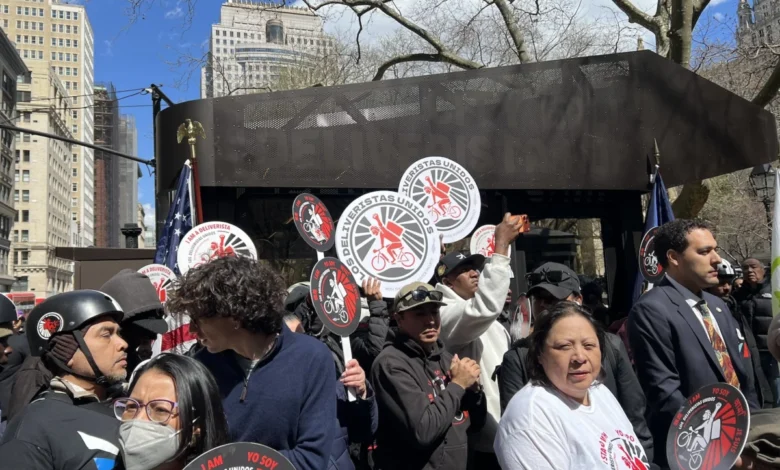
The forecast for downtown Manhattan last Tuesday warned of high winds, but the atmosphere on the ground near City Hall suggested the arrival of a long-awaited spring. Under a clear sky, a crowd of municipal employees, labor organizers, and delivery workers gathered on a sidewalk that, until recently, had been occupied by a dilapidated, vacant newsstand. In its place stood a sleek, modernist structure characterized by metallic columns and transparent glass windows—the city’s first official "deliverista hub." While the physical footprint of the shed is modest, its inauguration marks the culmination of a multi-year political and grassroots struggle to recognize the fundamental rights of the city’s massive app-based workforce.
The opening of this facility represents a significant victory for Los Deliveristas Unidos, a collective of delivery workers that has been campaigning for such infrastructure since 2021. For years, the project remained stalled in a quagmire of bureaucratic red tape and permitting delays. The deadlock was finally broken when Mayor Zohran Mamdani, who recently took office, moved to expedite the construction process as part of an aggressive "first 100 days" agenda. The result is a specialized refuge where the people who power New York’s billion-dollar food delivery economy can find shelter, charge their equipment, and build community.
A New Architectural Standard for Public Infrastructure
The structure, located in the heart of Lower Manhattan, is designed to be both functional and symbolic. Constructed in approximately one month once the final permits were secured, the hub features a contemporary aesthetic that contrasts with the traditional utilitarian street furniture of New York. Beyond its visual appeal, the hub serves as a critical utility point.
At present, the hub is equipped with battery-swapping stations where cyclists can exchange depleted e-bike batteries for fully charged ones at a subsidized rate of $2 per day. This initiative aims to address two issues simultaneously: the operational downtime of workers and the safety concerns surrounding uncertified lithium-ion batteries, which have been linked to a rise in residential fires across the five boroughs.
According to representatives from the Worker’s Justice Project, the organization that helped organize Los Deliveristas Unidos, the hub’s functionality will expand in phases. Future upgrades are expected to include a comprehensive HVAC system for climate control and dedicated indoor charging stations. Furthermore, the site will be staffed five days a week by a member of the Worker’s Justice Project, providing a physical headquarters where workers can receive information regarding their labor rights, insurance, and union membership.
The Evolution of the Deliverista Movement: A Chronology
The journey to the opening of the Manhattan hub began in the early days of the COVID-19 pandemic. As the city went into lockdown in 2020, delivery workers were designated as "essential," yet they found themselves increasingly marginalized. With restaurants closed to indoor dining, workers lost access to basic necessities, including restrooms and indoor shelter from the elements.
Gustavo Ajche, co-founder of Los Deliveristas Unidos, recalled the isolation of that period. Speaking in Spanish during the opening ceremony, Ajche noted that the idea for the hub was born from observing abandoned urban infrastructure. "During the pandemic, everything was closed and things got very complicated," Ajche said. "I saw my colleagues struggling to find places to shelter from cold, rain, and wind." He identified vacant newsstands—relics of a pre-digital age—as the perfect footprint for a new type of worker-centric infrastructure.
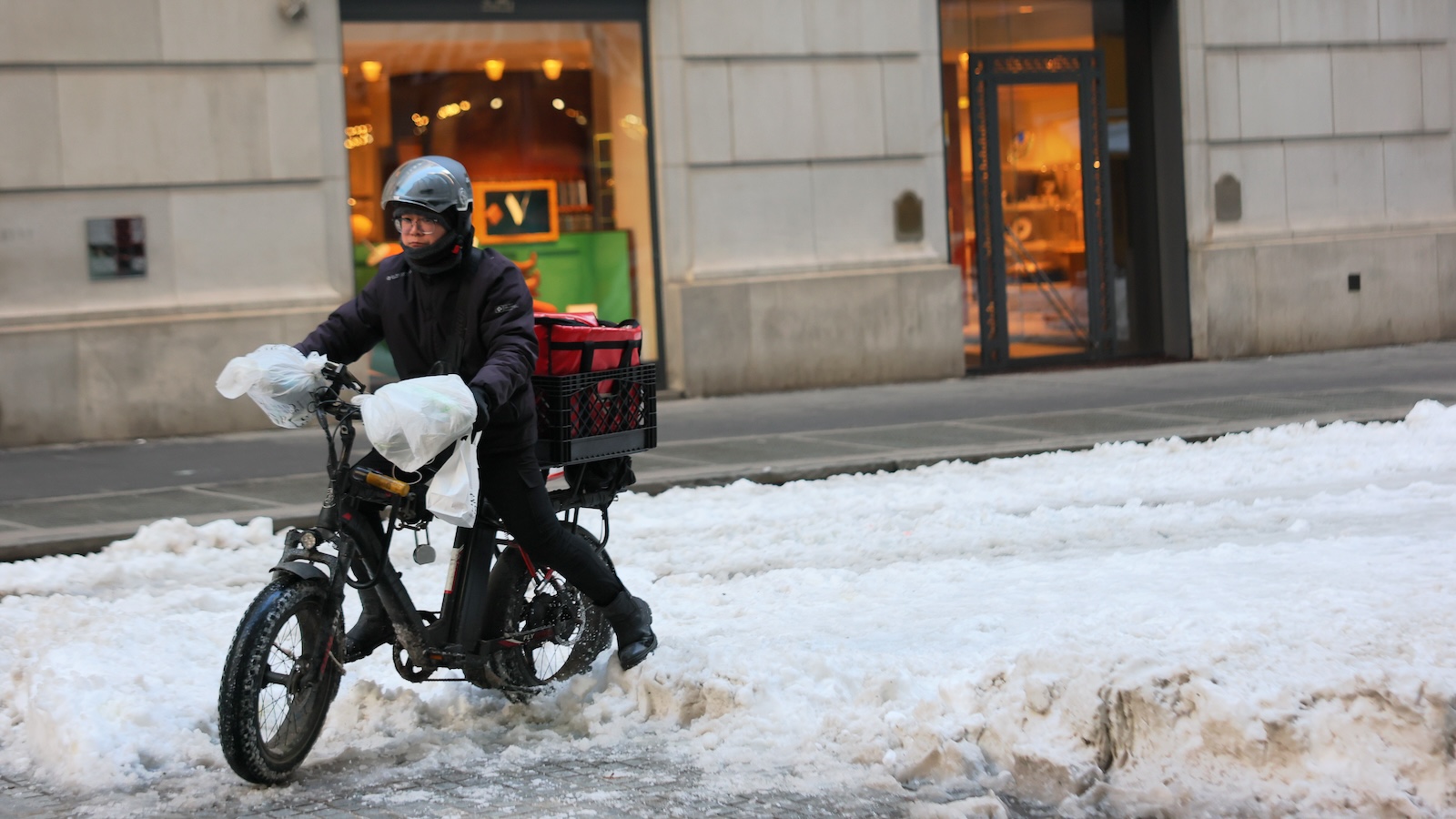
In 2021, the movement gained political momentum as Los Deliveristas Unidos successfully lobbied for a suite of local laws aimed at improving working conditions, including the right to access restaurant bathrooms and a minimum pay rate. However, the physical infrastructure component proved more difficult to realize. Despite $1 million in federal funding secured by Senator Chuck Schumer in late 2022, the project faced years of delays under the previous mayoral administration. Critics pointed to the complexity of multi-agency coordination, involving the Department of Transportation, the Parks Department, and the Department of Buildings.
The timeline shifted dramatically following the election of Mayor Mamdani. By prioritizing the project as a symbol of his administration’s commitment to the working class, the physical construction was completed in a fraction of the time previously estimated.
Supporting Data: The Scale of the Delivery Economy
The necessity for such hubs is underscored by the sheer scale of the app-based delivery workforce in New York City. Current estimates suggest there are between 65,000 and 80,000 delivery workers operating across the five boroughs. These workers are the backbone of a logistics network that handles millions of deliveries annually, ranging from prepared meals to household groceries.
Economic data highlights the vulnerability of this sector:
- Mode of Transport: Approximately 75% of delivery workers utilize e-bikes, mopeds, or scooters to navigate the city’s dense traffic.
- Climate Exposure: Unlike ride-share drivers who operate within the climate-controlled environments of automobiles, deliveristas are directly exposed to the city’s increasingly volatile weather patterns.
- Safety Risks: According to Department of Transportation statistics, delivery workers on two-wheeled vehicles are significantly more likely to be involved in traffic accidents compared to standard commuters.
The Manhattan hub is viewed as a pilot project to mitigate these risks. By providing a centralized location for battery swaps, the city hopes to standardize the use of UL-certified batteries, potentially reducing the frequency of battery-related fires, which saw a 20% increase in the prior fiscal year.
Official Responses and Political Implications
The ribbon-cutting ceremony drew a high-profile contingent of city and federal officials, reflecting the project’s significance in the current political landscape. New York City Parks Commissioner Tricia Shimamura emphasized the hub’s role in reclaiming the "public realm" for the benefit of all citizens, not just the affluent.
"This is what the public realm is made for," Shimamura stated. "This is what it means for our city to serve the people who keep it running." While Shimamura noted she had only been in her role for eight weeks, she acknowledged the administrative hurdles that had previously slowed the project, stating that future hubs would require even closer collaboration between the Parks Department and the Department of Transportation.
Senator Chuck Schumer, who was instrumental in securing the federal grant for the project, framed the hub as a matter of basic dignity. "When I rode my bike through the city, I saw the need for better and safer infrastructure," Schumer noted in his remarks. He was joined by Public Advocate Jumaane Williams and City Council Member Shaun Abreu, both of whom have been vocal supporters of expanded labor protections for gig economy participants.
Ligia Guallpa, executive director of the Worker’s Justice Project, described the opening as a "redefinition of what is possible" in urban planning. She argued that for too long, New York’s public spaces have been designed around the needs of car owners and the wealthy. The conversion of a newsstand into a worker hub, she suggested, is a literal and figurative reclaiming of city soil for the working class.
Broader Impact and the Intersection of Climate Justice
The deliverista hub is being hailed by urban planners as a prime example of "climate justice." As climate change accelerates, New York City is experiencing more frequent heat waves and "micro-burst" flooding events. For a workforce that spends 10 to 12 hours a day outdoors, these environmental shifts are not merely inconveniences but occupational hazards.
The hubs are intended to serve as "cooling centers" during extreme heat events and "warming centers" during the winter. By providing a safe space to recharge, the city is also encouraging the continued use of micro-mobility, which is essential for reaching New York’s goal of reducing carbon emissions from the transportation sector.
However, the path forward remains challenging. Both Ajche and Commissioner Shimamura admitted that a single hub is insufficient for a city of 8.5 million people. The scalability of the project depends on identifying further funding and navigating the jurisdictional complexities of New York’s sidewalks. Not every viable location falls under the jurisdiction of the Parks Department; many are controlled by the Department of Transportation or private developers, necessitating a more integrated approach to "streetscape" management.
Future Outlook: Scaling the Model
As the Lower Manhattan hub begins its first full month of operation, all eyes are on its utilization rates and the feedback from the workers themselves. The Worker’s Justice Project plans to use the data gathered from this site to advocate for a network of similar structures in high-traffic delivery corridors, such as the Upper West Side, Williamsburg, and Jackson Heights.
The success of this initiative may also provide a blueprint for other global metropolises grappling with the rise of the gig economy. Cities like London, Paris, and San Francisco have watched New York’s labor experiments closely. By integrating physical infrastructure with labor organizing and public safety initiatives, New York is signaling a shift away from a "hands-off" approach to the gig economy toward one that integrates these workers into the formal fabric of the city.
For the deliveristas who posed for photos and chanted "Deliverista Power!" at last week’s opening, the hub is more than just a place to swap a battery. It is a permanent, visible acknowledgment of their presence and their essential role in the life of the city. While the "mist" falling during the ceremony turned out to be nothing more than runoff from window washers across the street, the workers remained undeterred—finally having a place of their own to stand their ground.